🐶 Pets
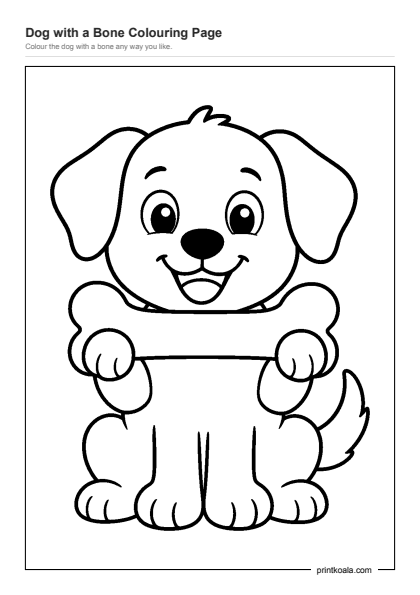
Dog with a Bone Coloring Page
Ages 2–49
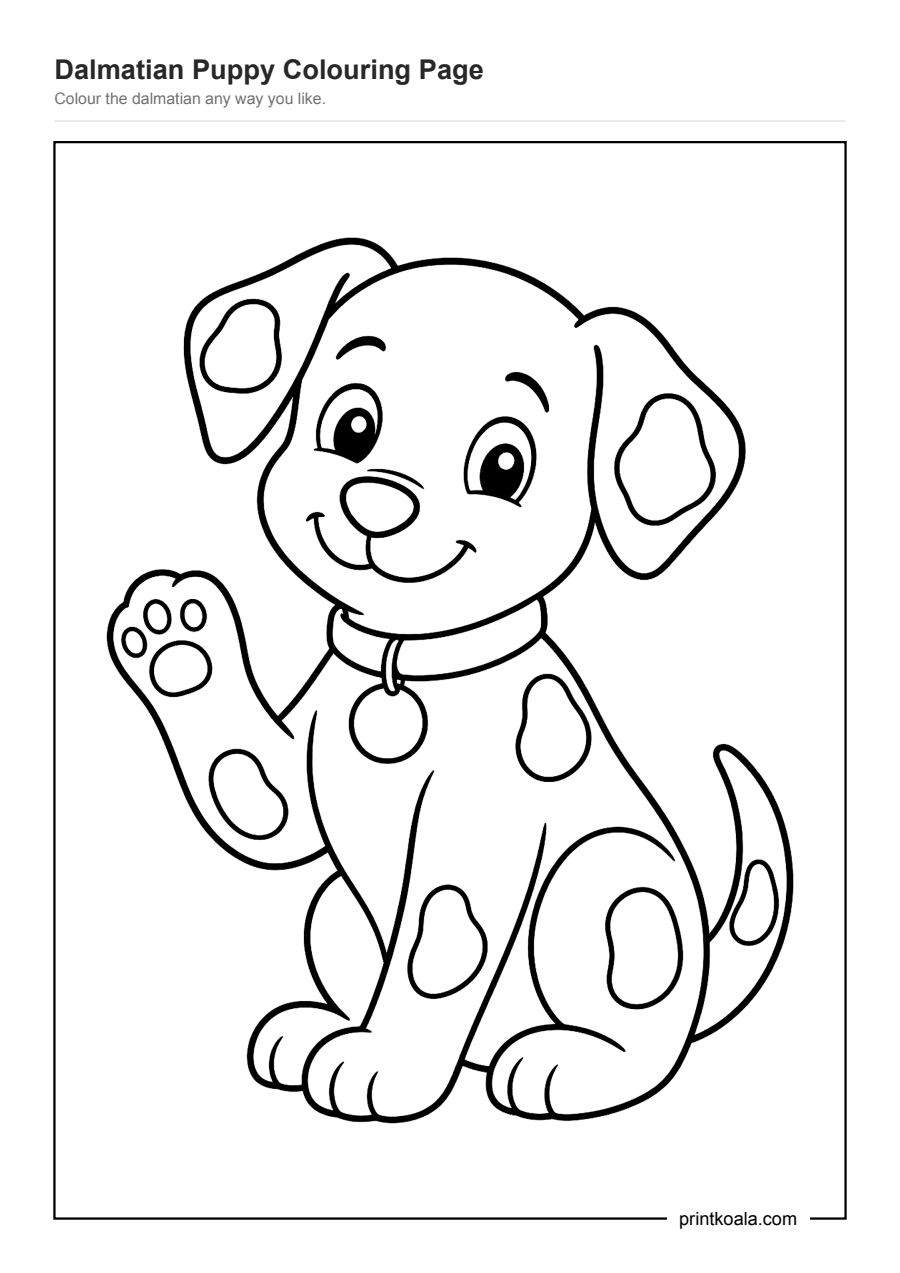
A sitting Dalmatian puppy waves one spotted paw hello, wearing a round collar tag and a big smile.
Free, no sign-up. Downloaded 37 times · A4 · Print at 100% scale
This Dalmatian puppy sits back on its haunches with one front paw lifted in a wave, toe pads and all. Its face is turned forward with big round eyes, a smiling mouth and a small oval nose. A collar circles its neck with a round tag hanging from it, and its two floppy ears each carry one large spot. More spots are scattered across the chest, side, front leg, haunch and the curled-up tail — seven or eight in total, each one big and rounded rather than small and fiddly.
Because the spots are so oversized, a child gets wide, clearly bordered shapes to fill in rather than a scatter of tiny dots, which suits a preschooler still learning to stay inside a line. The plain body between the spots can be done in one steady sweep of a single color, while the ear spots, collar tag and paw pads give a few smaller, separate areas for a bit more care and a second or third color. The raised paw and open smile also give a natural reason to talk about waving hello and what the puppy might be saying.
This is on the easier end for the Pets category — good for a two or three year old just starting to color inside shapes, and still a relaxed, quick page for a four or five year old who wants to add extra colors to the ears, tag and spots rather than race to the finish.
Let your child start with the big body shape first, then move to the spots so each one stands out against it. If they lose the outline on a spot, a black crayon can go over the edge again before filling in.