🎈 Animals Having Fun
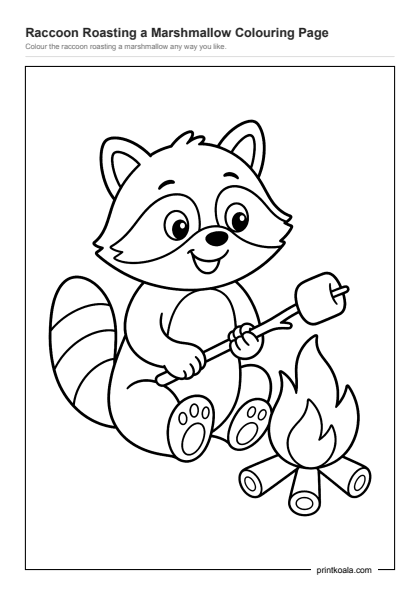
Raccoon Roasting a Marshmallow Coloring Page
Ages 2–54
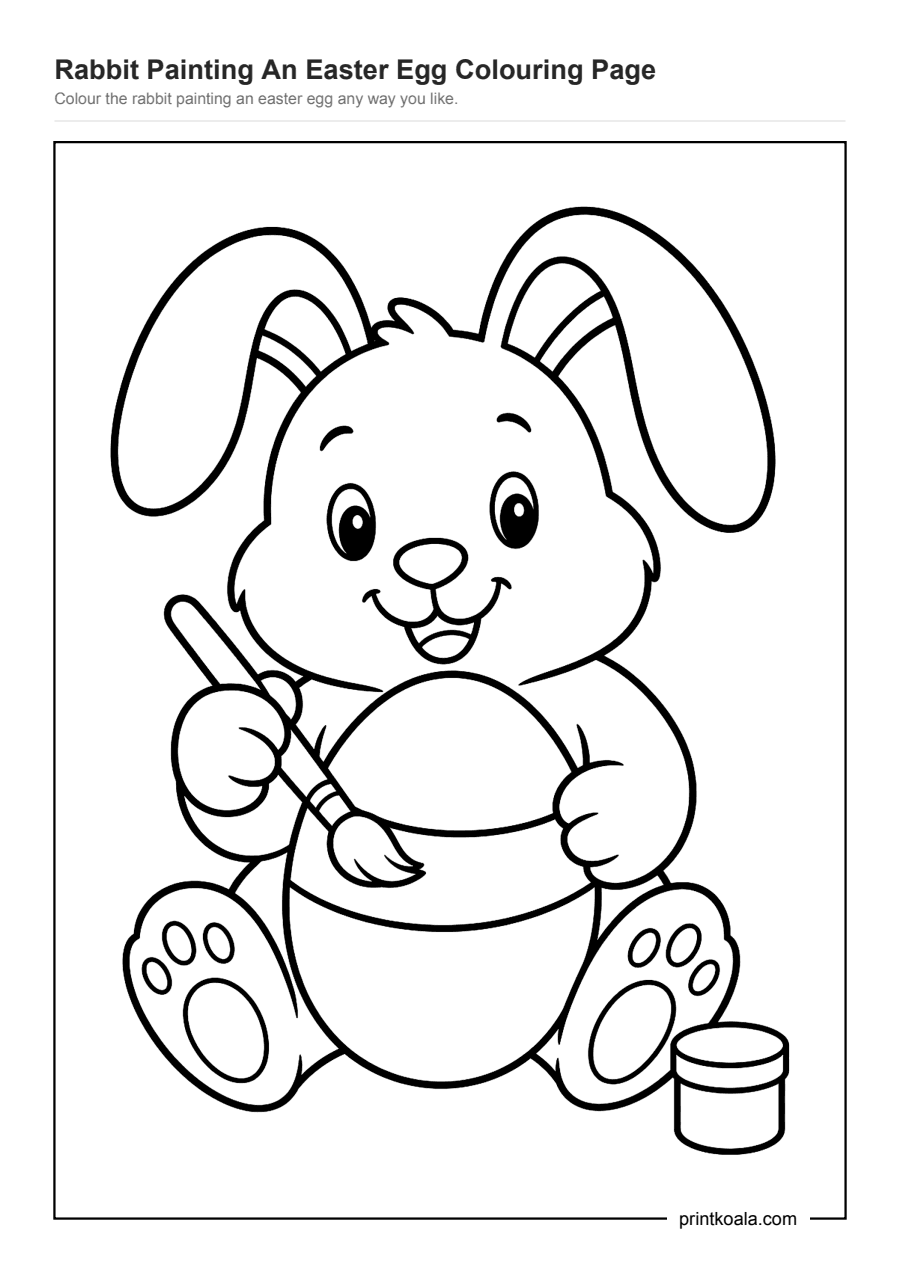
A sitting rabbit holds a paintbrush to a giant egg between its paws, with a small paint pot waiting by its big flat feet.
Free, no sign-up. Downloaded 1 times · A4 · Print at 100% scale
This rabbit sits back on its haunches with one long ear flopped left and one flopped right, each marked with a single stripe down the middle. It holds a paintbrush in one paw, brush tip resting against a large oval egg leaning against its tummy. The egg has one broad band painted across its middle, splitting it into two big sections to color separately. A small paint pot sits on the ground by the rabbit's foot, and both feet are turned up to show three oval paw pads each.
Most of this page is made of big, forgiving shapes: the rabbit's body, its ears, the two halves of the egg. A child can fill those in with a few confident scribbles and still have it look tidy. The paw pads and the stripe down each ear are smaller and more enclosed, so they are a good place to slow down and use the tip of a crayon rather than the side. The egg is the obvious talking point, since it is the one thing clearly waiting to be painted twice over, once by the rabbit in the picture and once by the child holding the crayon.
There is nothing fiddly in the background and no small details hiding in corners, so this suits a preschooler working mostly on their own. It sits at the easier end of the category: detailed enough in the paw pads and ear stripes to hold a three or four year old's interest, but not so busy that a younger child coloring in big movements will lose the picture.
Suggest starting with the egg's two big sections, since a mistake there is easy to fix with a darker color. Save the six small paw pads for last, when your child's hand has warmed up and can manage the tighter curves.