🐶 Pets
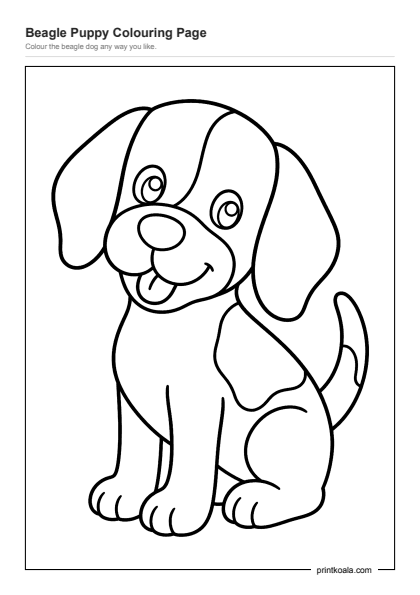
Beagle Puppy Coloring Page
Ages 2–53
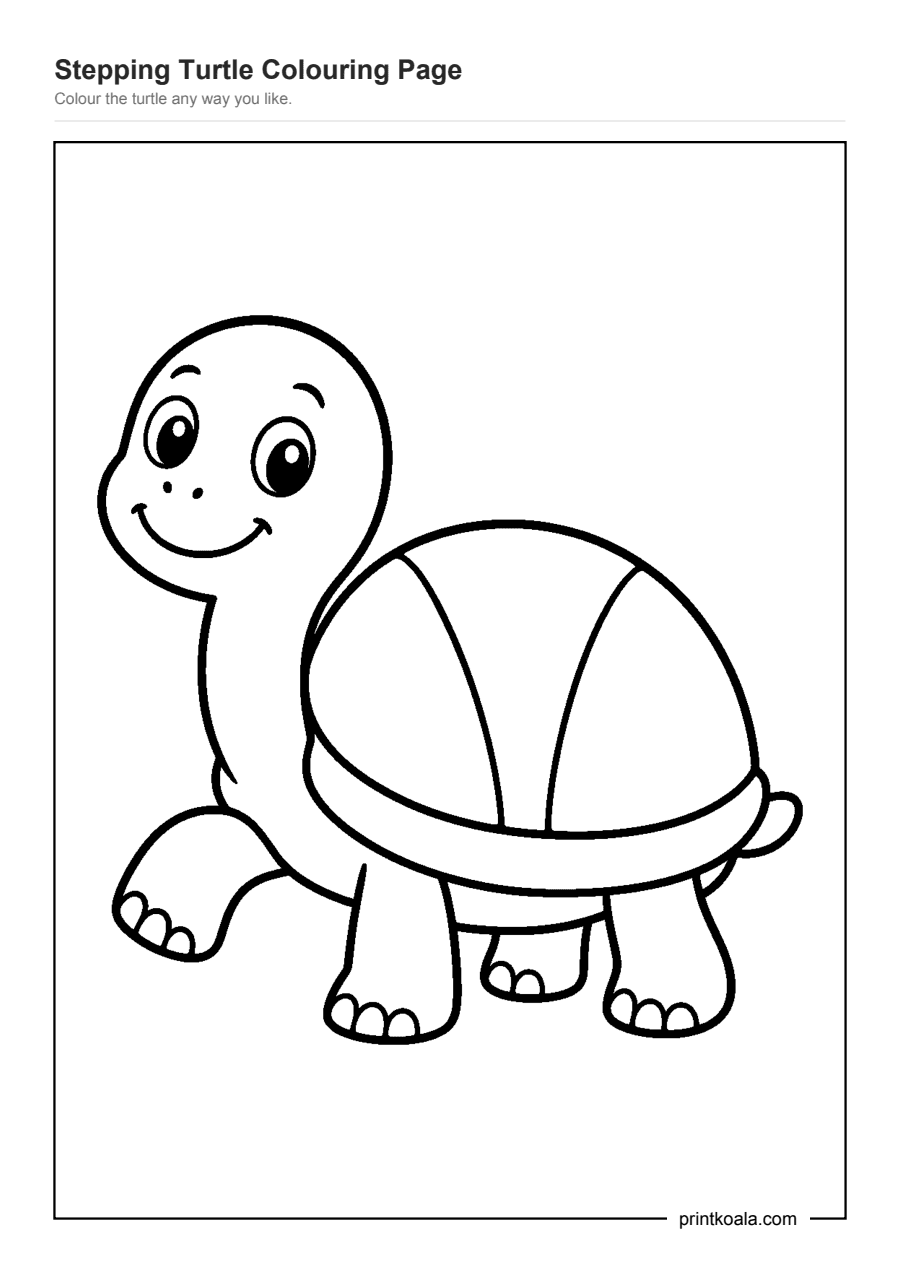
A smiling turtle mid-step, its domed shell split into three curved panels above a wide rim band, with tiny toes on each stubby leg.
Free, no sign-up. Downloaded 10 times · A4 · Print at 100% scale
This turtle is caught mid-walk, front leg lifted and stepping forward, head turned to face you with a big smile. Its face has two large round eyes, two curved eyebrows, and two tiny dots for a nose. The shell is the star of the page: a tall dome marked out by curved lines into three long panels, sitting on top of a wide rim band that wraps right around the base like a belt. Underneath, four short legs poke out, each ending in two or three rounded toes, and a small bump of a tail peeks from behind the shell on the right.
What makes this one worth printing is the mix of spaces on offer. The shell panels and the rim band are big enough for a two-year-old to scribble across without much steering, so a child gets to pick two or three shell colors and see a pattern take shape as they go. The legs and toes are smaller and set apart from each other, which asks for a bit more care with the crayon tip, and the face gives them somewhere to slow down and talk about the turtle's expression rather than just fill space. There is plenty to name out loud too: the shell pattern, the raised foot, the little tail.
Overall this sits on the easier end of the scale. The outlines are thick, the shell sections are generous, and nothing on the page is fiddly except the toes, which are fine to leave rough. It suits toddlers just getting the hang of staying inside lines as much as preschoolers who want a page with a bit more going on than a plain oval.
Start with the big shell panels, since mistakes there barely show. Save the small toes for last and do not worry if color spills over them. Ask your child what color a turtle's shell should be and why.