🐸 Reptiles & Amphibians
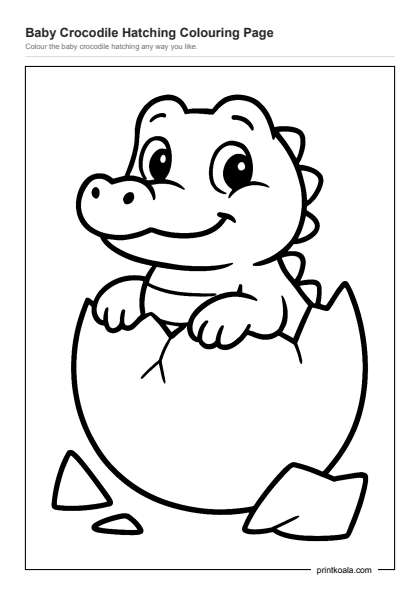
Baby Crocodile Hatching Coloring Page
Ages 2–57
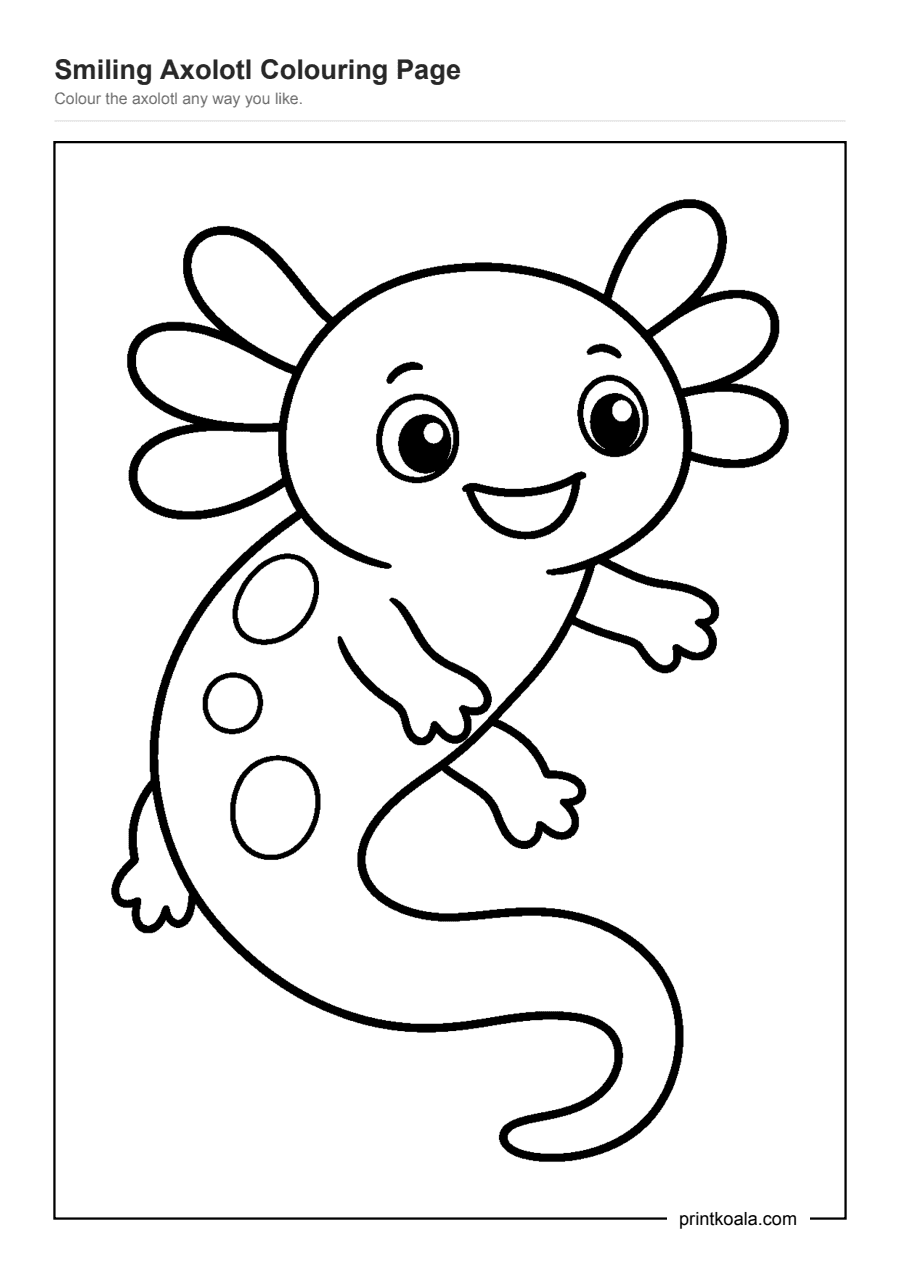
A big-eyed axolotl curls into an S-shape, its six feathery gills, three round spots and looping tail all waiting for color.
Free, no sign-up. Downloaded 10 times · A4 · Print at 100% scale
This axolotl is drawn mid-swim, its body bending into a long S-curve that ends in a tail looping back on itself at the bottom of the page. The round head takes up a good third of the sheet, with two large oval eyes, curved little eyebrow lines above them, and a wide open smile. Either side of the head sits a cluster of three feathery gill fronds, six in total, standing up like little branches. Two front legs reach across the body with tiny clawed toes, and a third leg pokes out near the tail. Scattered across the back are three round spots, one small, one medium and one larger, each an empty circle waiting to be filled in.
The body and tail are the kind of big, forgiving shapes a young child can color without much worry about staying inside the lines, which makes this a good page for building confidence with a crayon. The six gill fronds and three spots are smaller and separate from each other, so they are a natural next step: a child can give each gill its own color, or make the three spots match while the body stays a different shade. It is also an easy excuse to talk about what gills actually do, since axolotls are unusual in keeping theirs as adults instead of growing lungs.
Compared with busier animal sheets, this one sits on the simpler end: there is no background clutter, no fur texture, and only a handful of small parts to pick out from the large open body. That makes it well suited to nursery-age children coloring mostly on their own, while the gills and spots give slightly older preschoolers something a little more precise to aim for.
Let your child start with the body and tail, the biggest spaces, before moving to the smaller gills and spots. If the gill fronds feel fiddly, it is fine to color them all one color rather than separately. Ask what the feathery bits on its head might be for.