🐸 Reptiles & Amphibians
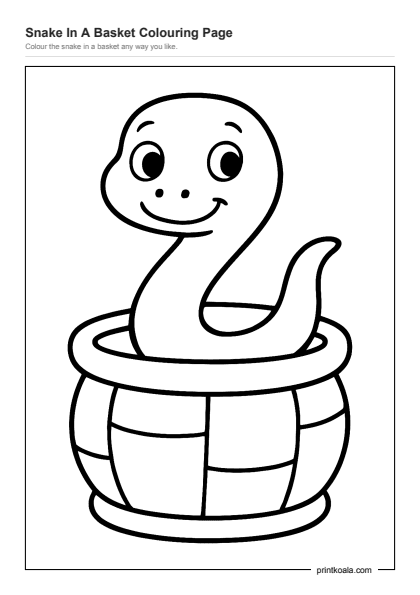
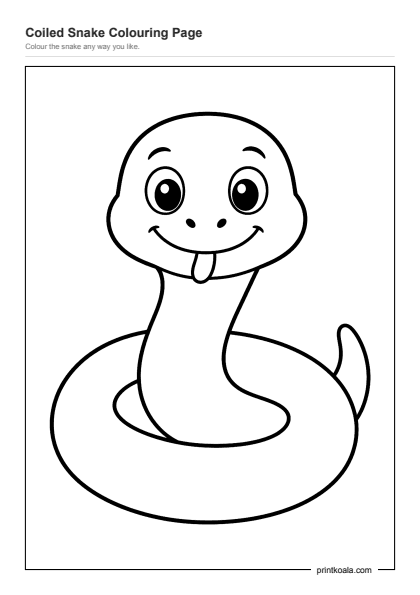
Coiled Snake Coloring Page
Ages 2–55
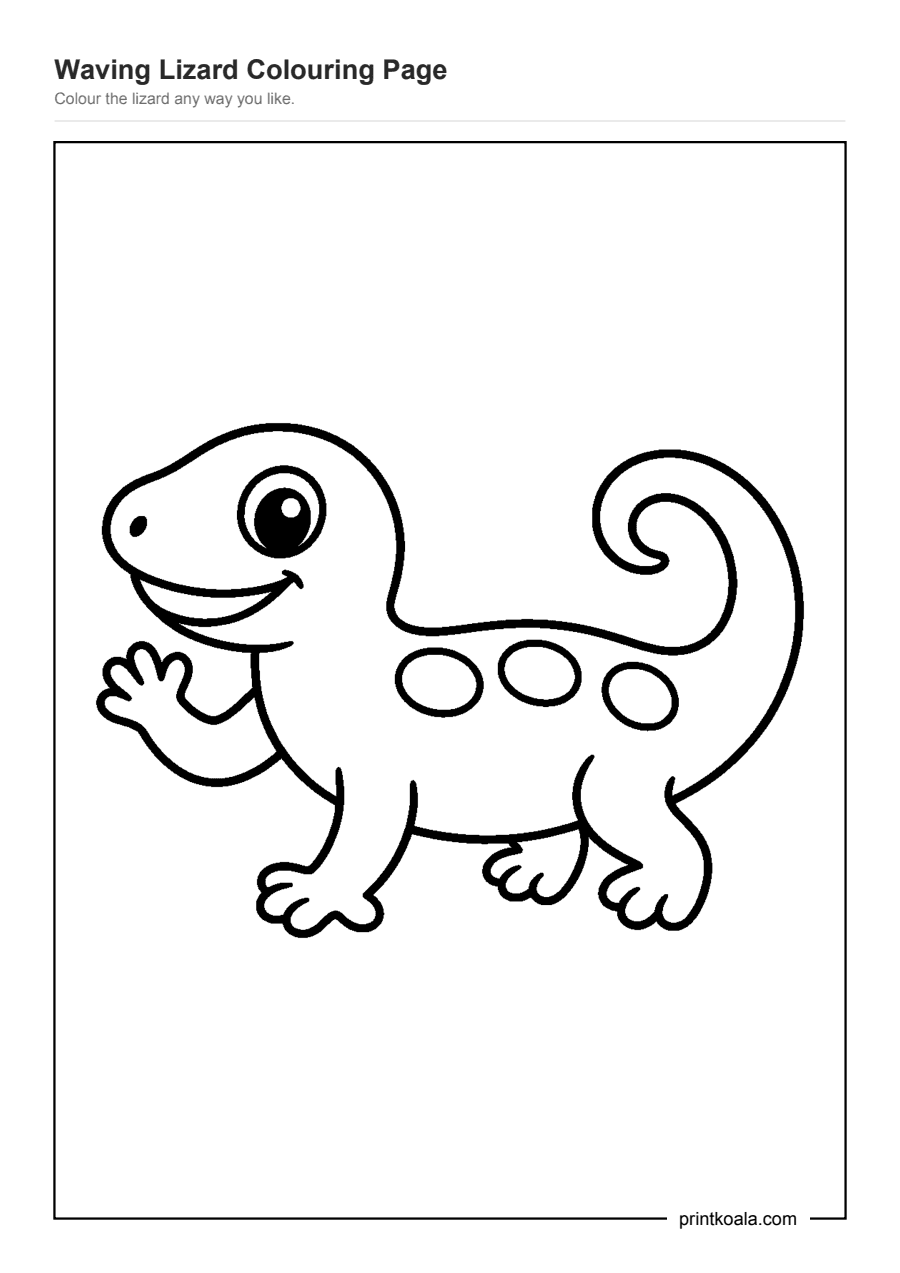
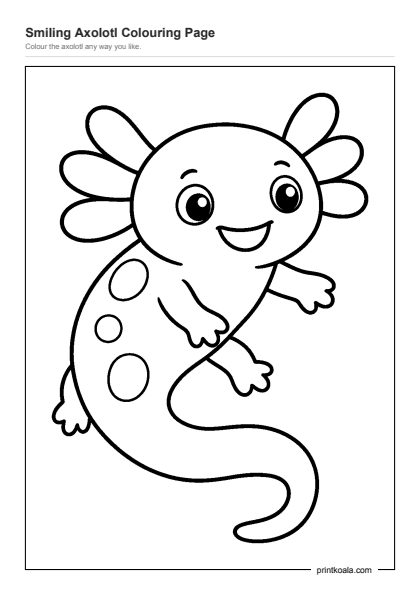
A friendly lizard walks on all fours, waving one paw, with three oval spots on its back and a tail curled into a spiral.
Free, no sign-up. Downloaded 5 times · A4 · Print at 100% scale
This lizard stands side-on, one front foot lifted and waving with its fingers spread, as if it has just spotted the child looking at it. Its face is simple and open: one big round eye with a bright highlight, a single nostril dot, and a wide curved smile. Along its back sit three plain oval spots, and behind them the tail sweeps up and curls into a neat spiral loop. Four short legs end in small clawed feet planted on the ground, and there is nothing else on the page to color in behind or around the lizard.
The shapes here are mostly generous and closed, which is what makes the sheet worth putting in front of a young child: the body, head and tail are wide, uninterrupted spaces a crayon can move across freely. The three back spots and the eye are the only small enclosed bits that call for slower, more careful strokes, so a child gets a bit of both without either one dominating. It is also an easy drawing to talk about while coloring: how many spots does the lizard have, which foot is it waving with, where does the tail end up curling.
Because the outlines are thick and the body is one continuous shape with few tight corners, this is on the easier side of what is in the reptile section, suited to a child still building control over a crayon or marker. Older preschoolers who color quickly may want to add a background or pattern of their own once the lizard itself is done.
Let your child start with the big body and tail, since those areas are the most forgiving for a wobbly hand. Save the three back spots and the eye for last, and count them together as each one gets filled in.