🧸 Toys & Games
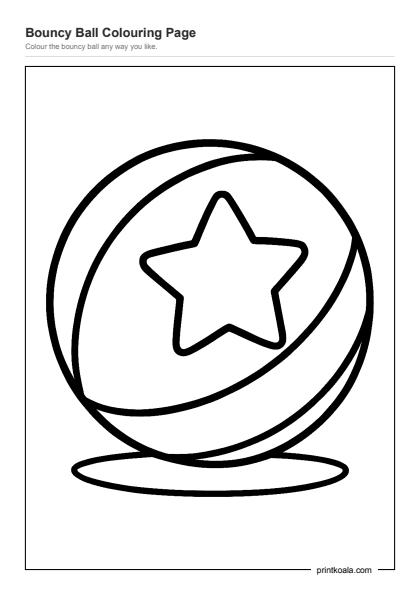
Bouncy Ball Coloring Page
Ages 2–48
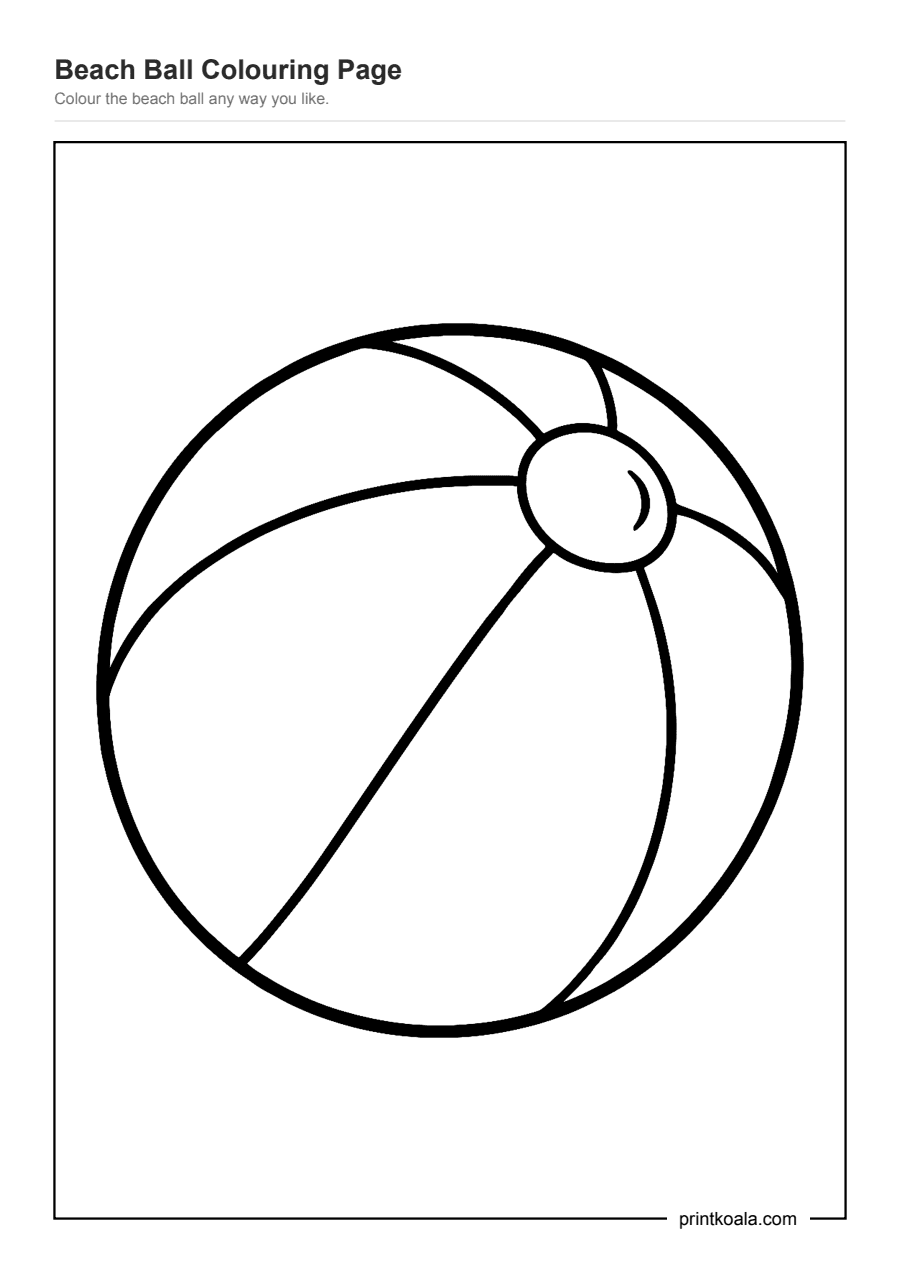
A single beach ball with a small valve cap at the top and just a few broad curved panels, one far bigger than the rest.
Free, no sign-up. Downloaded 7 times · A4 · Print at 100% scale
This page shows one beach ball, drawn large and centerd, with nothing else on the page. Near the top sits the small round valve cap, with a tiny curved crescent inside it standing in for a highlight. From that cap, curved lines sweep outward and split the ball into panels: a long diagonal panel that takes up nearly half the ball, a wide curved panel on the left, a narrower strip down the right, and a small sliver along the top. There is no sand, sun or water in the background, so the ball is the whole job.
Because the panels are so few and so large, this sheet is really about steering a crayon along a curved line rather than a straight one, and stopping exactly where two lines meet at the cap. The size difference between the panels is worth pointing out to a child before they start: the bottom panel is huge, the top sliver is tiny, and that is a natural way to talk about big and small while they work. A child can give every panel its own color to make a proper striped beach ball, or pick two colors and alternate them, or go rogue and color the whole thing purple. All of those are fine outcomes for this page.
This is one of the easier sheets in the toys and games set, with big open spaces and no fiddly small areas to fill in. It suits a child who is still building the control to stay inside a curved line and wants a quick win, and it works just as well as a first coloring page for a toddler who is only just starting to hold a crayon.
Let your child start with the biggest bottom panel, since it is the easiest to fill without crossing a line, then work outward to the smaller ones. Ask them which panel looks biggest. If a crayon slips over a curve, turn it into a stripe rather than starting again.