🐙 Ocean & Sea Creatures
Dolphin Jumping Over a Wave Coloring Page
Ages 3–58
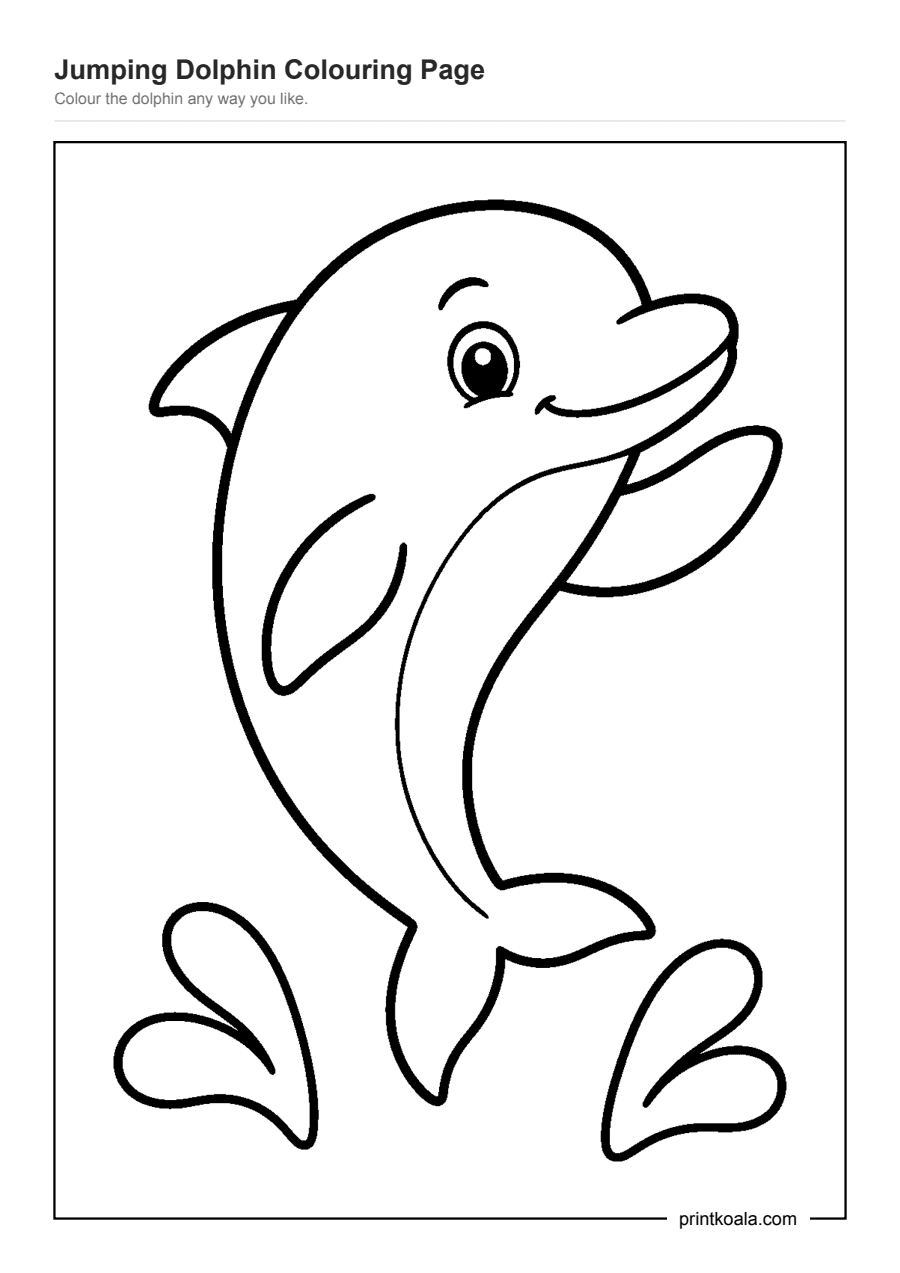
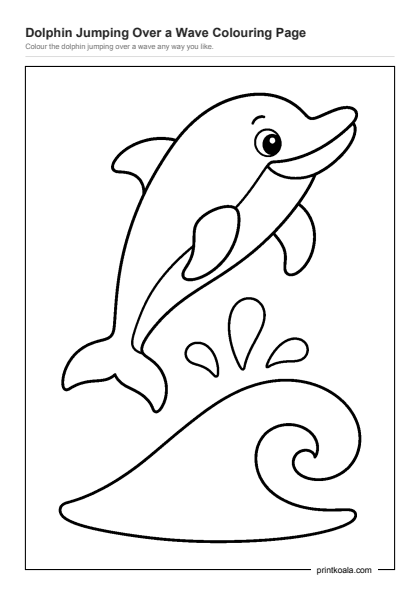
A dolphin balanced upright on its tail with one flipper raised like a wave, and curling splash shapes at its base.
Free, no sign-up. Downloaded 12 times · A4 · Print at 100% scale
This dolphin stands tall on the tip of its tail fin, body curving up and back the way dolphins do when they leap clear of the water. One flipper is thrown up and out to the side, almost like it is waving. The dorsal fin sits neatly on its back, and on the front of its body a second, smaller fin peeks through near the belly. Its face has one big round eye with a curved brow above it, and a closed, smiling beak. A long curved line runs down the middle of the body to mark the paler belly, and at the bottom, a few curling splash shapes show where the dolphin has just come up out of the water.
Most of this dolphin is made up of large, open spaces - the back, the belly panel, the raised flipper - so a child can get the crayon moving in big strokes without worrying about staying inside tight lines. The eye and the splash shapes are smaller and closed off, which gives slightly older hands something fiddlier to slow down for. It is a good page for talking about why dolphins jump, and for picking two or three colors rather than reaching for every one in the box, since the shapes are simple enough that a plain color scheme still looks good.
Next to other ocean sheets in this set, this one sits on the easier side: the outline is clean, nothing is tiny, and there are no crosshatched patterns to fill in. It suits a child who is still building control over a crayon but wants a picture that looks finished quickly. An older preschooler who colors fast might want a second sheet ready, since this one will not take long.
Let your child start with the big back and belly first, then tackle the eye and splashes last, since those are the fiddliest parts. If the eye goes outside the lines, a black outline pen traced over the top afterwards hides it easily.