🐙 Ocean & Sea Creatures
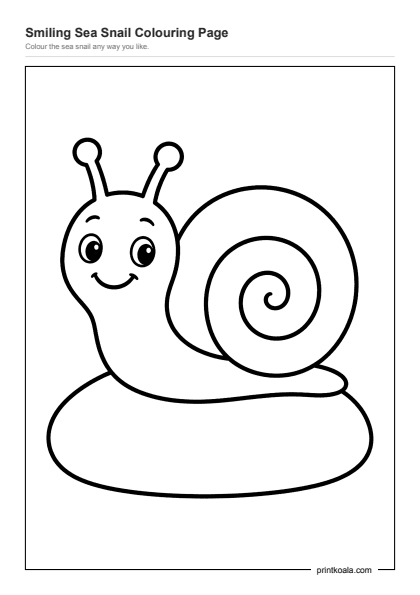
Smiling Sea Snail Coloring Page
Ages 2–49
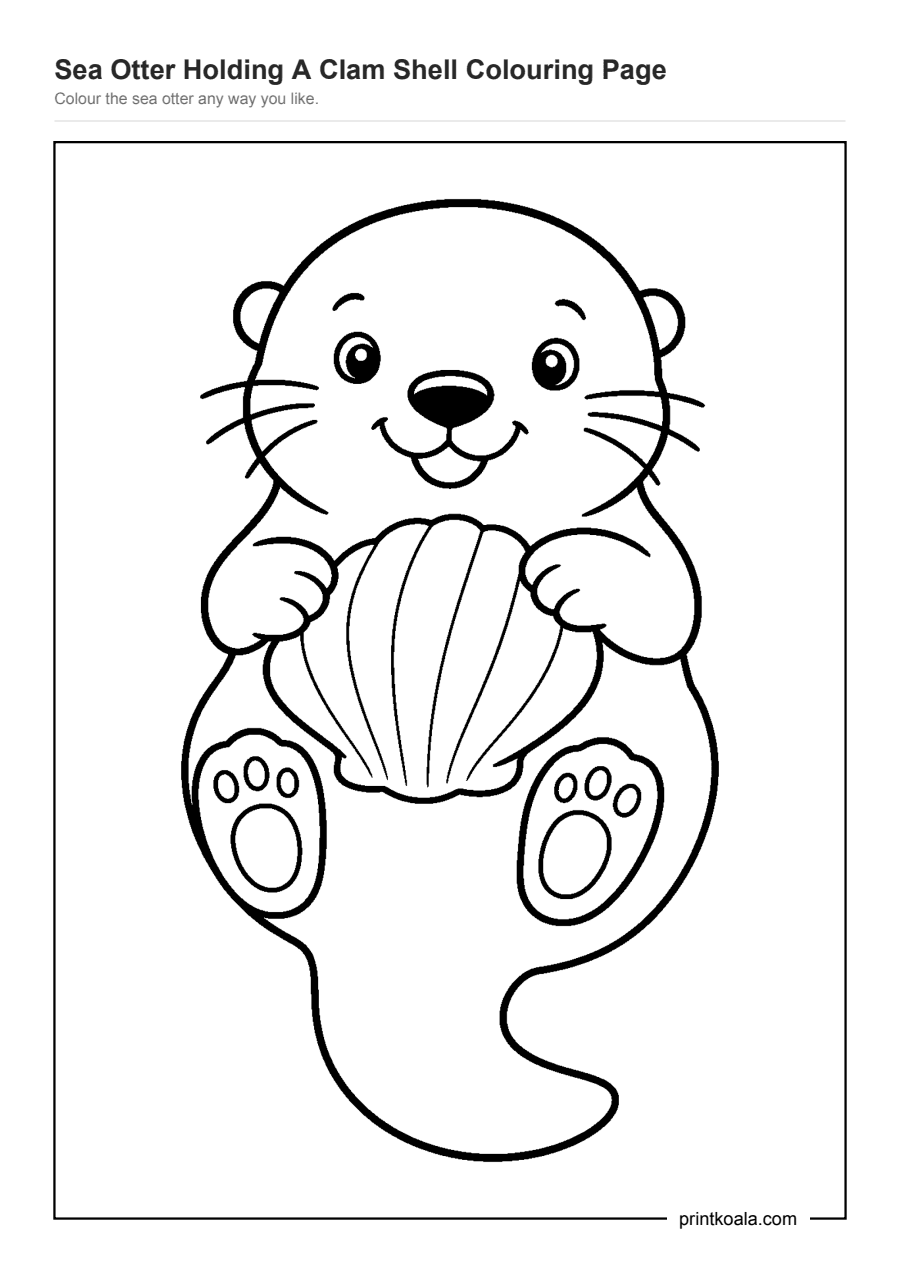
A front-facing sea otter floats on its back, holding a big ribbed clam shell in both paws, its webbed feet up and toe pads on show.
Free, no sign-up. Downloaded 6 times · A4 · Print at 100% scale
This otter faces straight out at you, floating on its back the way real sea otters do. Its two front paws are wrapped around a large ribbed clam shell held against its chest, and its two big webbed feet stick up on either side, each with three small toe pads to pick out. The round head has small ears, two dot eyes, a smiling mouth with a little tongue peeking out, and whiskers fanning out from both cheeks. Underneath it all, the body curves down into a wavy, ribbon-like tail that fills the bottom of the page.
Most of this sheet is generous open space: the belly, the head and the tail are all wide, rounded areas a young child can fill in with one color and barely lift the crayon. The clam shell is the one part that asks for more care, since its ridged lines break the shell into narrow stripes running from top to bottom. The paw pads and toe pads are small too, so they are a nice place for a parent to point and count together, or to hand over a second color once the big areas are done.
Because the outlines are thick and the otter takes up the whole page, this is an easy sheet best suited to toddlers and younger preschoolers who are still working on staying inside the lines. Older fours and fives who want more of a challenge can treat the shell stripes and toe pads as the tricky bit, while everyone gets the satisfaction of finishing a big, friendly-looking animal.
Start with the belly and head in one color, since they are the biggest areas. Save the clam shell for last and let your child pick a different color for it, then count the toe pads together as they go.