🎈 Animals Having Fun
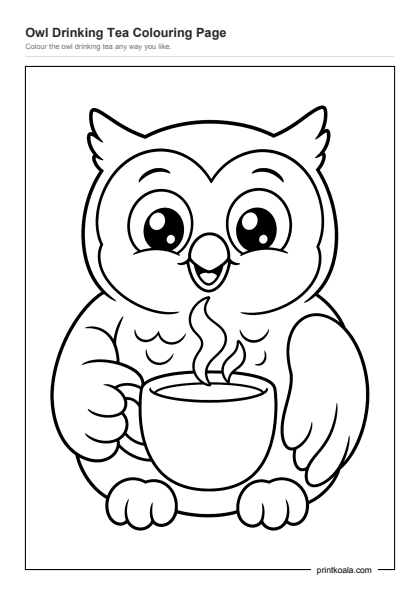
Owl Drinking Tea Coloring Page
Ages 2–57
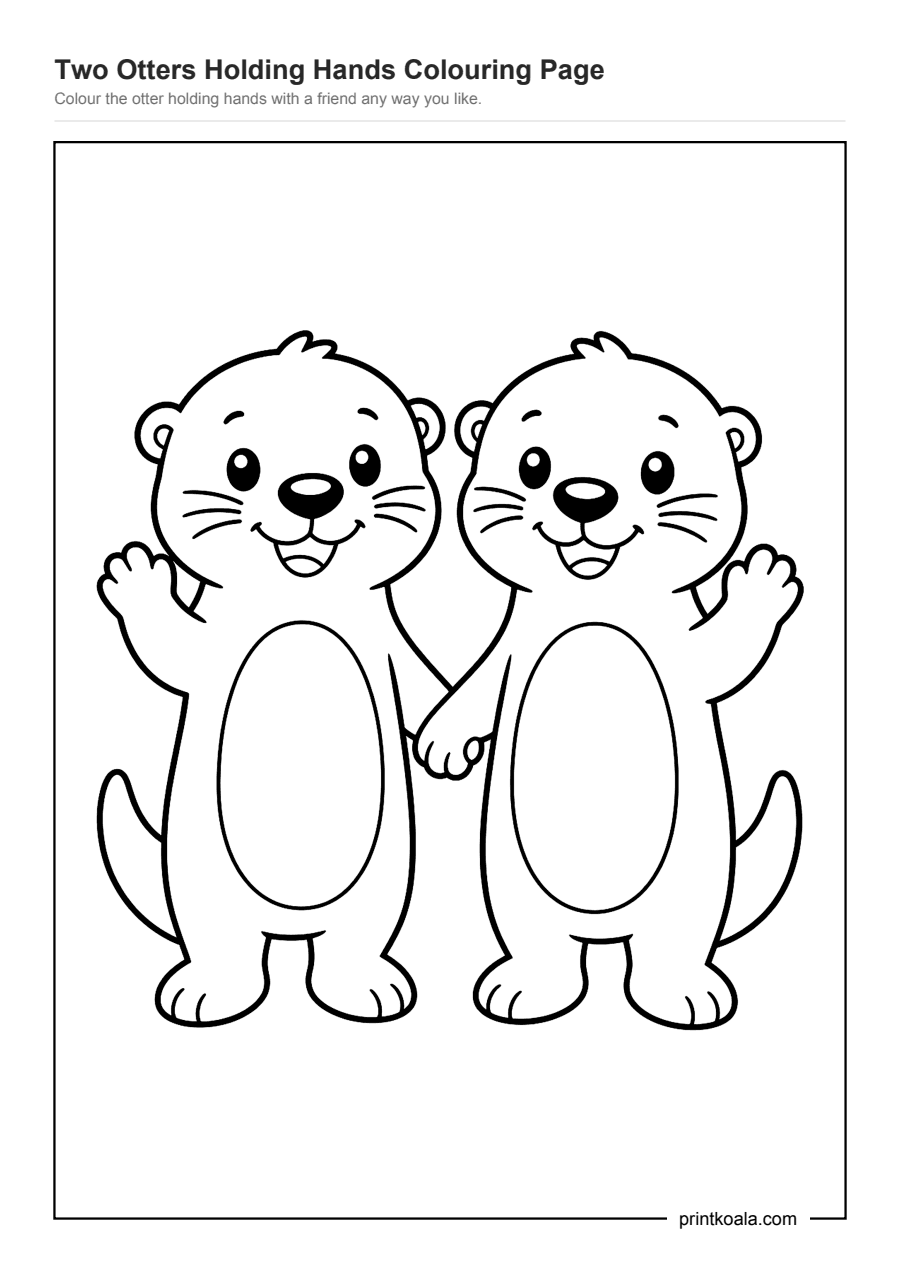
Two smiling otters stand side by side, paws joined in the middle and their free paws raised in a wave.
Free, no sign-up. Downloaded 3 times · A4 · Print at 100% scale
Two otters stand upright next to each other, the same height, facing forward. Their inner paws are joined low between them, and each otter lifts its outer paw in an open-fingered wave. Both have wide open-mouthed smiles, round eyes with a bright dot in each, small curved eyebrows, and three whisker lines fanning out on each cheek. Each otter has a large oval belly patch left open in the middle of its body, round ears, stubby back feet, and a tail curled off to the side. There is no background, so the whole page is just the two friends.
The big oval bellies are the obvious place to start, since they are the largest open spaces on the page and forgiving of wobbly strokes. From there a child moves on to smaller, trickier bits: the two round faces, the four ears, the whisker lines, and the paws, which take more care to stay inside such narrow shapes. Because the otters are drawn as a mirrored pair, a child can try giving each one a different color, or keep them matching, which is a nice thing to ask them about before they start. The joined paws in the center are a good prompt for a quick chat about what it means to hold hands with a friend.
This is a fairly gentle sheet. The thick, simple outlines and lack of background clutter make it easy going for a first-time colorer, while the whiskers and paw details give slightly older preschoolers something to slow down for. It suits a child coloring alone or two children coloring one otter each.
Start with the two belly ovals so your child gets an early win, then move to the faces and whiskers. If the whisker lines feel too fiddly, skip them or fill them in yourself afterwards.