🦄 Fantasy & Fairy Tale
Baby Phoenix Bird Coloring Page
Ages 3–56
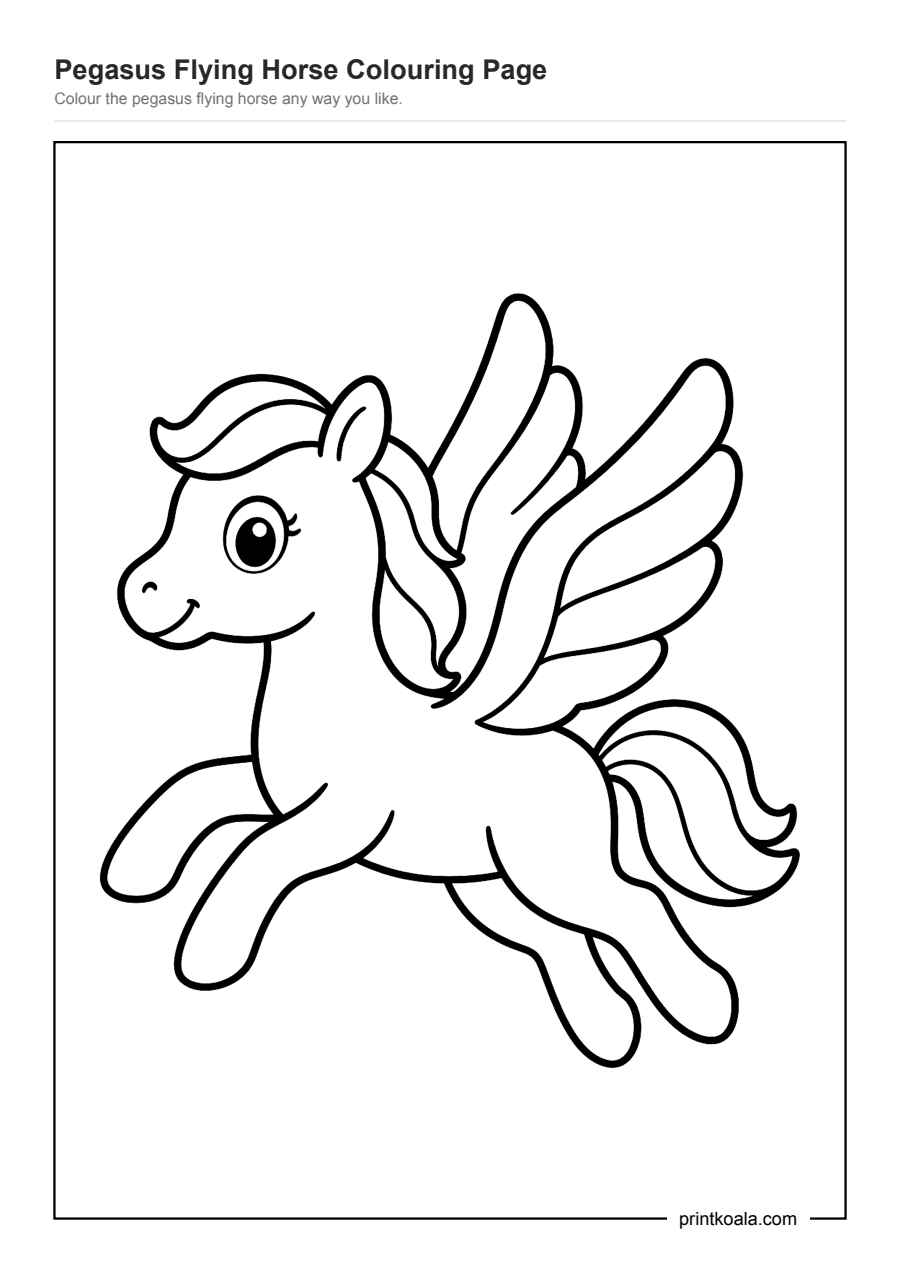
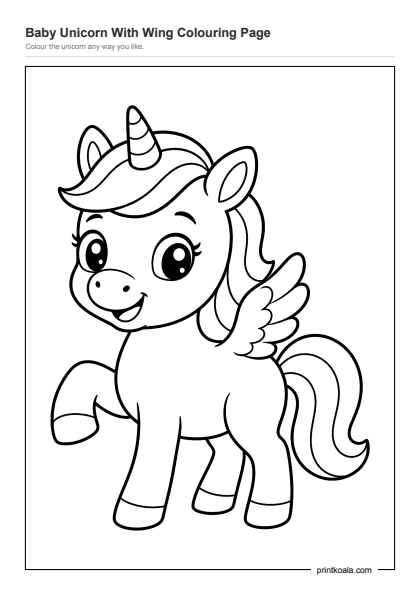
A smiling baby Pegasus caught mid-leap, one huge feathered wing spread wide, with a curling mane and a swishing tail to color.
Free, no sign-up. Downloaded 8 times · A4 · Print at 100% scale
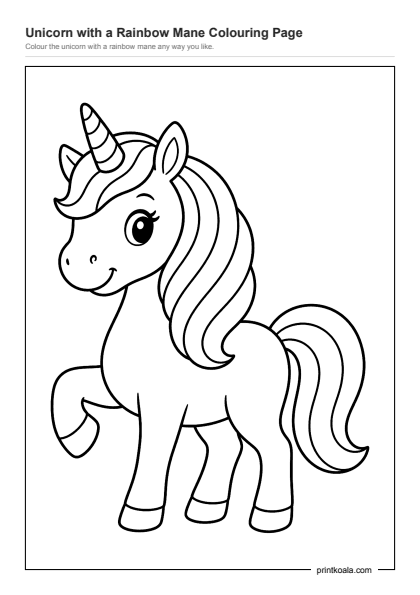
This Pegasus is drawn side-on, caught mid-leap with its front legs tucked up and back legs trailing behind, as if it has just left the ground. It has a big rounded head with one large eye and a curled eyelash, a small pointed ear, two dot nostrils, and a closed, smiling mouth. A swept-over forelock sits above the eye, and a wavy mane flows down the back of the neck in a few loose layers. The single wing dominates the page, stretched up and back with five or six long feather sections stacked one over the other. Behind the body, a tail made of several flowing, curled strands finishes off the pose.
What makes this one worth printing is the size of its spaces. The wing and the body are big, open, and easy to fill in with one color each, so a child can get a confident result fast without hunting for tiny gaps. The mane and tail bring in some gentle variety, since each flowing strand can be its own color if your child wants to mix things up, or left as one shade for a calmer finish. The face is the only part that asks for a steadier hand, with the small eye and nostril dots giving just enough detail to talk about without turning the page fiddly.
This sits on the easy end of the shelf. The outline is thick, the shapes are rounded and generous, and there are no cramped corners to catch a crayon. It suits a child who is still building control over a crayon or pencil and wants a page that looks finished quickly, while the layered wing feathers give slightly older preschoolers something a bit more interesting to work through.
Let your child start with the wing since it is the biggest space and gives a quick win. Save the eye and nostril dots for last, when their hand is warmed up, and let them pick a different color for each mane and tail strand if they want variety.