🐸 Reptiles & Amphibians
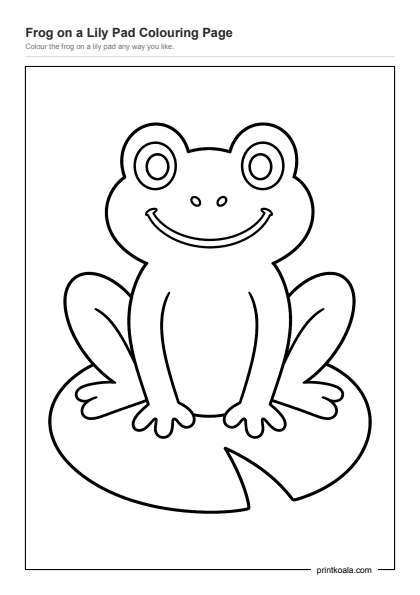
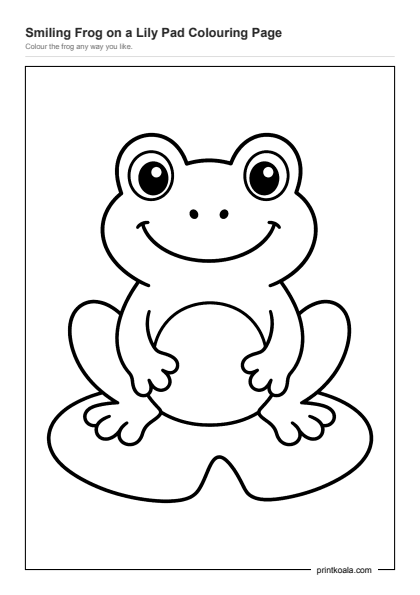
Smiling Frog on a Lily Pad Coloring Page
Ages 2–58
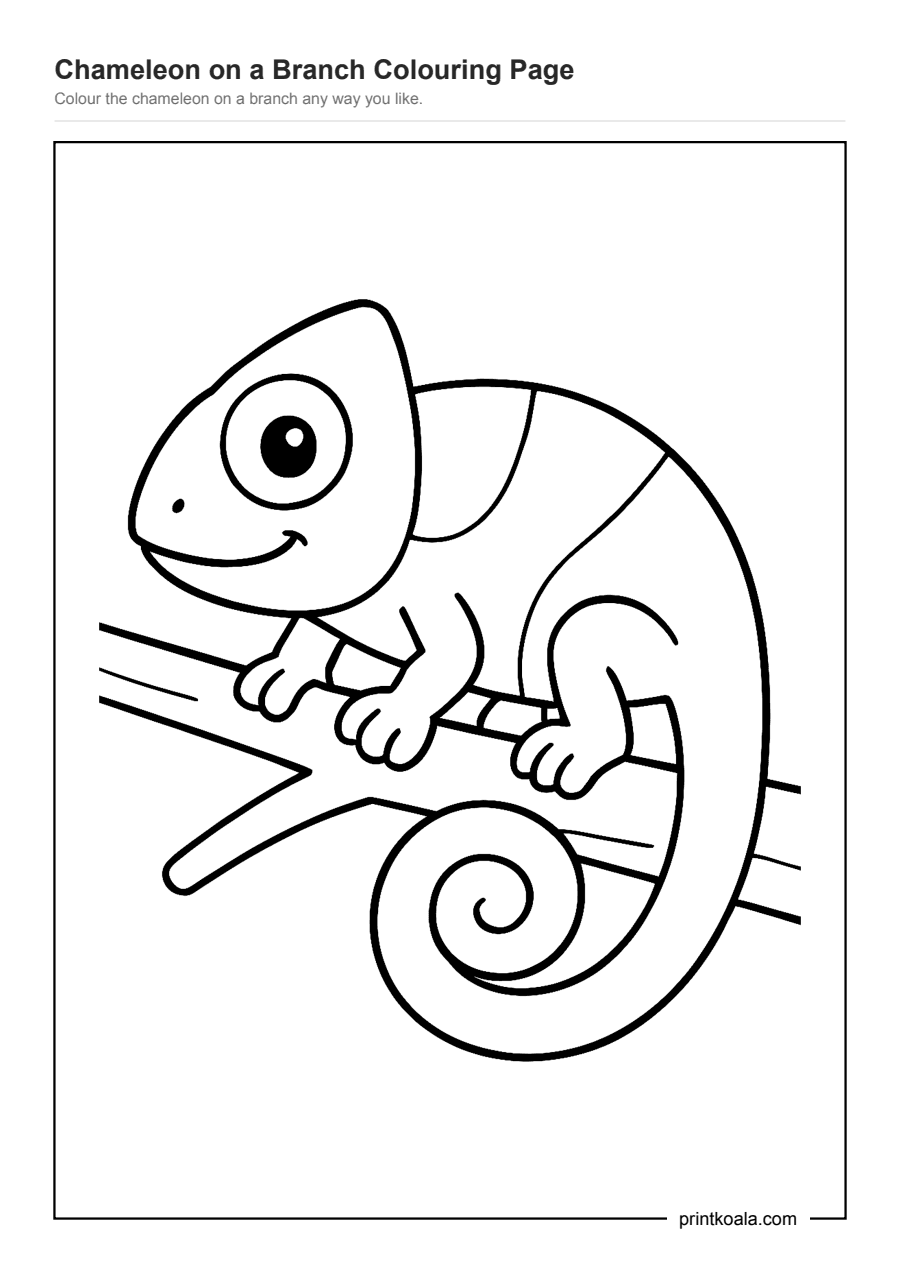
A big-eyed chameleon grips a branch with two curled feet while its tail coils into a tight spiral below.
Free, no sign-up. Downloaded 6 times · A4 · Print at 100% scale
This chameleon has climbed onto a branch and stopped there, two feet wrapped around the wood, its long tail curled into a neat spiral underneath. The head comes to a tall pointed peak, with one large round eye and a small dot for a nostril, and the mouth is drawn as a simple closed smile. A single curved line runs along the back of the head and down the spine, and the branch itself has a short broken stub poking off to one side, plus a few bark lines for texture. Nothing about the drawing is fussy: no scale pattern, no background clutter, just the animal and the branch it is holding onto.
What makes this one worth printing is the mix of shapes on offer. The body, head and tail spiral are all large, rounded spaces a young child can fill in with a few big strokes, while the feet, eye and branch stub are small enough to ask for a bit more care and maybe a different color. The tail's tight curl is the standout feature and gives a child something to talk about while they color, since chameleons really do curl their tails like this when resting. It also works well as a two- or three-color picture: one shade for the chameleon, another for the branch, perhaps a third for the eye.
The open, uncluttered line work makes this an easy sheet rather than a fiddly one, so it suits younger colorers who are still getting used to staying inside a line, as well as older preschoolers who want to finish something quickly and move on. There is no fine detail to strain over, which makes it a good first attempt at a reptile subject.
Let your child start with the big body first, since it is the easiest shape to stay inside. Save the tail spiral for last and suggest coloring it in one continuous curl from the outside in. If they go over a line, a contrasting color on the branch next to it will hide it.