🐙 Ocean & Sea Creatures
Crab Walking on the Beach Coloring Page
Ages 3–513
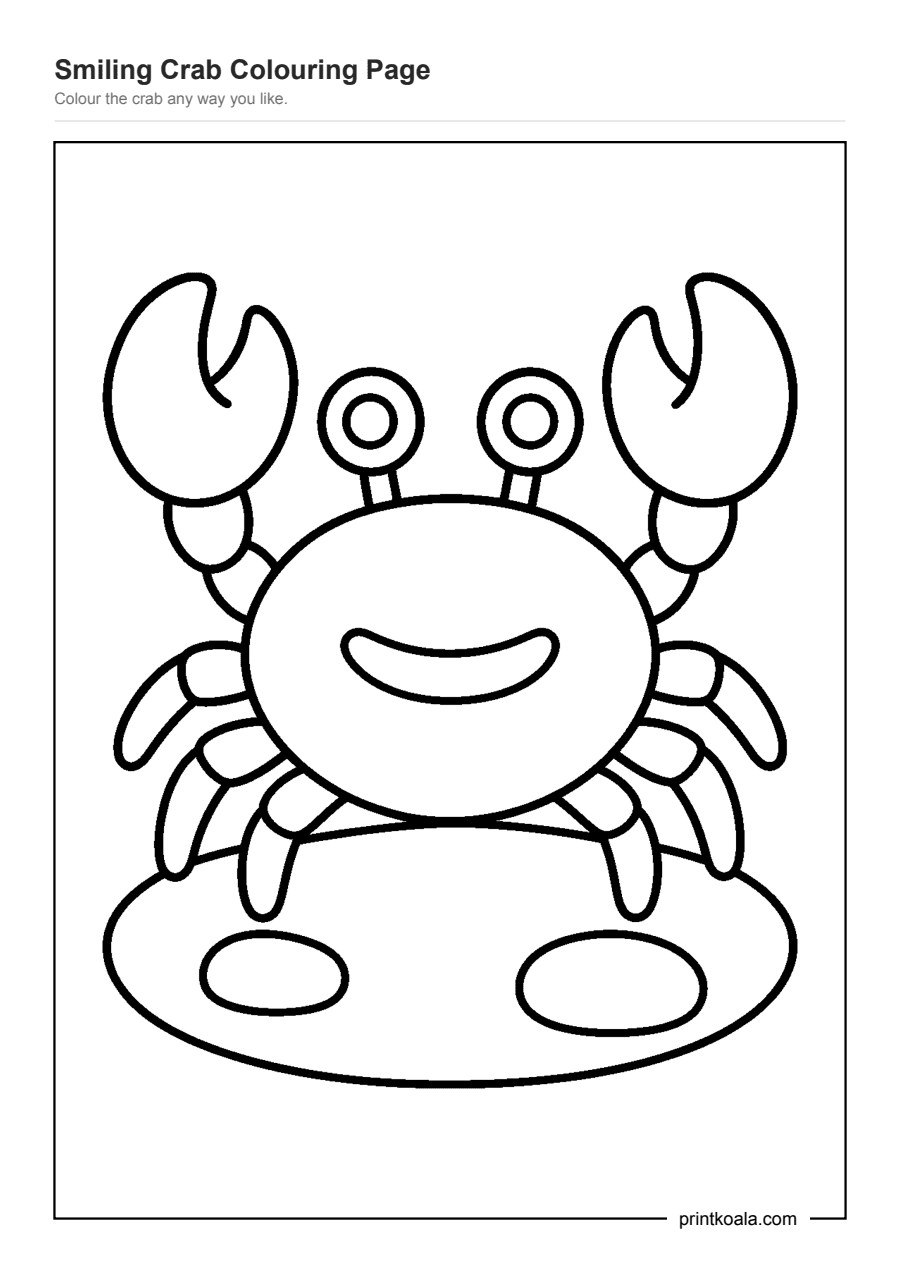
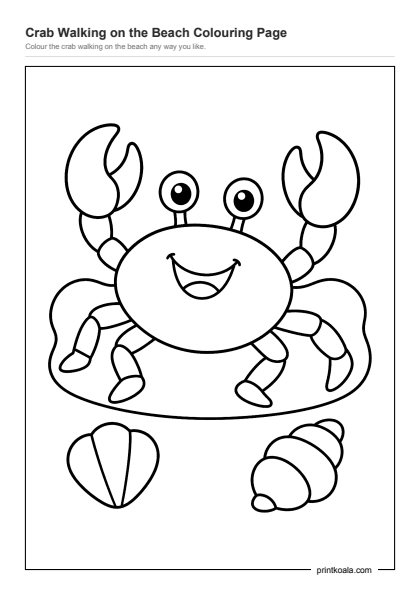
A big round smiling crab with two eyes on stalks, two segmented claws and eight legs, perched on a sandy mound with two pebbles.
Free, no sign-up. Downloaded 10 times · A4 · Print at 100% scale
This crab fills the page with one large oval shell and a wide curved smile, flanked by two thick claws held up like a shrug. Above the shell, two eyes sit on stalks, each drawn as a ring inside a ring. Underneath, four legs reach out on each side, every one broken into two or three segments, and the crab rests on a low sandy mound with two plain pebble shapes resting on it. Nothing overlaps and every outline is closed, so there's no guessing where one part ends and the next begins.
The appeal here is the size of the spaces. The shell alone is big enough for a toddler to scribble across in seconds without worrying about staying inside anything fussy, and the claws offer two more generous open areas. The legs and eye stalks are where the picture asks for more control, since each segment is its own small shape and a child coloring them one at a time will naturally start noticing how a crab's body is built in repeating parts. It's an easy page to talk over while coloring: where the eyes are looking, why the claws are held up, what the two pebbles on the sand might be.
This is one of the simpler sheets in the ocean set, with clean rounded shapes and no fine background detail to fill in. It suits a younger child working on their first full-page pictures, while the segmented legs and claws give an older preschooler enough small sections to keep their interest without becoming a chore.
Let your child start with the shell, since it's the biggest space and builds confidence fast. Save the small leg and claw segments for when they're ready to slow down, and use the two pebbles to talk about what a crab might find on the sand.