🐄 Farm Animals
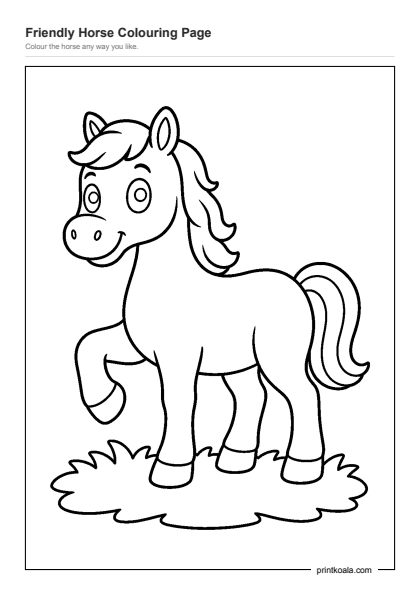
Friendly Horse Coloring Page
Ages 2–513
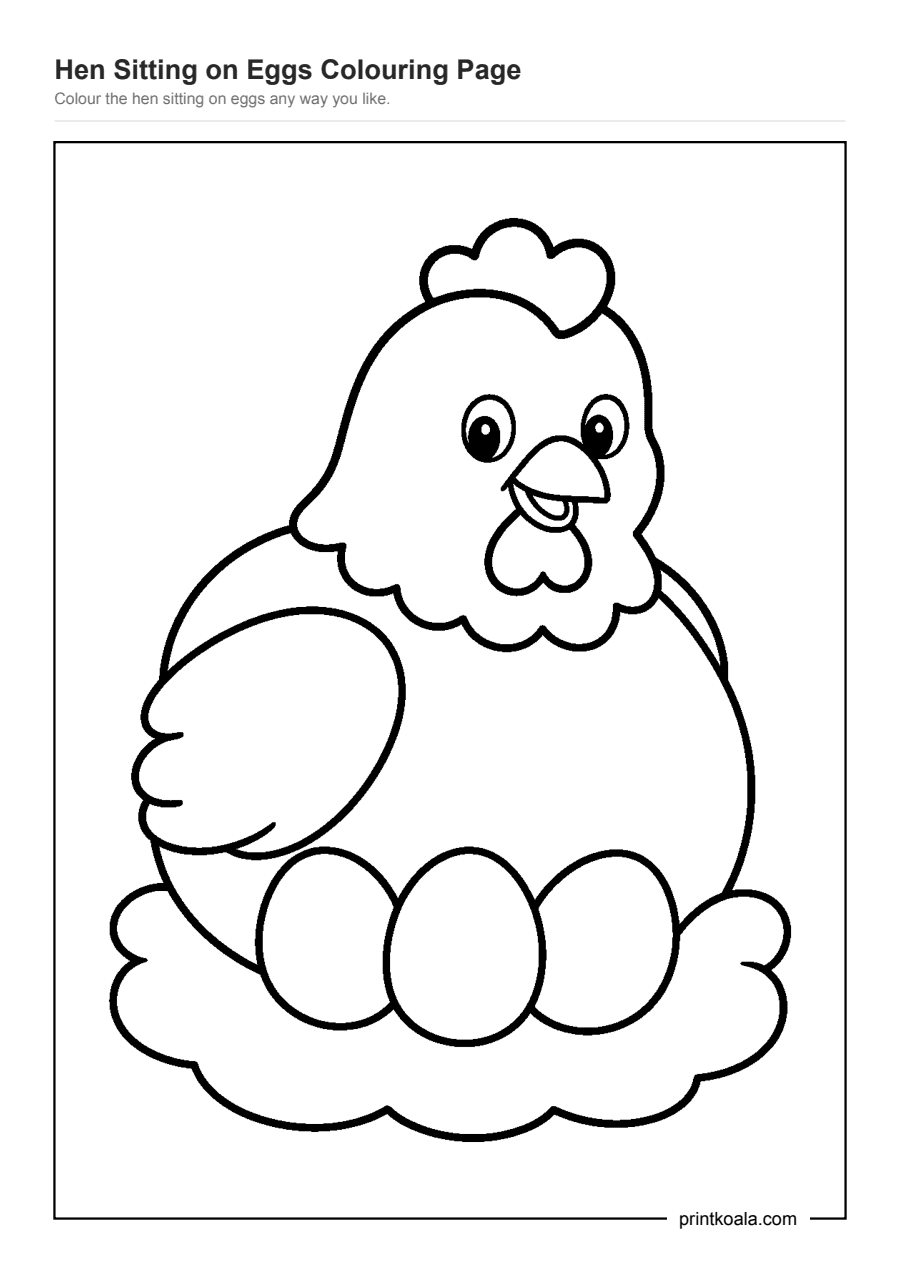
A plump hen faces forward with one big wing out, sitting on three large eggs tucked into a scalloped nest.
Free, no sign-up. Downloaded 13 times · A4 · Print at 100% scale
This hen looks straight out at you, round and comfortable, with a three-pointed comb on top of her head and a small bumpy wattle under her beak. Her beak is open just a little, as if she is clucking. One large wing sits out to the side of her body like a folded fan. Underneath her, tucked between her body and the ground, are three big oval eggs, and the whole scene rests on a soft, scalloped nest shape.
The body and wing are the two biggest spaces on the page, so a child can get in a lot of coloring without having to stop and start. The three eggs are a nice bonus job: they are the same shape and size, which makes it easy for a child to give each one its own color and then count them back to you when they are done. The comb, wattle and eyes are smaller and take a steadier hand, but there are only a few of them, so they do not turn the page into a chore.
This one sits on the easy side. The outlines are thick and the small bits are kept to the hen's face, so a child who tends to scribble outside the lines still has plenty of room to succeed. It suits toddlers who are just starting to color as well as three and four year olds who want a page with a bit more going on than a plain animal shape.
Let your child start with the hen's body or wing, since those are the biggest, easiest spaces. Save the comb and wattle for last, as they are the fiddliest bits. Ask them to pick a different color for each of the three eggs so they can count them once finished.