🐄 Farm Animals
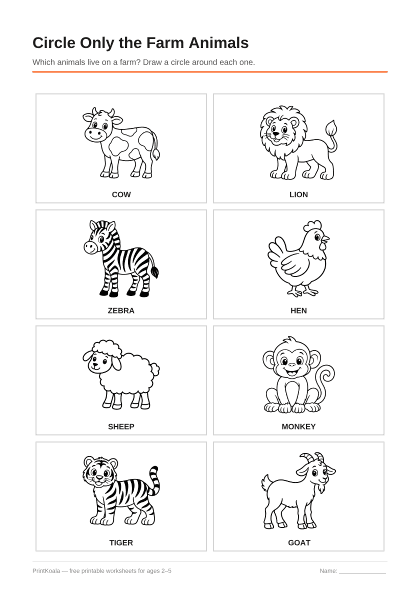
Circle Only the Farm Animals
Ages 3–57
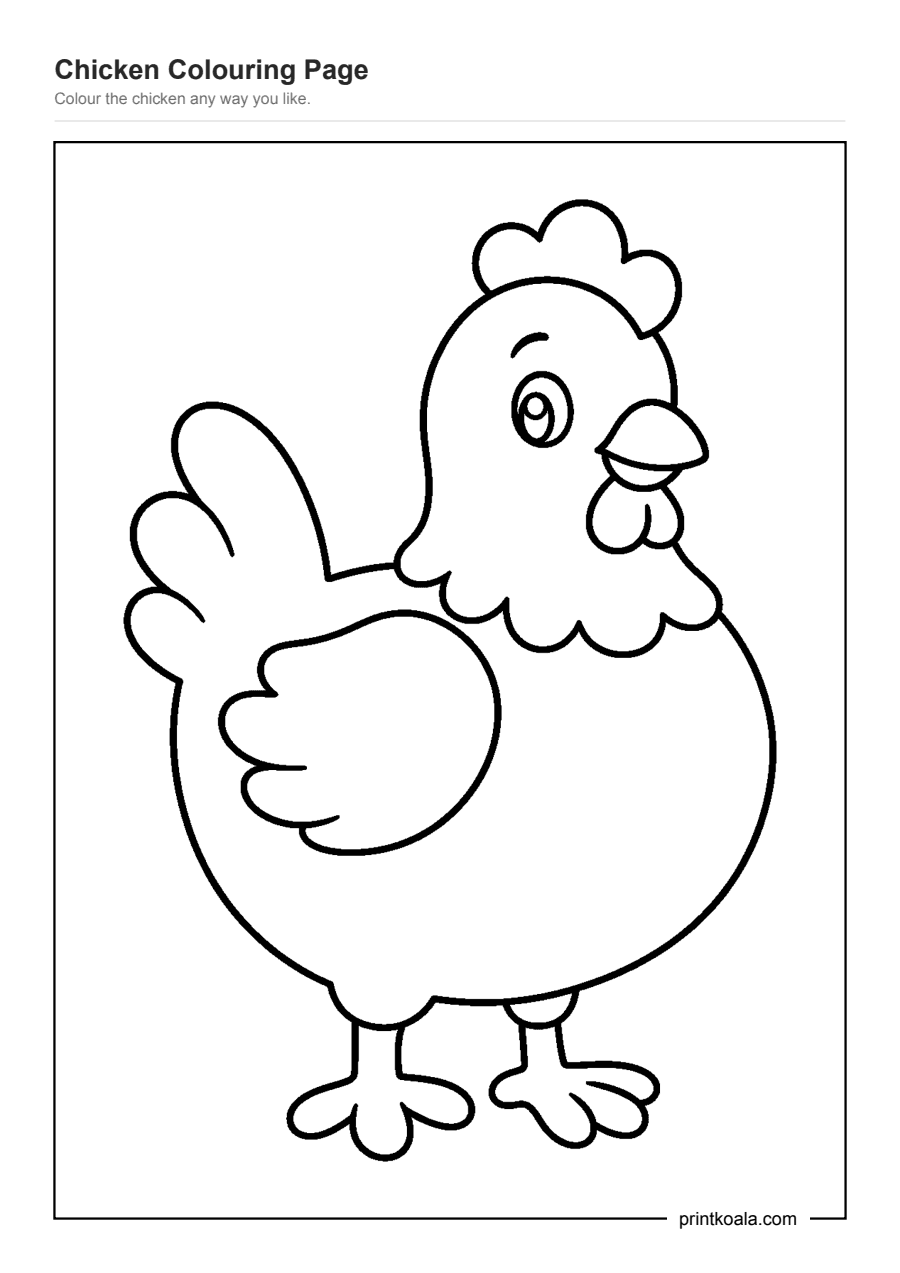
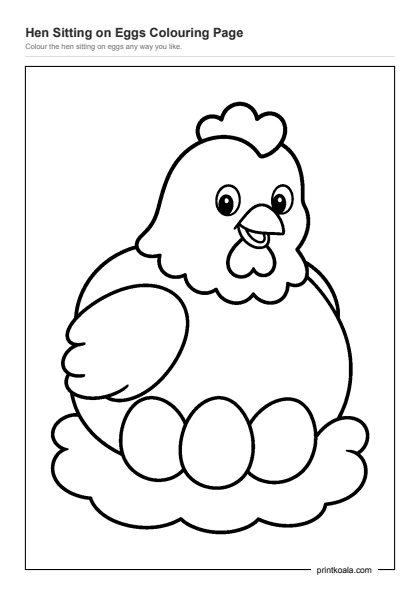
A plump hen stands with her tail feathers swept up in a curving plume and one round wing resting on her side.
Free, no sign-up. Downloaded 10 times · A4 · Print at 100% scale
This chicken stands still and faces out at whoever picks up the crayon, with a big curved plume of tail feathers swept up behind her and a single oval wing tucked against her round belly. Her head carries a small three-bumped comb, one round eye, a short pointed beak and a tiny wattle underneath. Two sturdy legs end in feet with three splayed toes each, planted flat on the page with no ground line or background scenery to fill in - just the chicken, large and alone.
The body and the tail plume are the main event: big, closed, curving spaces that give small hands plenty of room to color without having to stay inside anything too fiddly. The comb, wattle, beak and toes are smaller jobs that call for a steadier hand and a bit more patience, so the page quietly offers both an easy win and a slightly trickier bit without ever getting cramped. It's also an easy picture to talk about while coloring - why the tail sticks up like that, how many toes are on each foot, what color a chicken "should" be.
Because the outlines are thick and the small sections are kept to a minimum, this sits at the easier end of the farm animals set - a good one for a toddler still learning to hold a crayon, or a preschooler who wants to finish a picture in one sitting without getting stuck on tiny gaps.
Let your child start on the body or tail plume for a quick, satisfying win, then move to the smaller comb and wattle last, when their grip is warmed up. Ask them to count the toes on each foot as they go.