🐄 Farm Animals
Rooster Crowing on a Fence Coloring Page
Ages 2–533
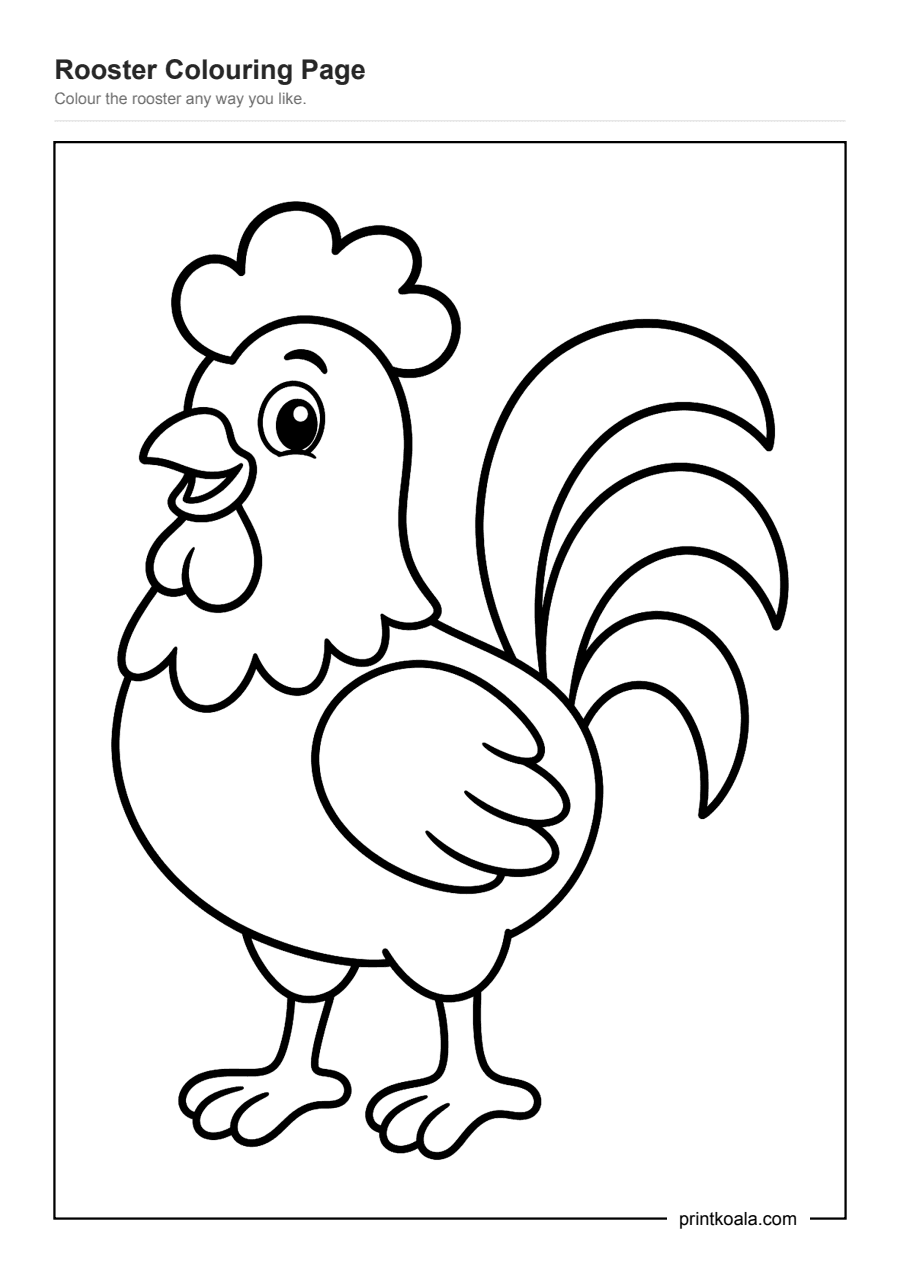
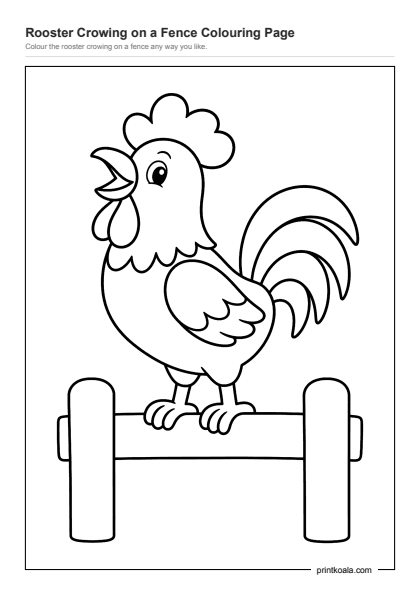
A cheerful standing rooster with a bumpy comb, a round tucked wing and four big sweeping tail feathers fanning out behind him.
Free, no sign-up. Downloaded 15 times · A4 · Print at 100% scale
This rooster stands side-on with his beak open, as if mid-crow, one round eye looking out at the page. On his head sits a bumpy comb, and under his beak hangs a two-lobed wattle. His body is one large rounded shape, broken only by a big oval wing folded against his side with a few simple feather lines inside it. Behind him, four wide tail feathers curve up and out in a fan, each one a smooth open band rather than a cluster of narrow spikes. He stands on two legs with clawed feet planted flat on the ground.
Most of this page is made up of generous, uncluttered spaces: the body, the wing, and each of the four tail feathers can be filled in with a handful of confident strokes. The comb and wattle give a child two smaller rounded bits to slow down for, and the feet and beak are small enough to need a bit more care with the crayon tip. It is a good page for talking through color choices out loud, a red comb, a yellow beak, an orange or brown body are the obvious ones, but there is nothing stopping a purple rooster if that is what gets picked.
Because the shapes are large and there is no fine feather detail to fuss over, this sheet sits on the easier end of the farm animal set and suits a younger colorer working on staying inside a bigger, curved outline. Older preschoolers who want a bit more to do can use a different color for each of the four tail feathers instead of coloring them all the same.
Start with the big body and wing, then move to the four tail feathers, giving each one its own color if your child wants more of a challenge. Save the comb, wattle and beak for last, since those smaller shapes need the steadiest hand.