🦜 Birds
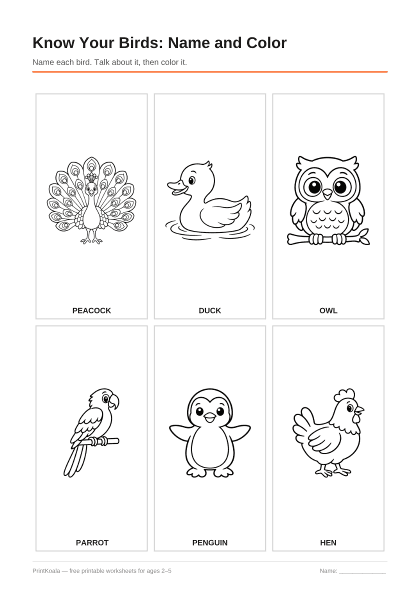
Know Your Birds: Name and Color
Ages 3–52
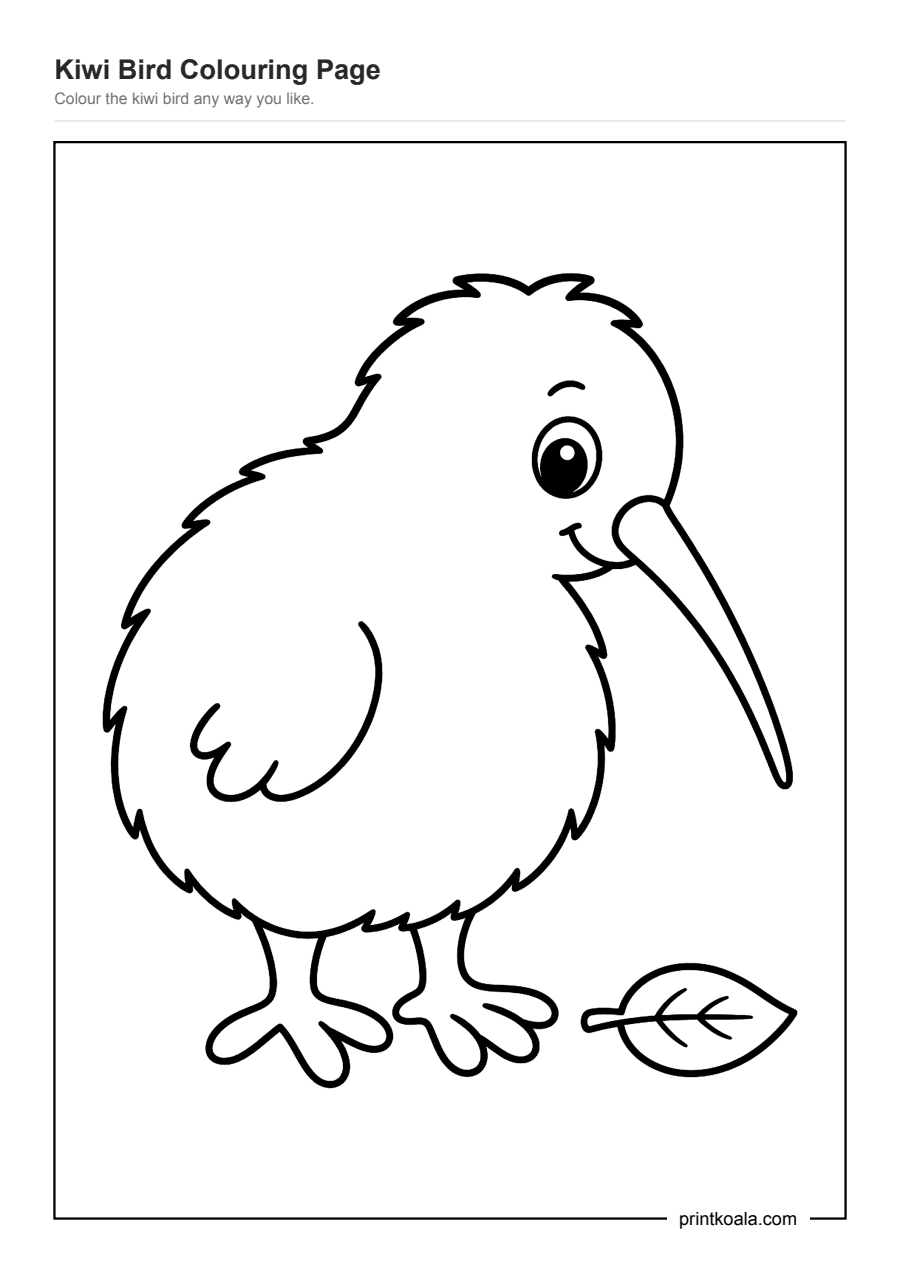
A round, fluffy kiwi bird with a long curved beak stands beside a single veined leaf, its body outlined in soft feather spikes.
Free, no sign-up. Downloaded 7 times · A4 · Print at 100% scale
This kiwi is drawn side-on, all plump body and no fuss. Its outline is a big rounded oval with small jagged spikes running round the edge to show its shaggy feathers, and it stands on two sturdy legs with clawed, splayed feet. The head is small next to that body, with one large round eye, a curved eyebrow line above it, a tiny smiling beak-line, and a long thin beak that stretches out and down almost to the ground. A small stubby wing sits tucked against the side of the body. Off to the right, on its own, is a single leaf with a stem and veins branching out from the middle.
The body is the main event here: one wide, unbroken space that a child can fill in with a single color and barely have to lift the crayon. The feather spikes round the edge and the toes on each foot are where things get fiddly, so the page naturally moves a child from big sweeping strokes to smaller, more careful ones without changing sheets. The leaf gives them a second color to reach for and something separate to talk about, such as what a kiwi might peck at, or where the leaf fell from.
It sits on the easier end of the shelf. The wide body space suits a younger child still getting the hang of staying inside lines, while the beak, feet and leaf veins give an older preschooler a bit more to concentrate on. Good for a first go at a bird that does not look like every other bird on the page.
Let your child color the round body first in one go, then move to the beak and feet last, since those thin parts need more care. If the spiky feather edge feels fiddly, skip it and color it a solid line with a marker instead.