🦜 Birds
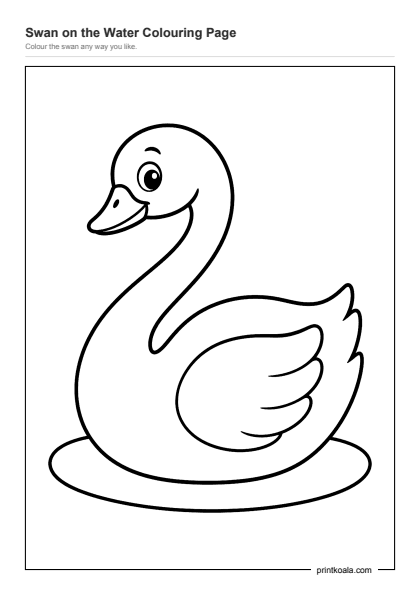
Swan on the Water Coloring Page
Ages 2–519
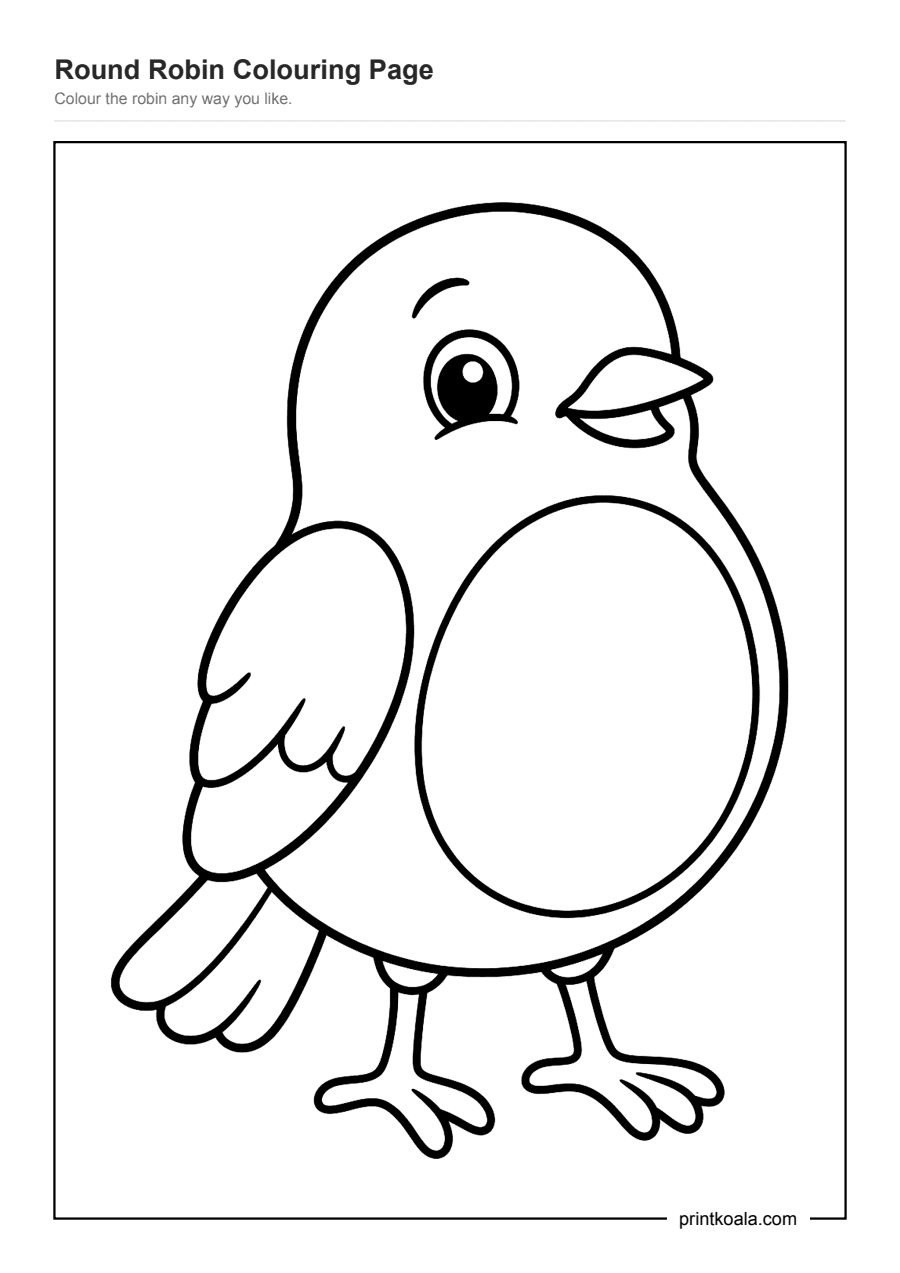
A plump robin stands facing right, with one large oval chest patch, a folded wing and two thin legs to color.
Free, no sign-up. Downloaded 16 times · A4 · Print at 100% scale
This robin is drawn front-on but turned slightly, standing on two thin legs with three-toed feet planted apart. Its body is almost egg-shaped, dominated by one big oval patch on the chest, the kind of space usually filled in with a robin's orange-red. Above that sits a round head with a single large eye, a short curved eyebrow stroke, and a small pointed beak held slightly open. One wing is folded against the side, built from three layered feather curves, and a fan of five longer feather strokes trails down at the tail. There is no branch, nest or background scene here, just the bird on a plain white page.
The chest patch and the head are the kind of large, open shapes a three-year-old can fill without much steering, good for a first go with a new pack of felt tips. The wing and tail feathers are smaller and layered close together, so staying inside them takes a steadier hand and is a better fit for a child who has already had some practice not coloring over the lines. Because the shapes are so clearly separated, it is also an easy page to talk through before you start: which bit is the tummy, which bit is the wing, why a robin's chest is red and its back is more brown.
There is nothing tricky about this sheet. It suits a preschooler working alone on the big chest and head, with an adult or older sibling on hand for the narrower feather sections if they want help keeping neat. It works fine as a quick five-minute page rather than a big sit-down project.
Let your child start on the big chest patch first, it is the easiest space to fill confidently. Save the layered wing and tail feathers for last, and talk about why a robin's front is red while its back and wings stay browner.