🦜 Birds
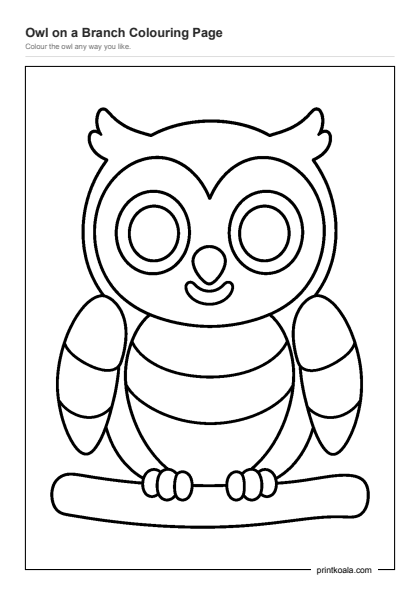
Owl on a Branch Coloring Page
Ages 2–58
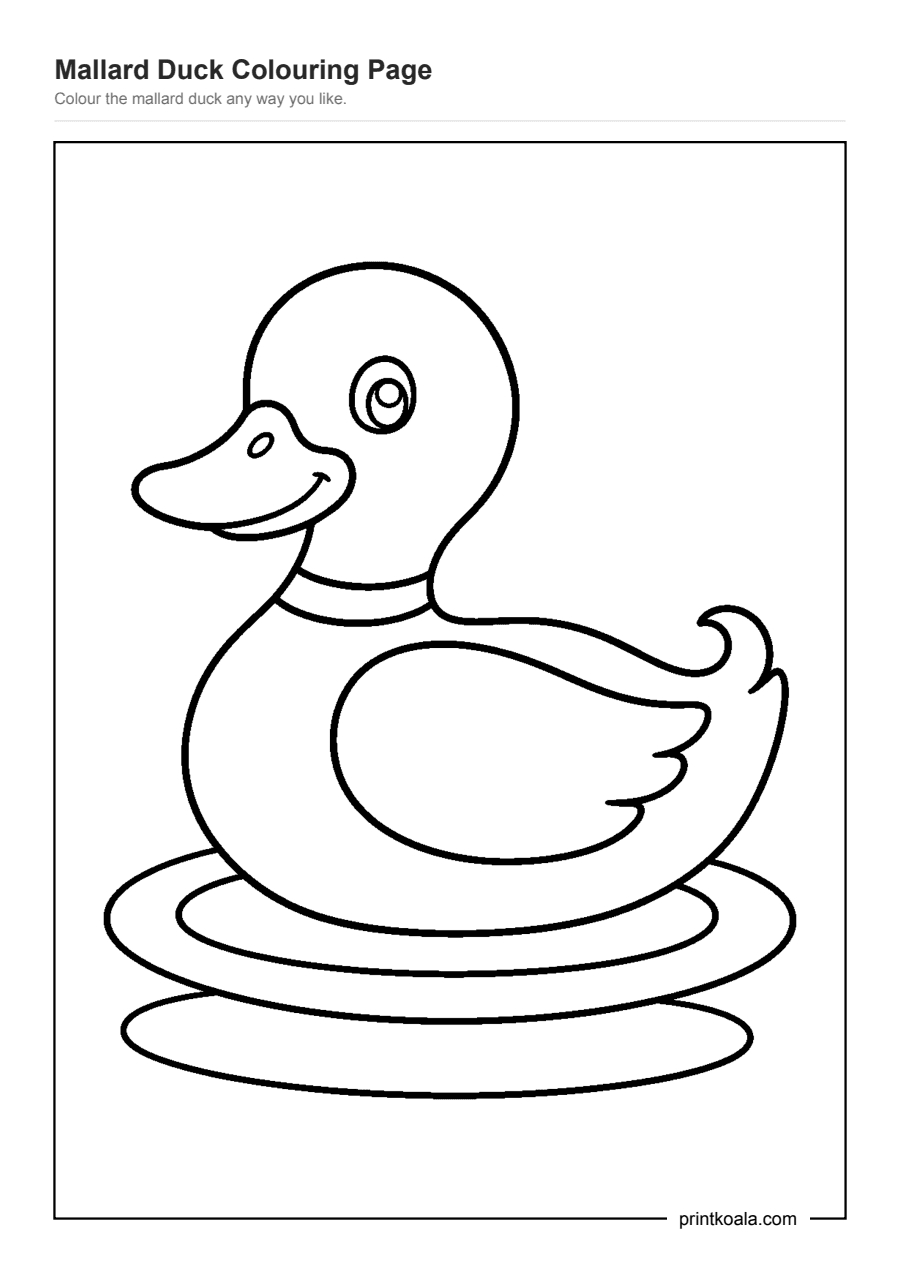
A plump mallard duck floats on rippling water, with a curled wing tip, a neck ring and one big round eye to color.
Free, no sign-up. Downloaded 8 times · A4 · Print at 100% scale
This mallard sits low in the water, facing left, with a big rounded head, a wide smiling bill and one large eye made of two circles. A thin ring runs around its neck, and its single folded wing sweeps back along the body before curling up into a little wave near the tail. Underneath the duck, three curved lines ripple across the page to show the water it is sitting on.
Most of this page is one big shape: the body and wing together take up the whole middle of the sheet, so a child can color it in with long strokes without worrying about staying inside tiny lines. The bill and the eye are smaller jobs that reward a slower hand, and the curled wing tip and the ripple lines give a natural place to swap in a second or third color, say yellow for the bill and blue for the water. It is also an easy picture to talk about while coloring: where the neck ring goes, why the wing folds back, what the ripples mean.
There is nothing fiddly here. No feathers to pick out one by one, no background clutter, just a duck and some water. That makes it a good fit for the youngest colorers, or for the end of a session when hands are getting tired but a child still wants to finish something.
Start with the big body and wing so your child gets an early win, then move to the smaller bill and eye. Save the thin ripple lines for last, since they need a steadier hand. If the crayon slips outside the lines, let it go.