🦜 Birds
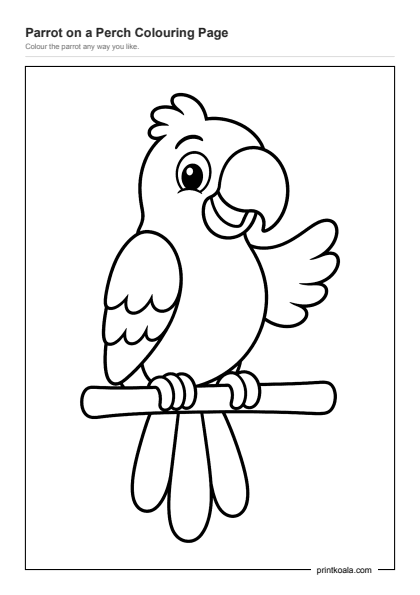
Parrot on a Perch Coloring Page
Ages 3–510
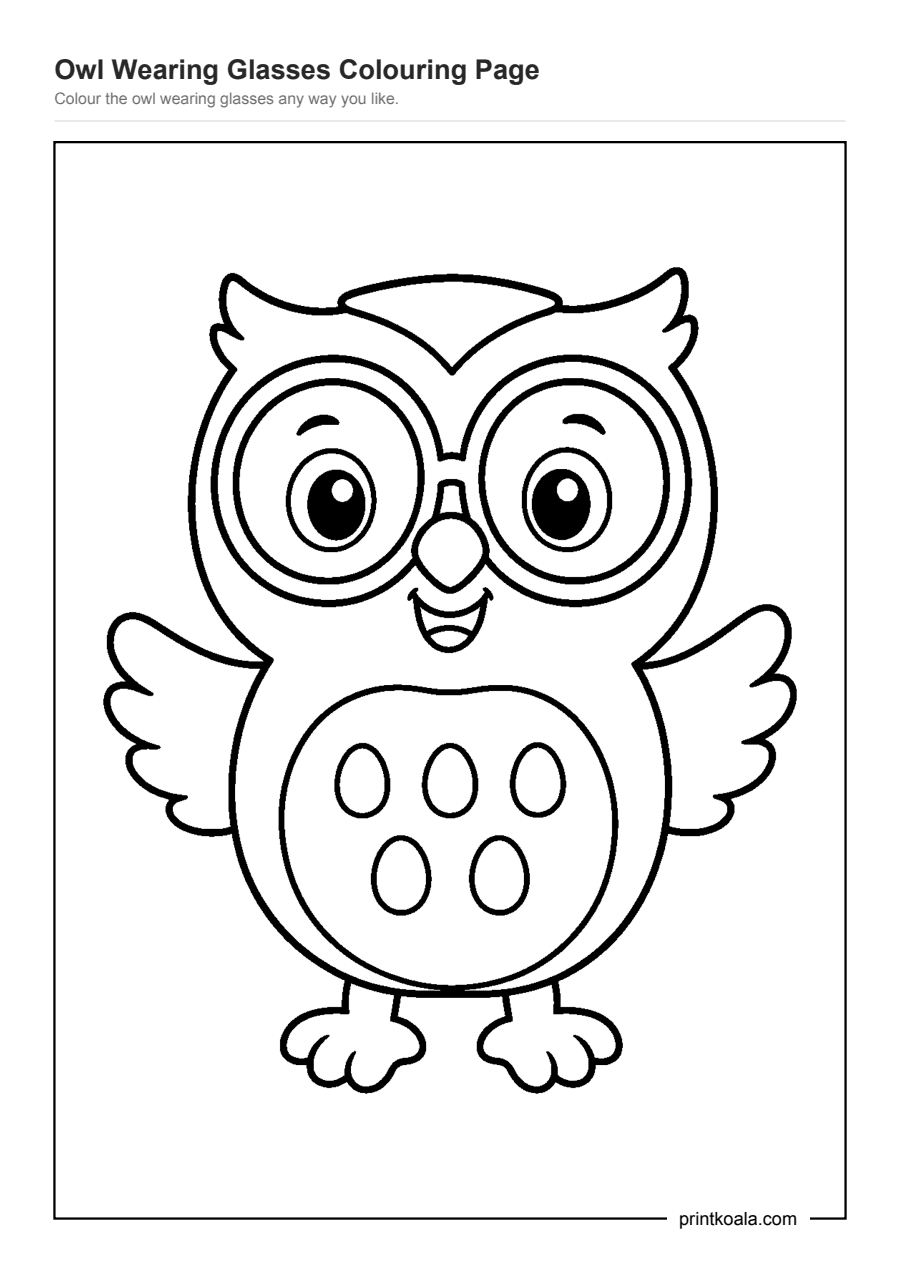
A round, big-eyed owl in oversized glasses stands with both wings spread, its belly patch dotted with five simple oval spots.
Free, no sign-up. Downloaded 5 times · A4 · Print at 100% scale
This owl faces straight out at the reader, standing on two clawed feet with both wings lifted out to the sides as if mid-flap. A pair of large round glasses sits over its eyes, each lens drawn as a double circle with a dark pupil and a small white highlight dot, and a thin curved eyebrow line above each one. Between the lenses is a small rounded beak, and underneath it a neat open-mouthed smile. On top of the head sit three simple feather tufts, one pointed shape on each side and a V-shaped one in the middle. The chest is one big outlined patch holding five oval spots, three across the top row and two below them, and the rest of the body is bare, rounded space on either side of the wings.
There is a good mix of shapes here for little hands. The body, wings and glasses are large and easy to stay inside, so a child who is still learning to control a crayon has plenty of room to succeed early on. The five belly ovals and two pupils are much smaller and sit close together, which asks for a slower, more careful hand and a finer grip on the crayon. It is also a page that invites a bit of chat while coloring, whether that is picking a color for the glasses frames, deciding if all five belly spots should match, or giving the owl feathers that do not look like any real bird's.
Because the shapes are chunky and the outlines are thick and unbroken, this sheet sits on the easier end for preschoolers, while the smaller pupils and belly ovals give slightly older children something to slow down for. It suits a three or four year old working alone just as well as a younger child coloring the big spaces while an adult handles the fiddly bits.
Start with the two wings and the round body, since they are the biggest spaces and build confidence fast. Save the five belly ovals and the eye pupils for last, as they need the steadiest hand. If a small oval gets messy, color over it in a darker shade rather than starting again.