🦜 Birds
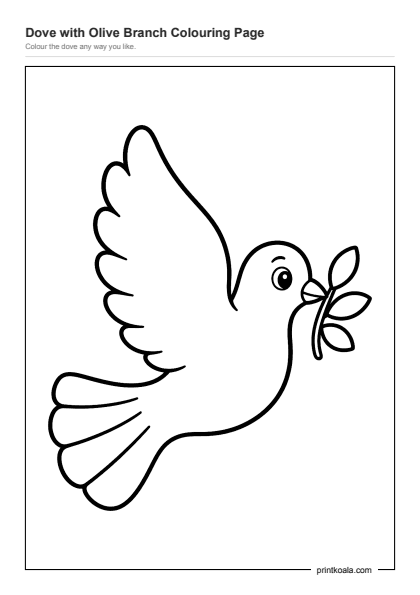
Dove with Olive Branch Coloring Page
Ages 2–513
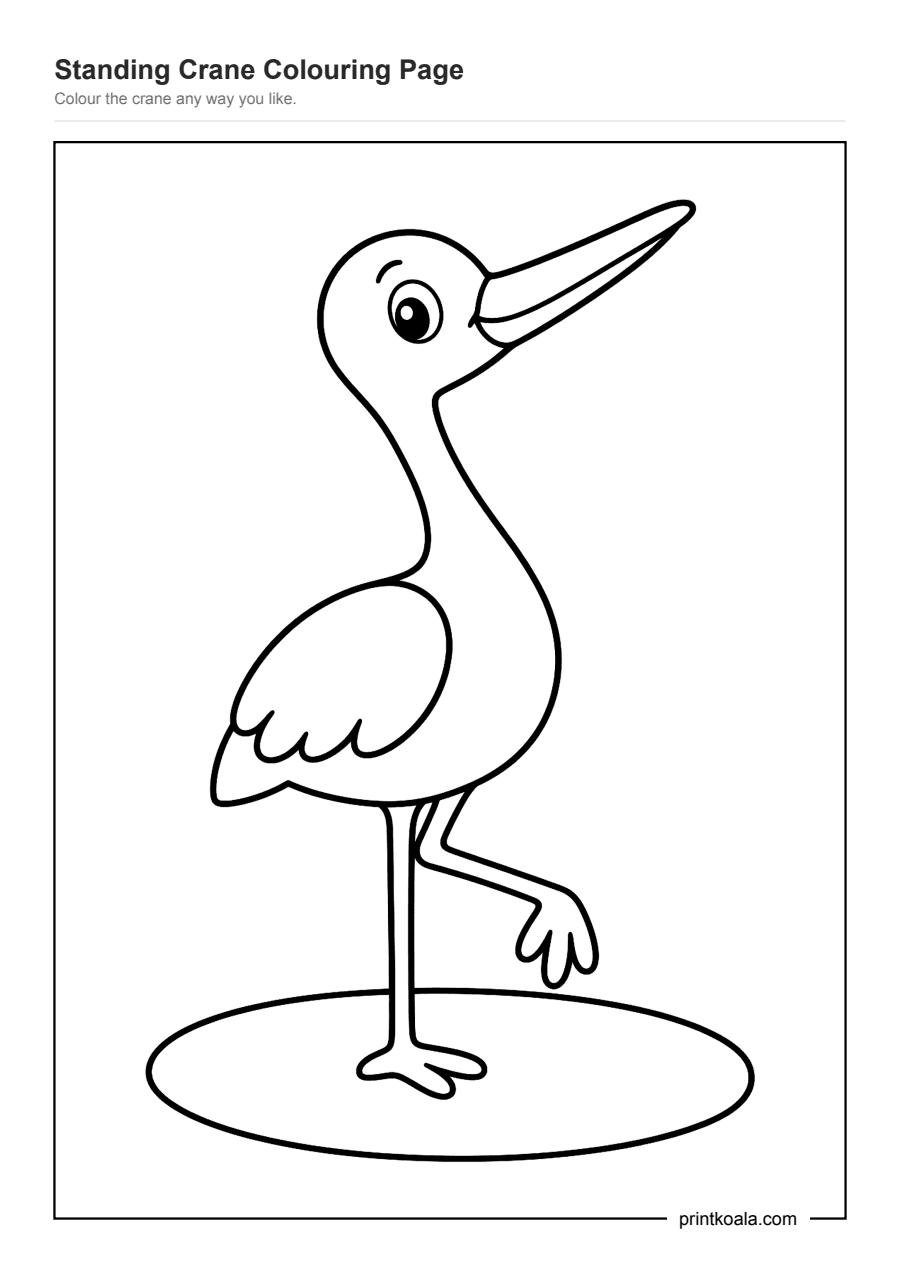
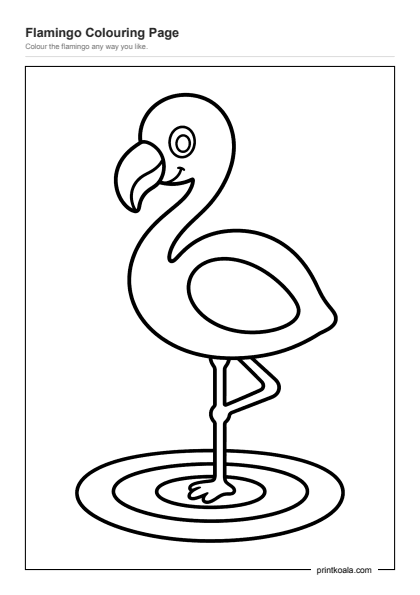
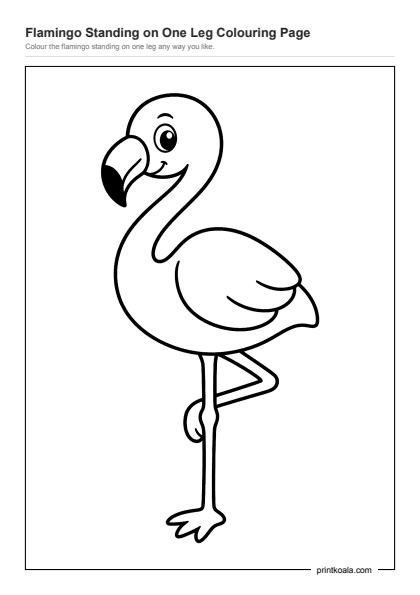
A cartoon crane balances on one leg with its other foot lifted, long beak pointed skyward, standing on a plain oval patch of ground.
Free, no sign-up. Downloaded 9 times · A4 · Print at 100% scale
This crane stands on one straight leg with the other bent up and forward, three little toes showing on the raised foot. Its neck curves in a long S-shape up to a round head with one big oval eye and a thick, pointed beak tilted up and to the right. The body is one large rounded shape with a single folded wing sitting on top, marked out by three scalloped feather lines. The whole bird stands on a plain oval base, like a patch of ground or a puddle, with nothing else drawn in the background.
The appeal here is the balance of big and small. The body, neck and wing are broad, closed shapes that a child can fill in with one confident color and not worry about staying inside tiny lines. Then there are a few smaller spots that reward more care: the eye, the three feather scallops on the wing, and the thin legs and toes. It is a nice page for talking about how a crane stands on one leg, and for counting the toes on that raised foot.
Compared to other bird sheets in this set, this one sits on the easier side. The shapes are large and uncluttered, there is no background scenery to fill in, and the thin legs are the only part that calls for a steadier hand. It suits younger preschoolers coloring mostly on their own, and older ones who want to add detail to the beak, eye and feathers.
Let your child color the big body and neck first, then save the thin legs and beak for last, once their hand is warmed up. If the legs wobble outside the lines, a thicker crayon over the top hides it well.