🦜 Birds
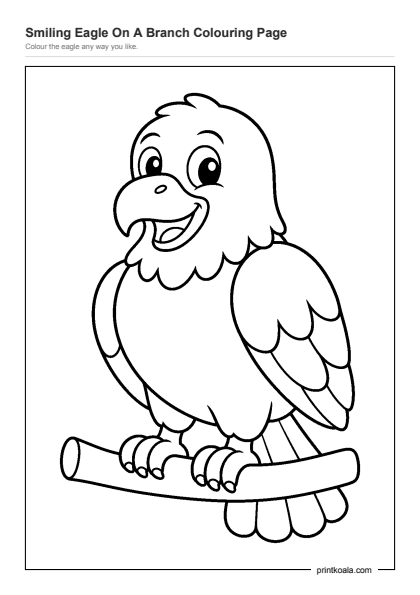
Smiling Eagle on a Branch Coloring Page
Ages 2–510
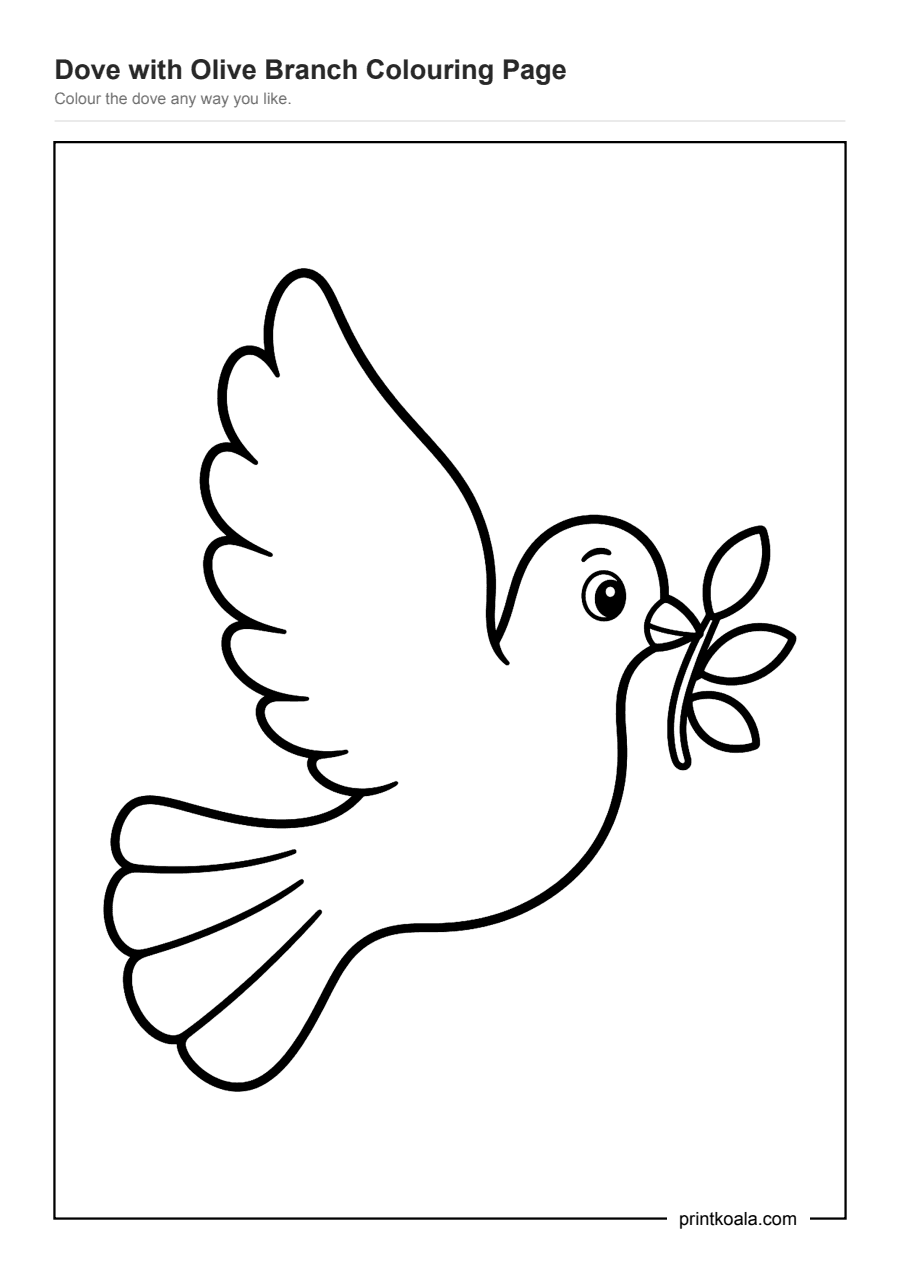
A flying dove with one big raised wing and a fanned tail, holding a small olive twig with six leaves in its beak.
Free, no sign-up. Downloaded 13 times · A4 · Print at 100% scale
This dove is caught mid-flight, angled up and to the right, with its round little eye and closed beak clasping a slim olive twig. The twig carries six simple leaves in two loose clusters, so there's a bit of fine coloring to balance out the rest of the page. One wing sweeps upward and is drawn in five scalloped feather sections, while the tail fans out at the bottom left in five more broad feather shapes. The body itself is one smooth, rounded curve with no feather lines at all, just open white space waiting for a single color.
That mix is what makes the page useful. The body and the big top feather of the wing are large enough for a two or three year old to color without much fuss, while the smaller wing scallops, the tail feathers, and the olive leaves give an older preschooler somewhere to slow down and stay inside the lines. It's also a nice page to talk over while you color: ask what color a dove should be, why it might be carrying a leafy twig, or count the six leaves together before the crayons come out.
The line work is bold and every space is closed, so there's no tricky shading or overlap to navigate. It sits on the easier side for a bird page, thanks to the smooth body, but the twig keeps it from being too plain for a four or five year old. Good for a quick sit-down activity or for keeping alongside a peace or springtime theme.
Start with the big wing feather and body, the easiest parts, before moving to the smaller tail feathers and the olive leaves. If the twig leaves feel too fiddly, skip them or fill them in as one shape rather than stopping the activity there.