🦜 Birds
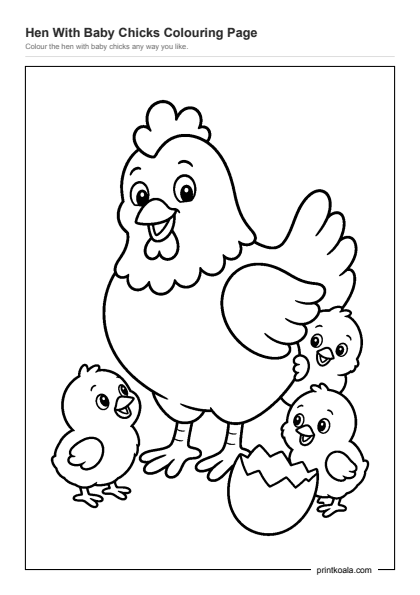
Hen with Baby Chicks Coloring Page
Ages 3–515
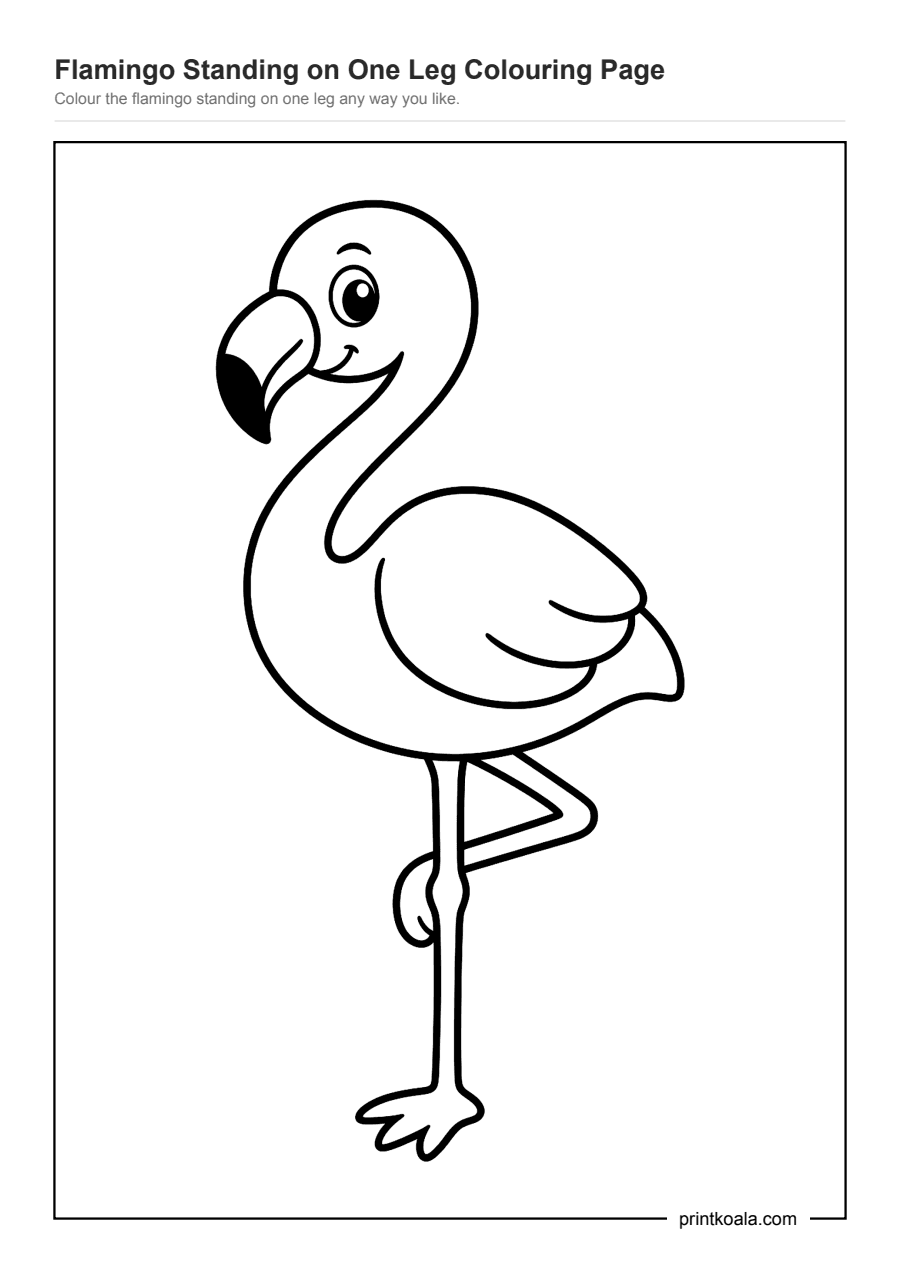
A big, round flamingo balances on one straight leg, its other leg tucked up, with a curved neck and a black-tipped beak.
Free, no sign-up. Downloaded 6 times · A4 · Print at 100% scale
This flamingo stands in the pose it's known for: one leg straight down to a webbed foot on the ground, the other leg bent and tucked close under its round body. The neck curves in a long S from the shoulders up to a big rounded head, with one large eye, a soft smile line, and a curved beak that's already colored black at the tip. The wing sits on the side of the body as two or three layered, scalloped feather sections, giving the otherwise plain oval body a bit of texture to work with.
Most of this page is generous, open space: the body, the head and the long neck are all big enough for a young child to fill in without straying over a line. The wing feathers and the small bent leg tucked near the body are the only fiddly bits, so a child gets to practice staying inside a tighter curve without the whole page being that demanding. It's a good one to talk about balance while coloring — ask why the flamingo has tucked one leg up and see what they think.
There's no background or scenery here, just the bird, so it suits a child who wants a quick, satisfying page rather than a long project. The already-black beak tip is the only part that needs care to leave uncolored or blend around; everything else is broad and forgiving. It works well as a first attempt at coloring a bird, and just as well as a calm, low-pressure page for a child who already colors confidently.
Start with the big body and neck, since those are the easiest wins and build confidence fast. Save the wing feather sections and the tucked-up leg for last, as they need a steadier hand and more patience.