🚀 Outer Space
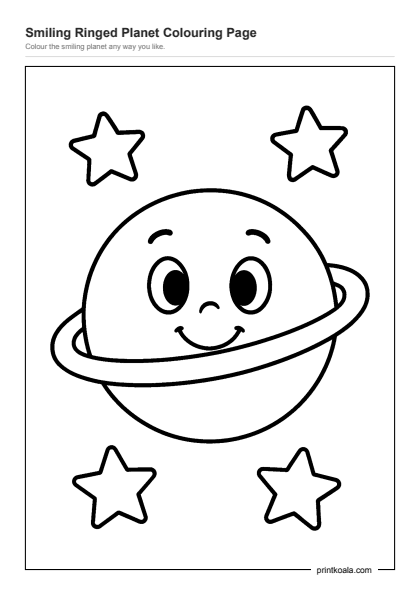
Smiling Ringed Planet Coloring Page
Ages 2–45
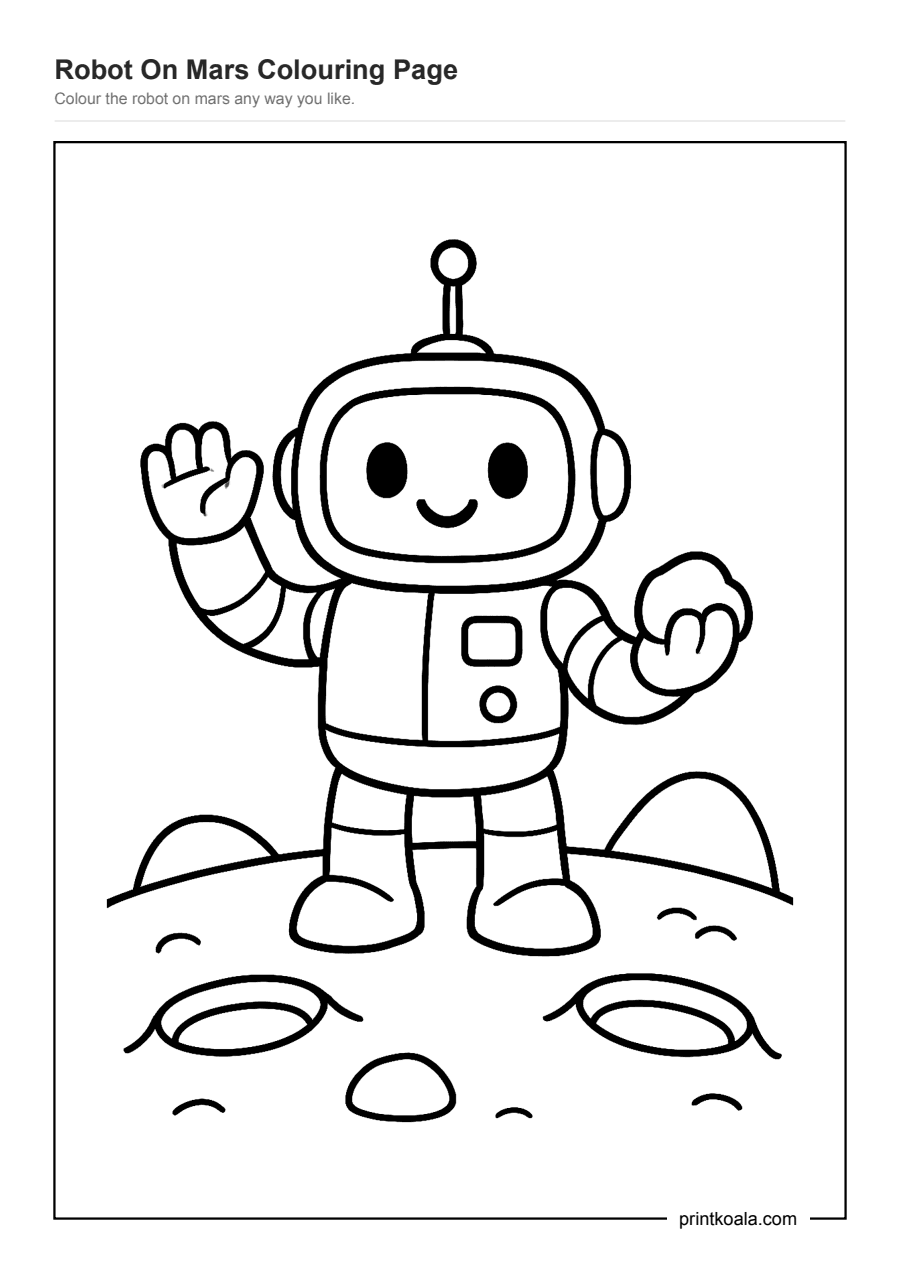
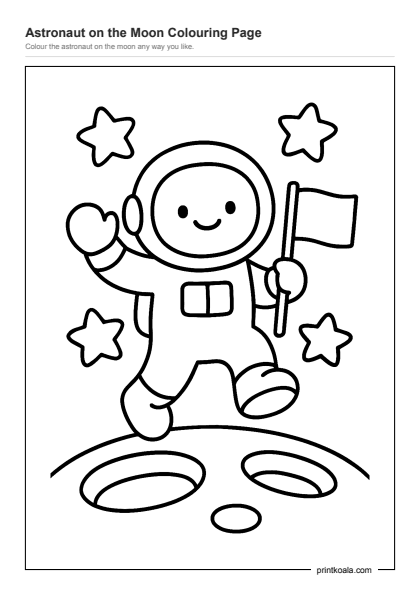
A round-headed robot waves hello with one hand while standing on a cratered Martian hill dotted with craters and a small rock.
Free, no sign-up. Downloaded 7 times · A4 · Print at 100% scale
This robot has a big rounded square head with a bobble antenna on top, two dot eyes and a curved smile, and small round panels for ears. One arm is raised in a wave with an open, spread-fingered hand; the other arm is bent with a rounded, mitten-like fist. Its chest has a square button and a round button set into a panel, and its striped legs end in two block feet planted on a bumpy Martian horizon. The ground curves under it with two low hills, two oval craters, a small pebble sitting between them, and a scatter of short crater-mark dashes.
Most of this page is made up of generous, uncluttered shapes: the head, the chest panel, the arms and the legs are all big enough for a young child to fill in without the crayon wandering off the line. The waving hand, the two chest buttons and the small craters are the fiddlier bits, so there is a nice mix of easy coloring and a few spots that ask for a steadier hand. It is also an easy picture to talk about while coloring, what color the robot should be, whether Mars is red or orange, what might be hiding in those craters.
Compared with busier space scenes full of stars and planets, this one is calm and focused on a single friendly character, which makes it a good fit for a child who colors best without too much going on around the page. The simple face and open pose suit a first attempt at a robot picture, while the smaller details like the buttons and craters give slightly older preschoolers something to slow down for.
Start with the head and chest panel, the biggest easiest shapes, before moving to the waving hand and the two small chest buttons. If the craters feel fiddly, let your child outline them first, then fill in loosely rather than aiming for a perfectly neat edge.