🧸 Toys & Games
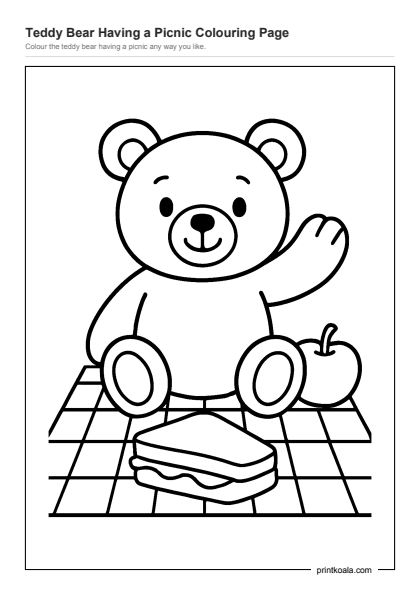
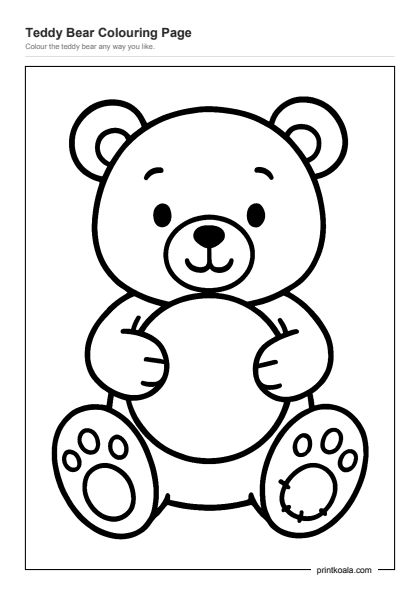
Teddy Bear Coloring Page
Ages 2–48
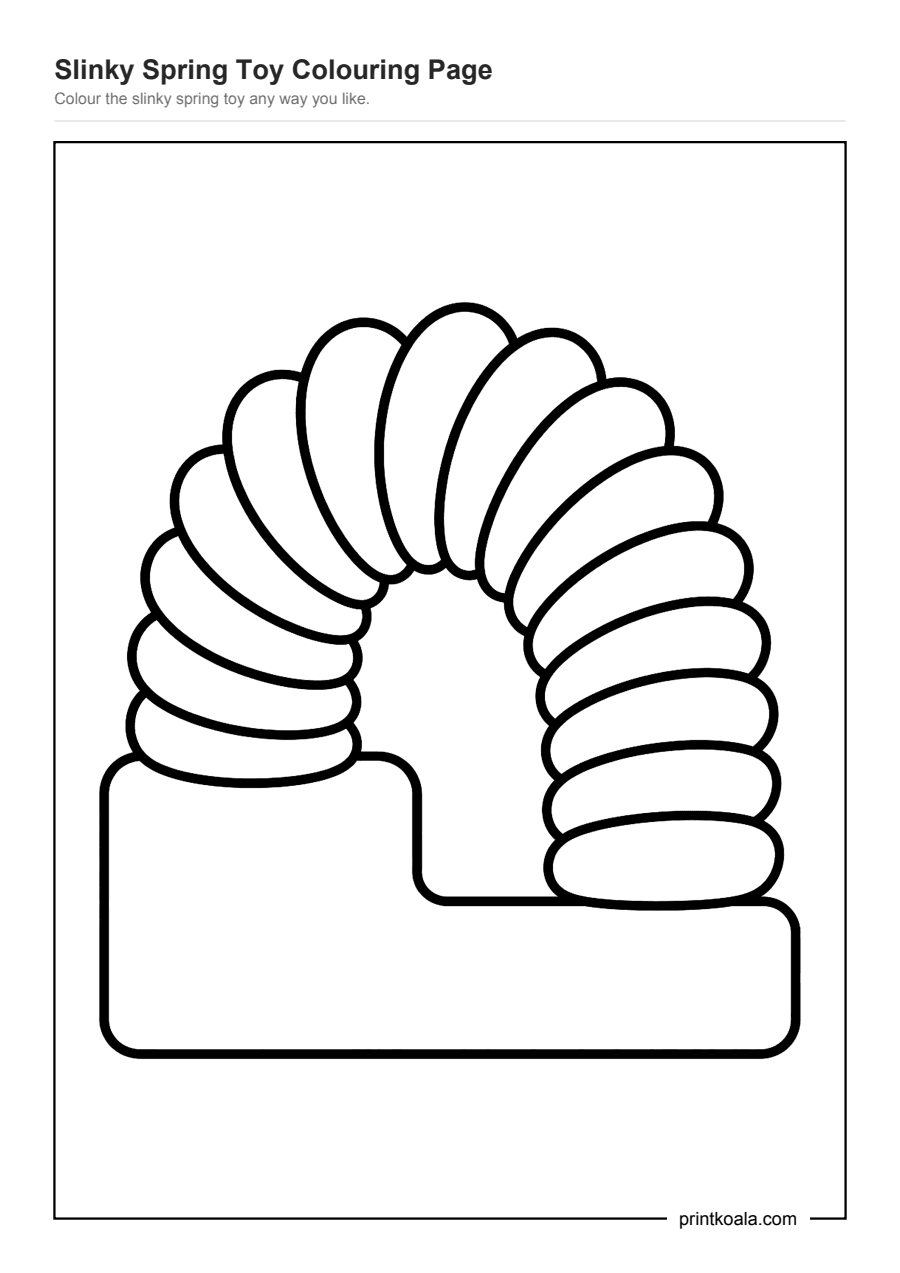
A Slinky arches over a two-level step, its body shown as about thirteen wide curved coils ready to fill in one by one.
Free, no sign-up. Downloaded 6 times · A4 · Print at 100% scale
This page shows a Slinky caught mid-tumble, its coils arching up and over like a rainbow before landing on a stepped platform. Count the bands and there are roughly thirteen of them, each a wide, rounded loop stacked against the next, thick enough that little hands can stay inside the lines without much trouble. Underneath, the toy rests on a simple two-level base: a shorter, taller block on the left where one end of the spring has just left the edge, and a longer, lower block stretching away to the right where it's about to land.
The coils are broad and evenly spaced, so there's no fiddly gap-filling here. Each band can be its own color choice, which suits a child who likes swapping crayons often, or one who wants to try a simple two-color repeat going up and over the arch. The straight edges of the step below make a nice change from all that curving, good practice for keeping a line steady across a longer, flatter stretch. It's also an easy excuse to talk about how a Slinky actually moves - stretching, bouncing, walking itself down stairs - while the coloring gets done.
With around a dozen repeated shapes to fill, this sheet takes a little longer than a single-object page, but none of the individual areas are small or awkward, so it works for confident three to five year olds and for younger children coloring alongside an adult. It's a solid middle-of-the-pile choice: more to do than a page with one big shape, but nothing here that will cause frustration.
Start with the step at the bottom in one color, then work up the coils one band at a time. Alternating two colors across the bands makes a neat pattern and stops the repetition feeling like a chore.