⚽ Sports & Fun Activities
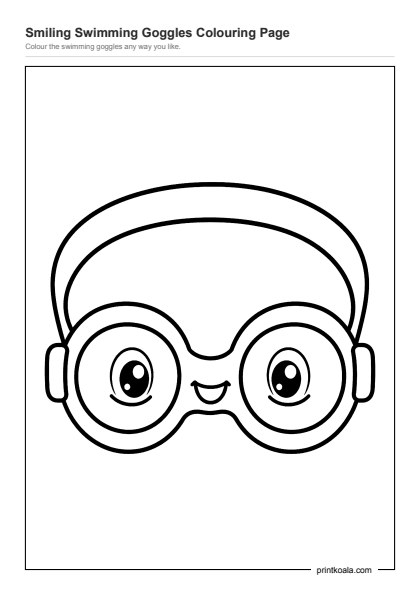
Smiling Swimming Goggles Coloring Page
Ages 2–55
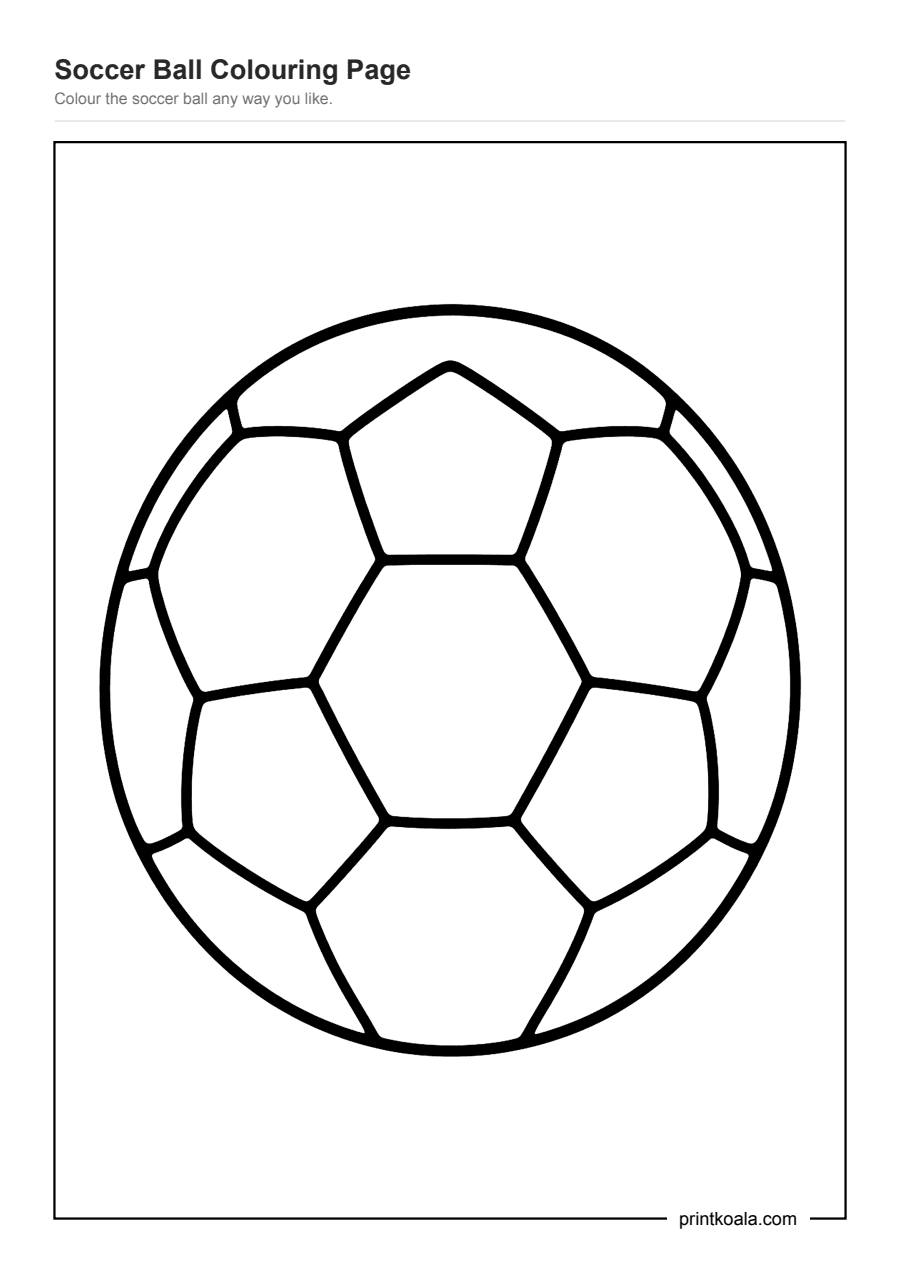
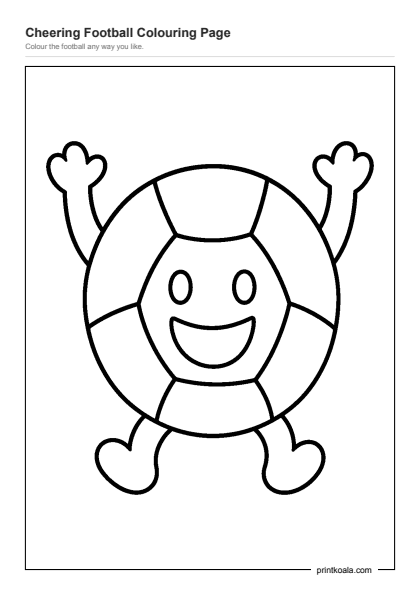
A single oversized soccer ball fills the page, its surface split into one pentagon, six hexagons and slim curved edge slices.
Free, no sign-up. Downloaded 10 times · A4 · Print at 100% scale
This page shows just one thing: a soccer ball, drawn big enough to fill almost the whole sheet. There's no pitch, no goal, no player in the background — just the ball's familiar panel pattern. At the top sits a five-sided pentagon, and in the very middle is a large hexagon. Four more hexagons ring that center one, upper left, upper right, lower left and lower right, with a final hexagon closing the pattern at the bottom. Where the ball curves away at the left and right edges, the panels narrow into thin crescent slivers, four of them in total.
Most of this page is made up of wide, open panels, so a child can color with big, loose crayon strokes and still stay roughly inside the lines. It's a good one for trying the classic black-and-white football look, or for picking any colors they like and seeing how a familiar object looks made-up. The slim curved slivers near the outer edge are the one part that asks for a steadier hand, and they're a natural thing to point out and count together: "how many skinny pieces can you find around the edge?"
Compared with busier sports sheets, this is on the easier end — one shape, one subject, no small print to work around. It suits a toddler coloring inside lines for the first time, and it still gives an older preschooler enough panels to keep them occupied for a few minutes without repeating themselves.
Let your child start with the big center hexagon for an easy win, then work outward panel by panel. The thin curved slivers near the edge are the fiddly bit — coloring a little outside their lines is fine, the ball still reads clearly.