🚒 Community Helpers
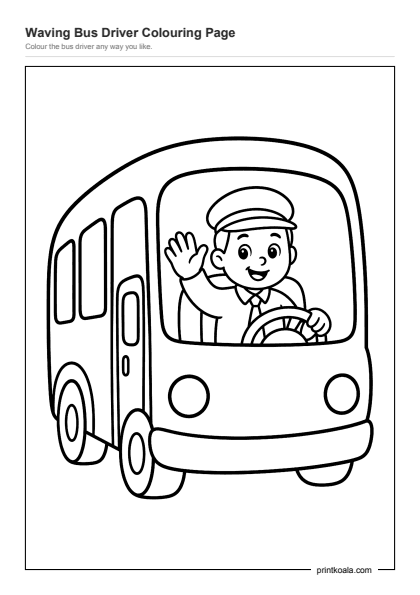
Waving Bus Driver Coloring Page
Ages 2–58
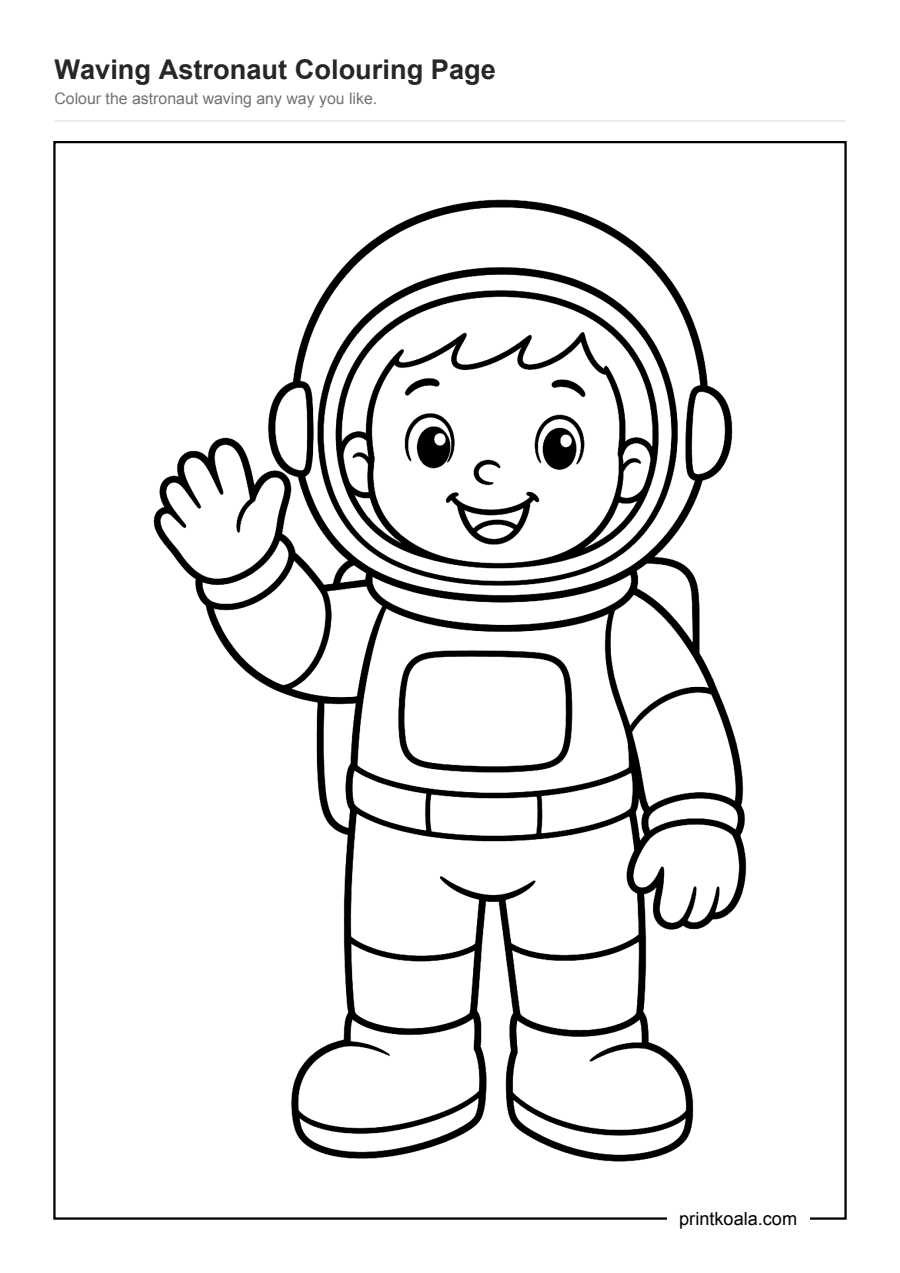
A smiling astronaut in a round helmet waves hello with one gloved hand, backpack and chest panel ready to color.
Free, no sign-up. Downloaded 6 times · A4 · Print at 100% scale
This astronaut stands facing forward with a big grin, one gloved hand raised in a wave and the other resting by their side. The helmet is round with a wide visor showing the child's face, hair and ears just visible through the glass, plus two small side pods on the helmet. Below the neck seal sits a rectangular chest panel, a belt across the middle, a backpack peeking out behind the shoulders, and a suit with banded knees and two chunky boots. There is no background or spacecraft, so the whole page is just the figure, drawn big and centerd.
Nearly every shape here is broad and closed, the helmet dome, the chest panel, the boots, which suits a child who is still learning to stay inside lines without needing a steady hand for fiddly bits. The visor is the one spot with some detail, since the face sits inside it, so it is a natural place to slow down and pick out eyes, a smile and hair separately from the glass around them. It is also an easy one to talk through while coloring: why is the glove waving, what color should the suit be, does the visor need a color at all or stay clear.
This sits on the easier side of the astronaut sheets in this set. The clean outlines and generous spaces make it a good first space-themed page for a younger child, while older preschoolers can add extra care to the visor and the panel details without the sheet dragging on too long.
Start with the helmet dome, it is the biggest space and gives an early sense of progress. Save the visor and face for last, since those small features need a steadier hand and are easiest to fix if a line wobbles.