🦄 Fantasy & Fairy Tale
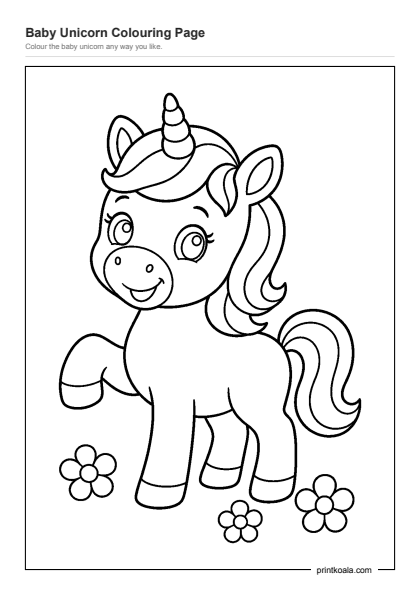
Baby Unicorn Coloring Page
Ages 2–53
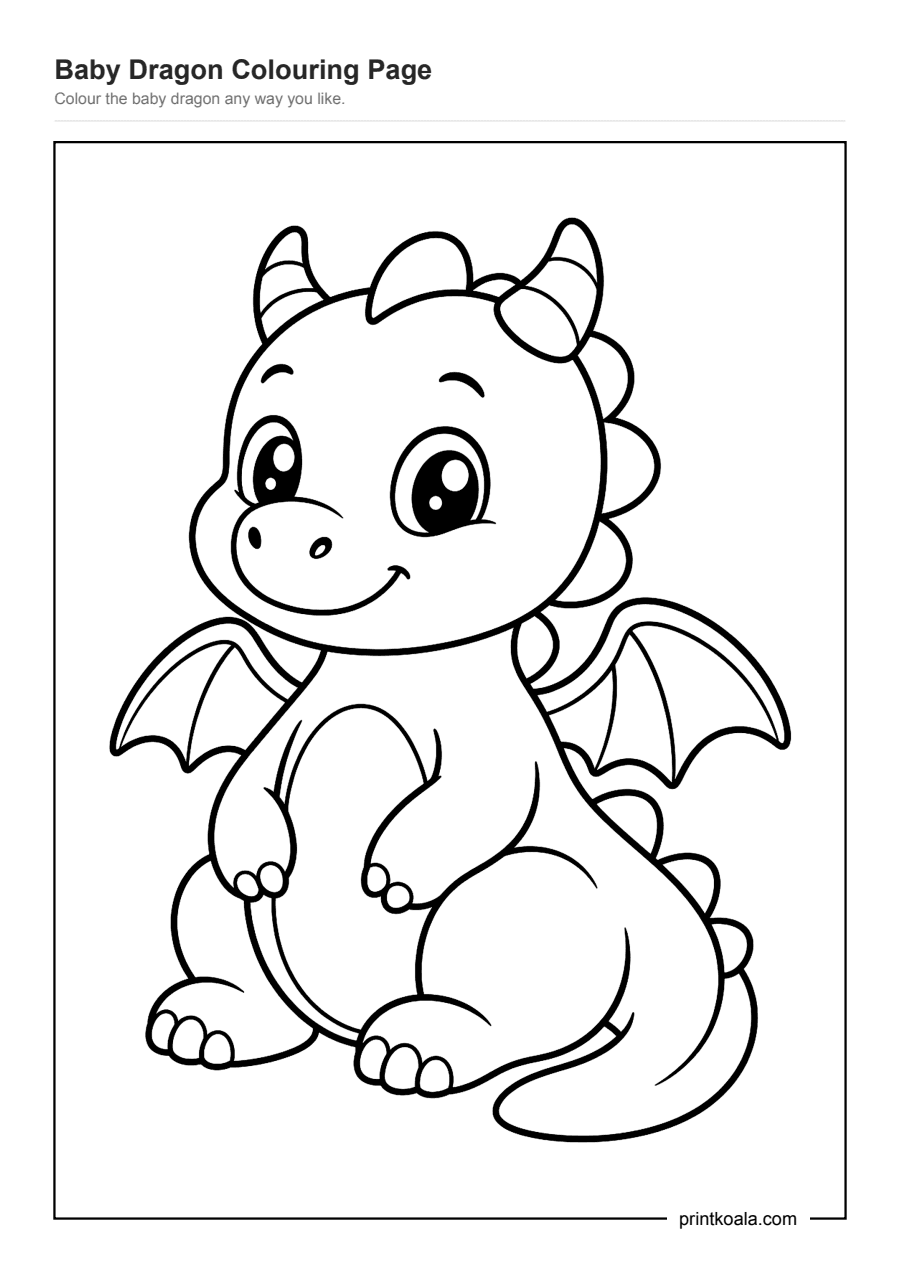
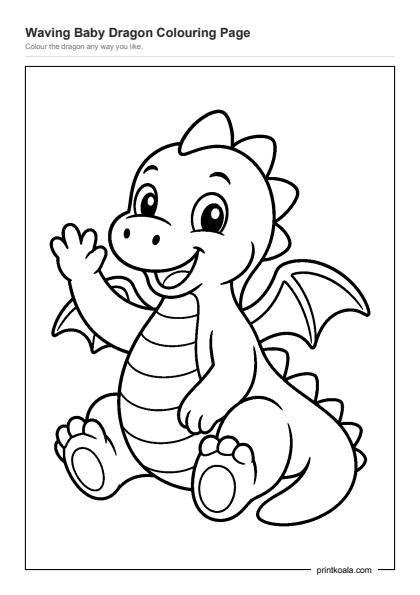
A round-bellied baby dragon sits with both wings spread and its tail curled in a loop between its front feet.
Free, no sign-up. Downloaded 6 times · A4 · Print at 100% scale
This baby dragon is sitting down, not flying or breathing fire. Its big head takes up most of the top of the page, with two large curved horns and one small nub horn between them, two arched eyebrows, huge round eyes, a tiny dot nostril and a closed, smiling mouth. Both bat-like wings are spread out to the sides, each made of a few ribbed sections. The body is one big oval belly, and the tail loops right round in a curl that sits between the front feet before the tip pokes out near the back leg. A row of small triangular spikes runs from the back of the head down to the tail, and each of the four feet ends in a little cluster of rounded claws to color separately.
What makes this one worth printing is the size of the shapes. The belly, the head and each wing panel are large enough for a three-year-old to fill in with a single color and not much wobble outside the lines, so a first attempt can still look finished. The spikes, horns and claws are small and separate, which gives an older sibling something fiddlier to slow down for if they want it. There's plenty to talk about too: how many horns does the dragon have, is it smiling, and which wing looks bigger.
Compared with other dragons in this set, this is one of the easier sheets, since there's no scale texture and only a handful of enclosed detail areas. It suits a child who's coloring mostly inside the lines already, or a younger one who just wants big spaces and doesn't mind going over the horns and claws with less precision.
Start with the belly and wings since they're the biggest spaces and give quick, satisfying results. Save the horns, spikes and claw tips for last, and don't worry if color crosses those small lines a little.