🐣 Baby Animals
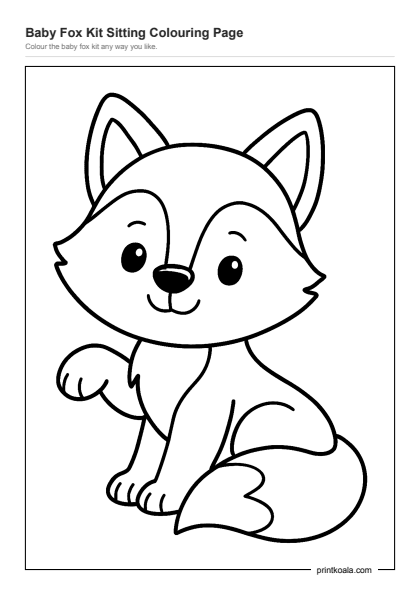
Baby Fox Kit Sitting Coloring Page
Ages 2–57
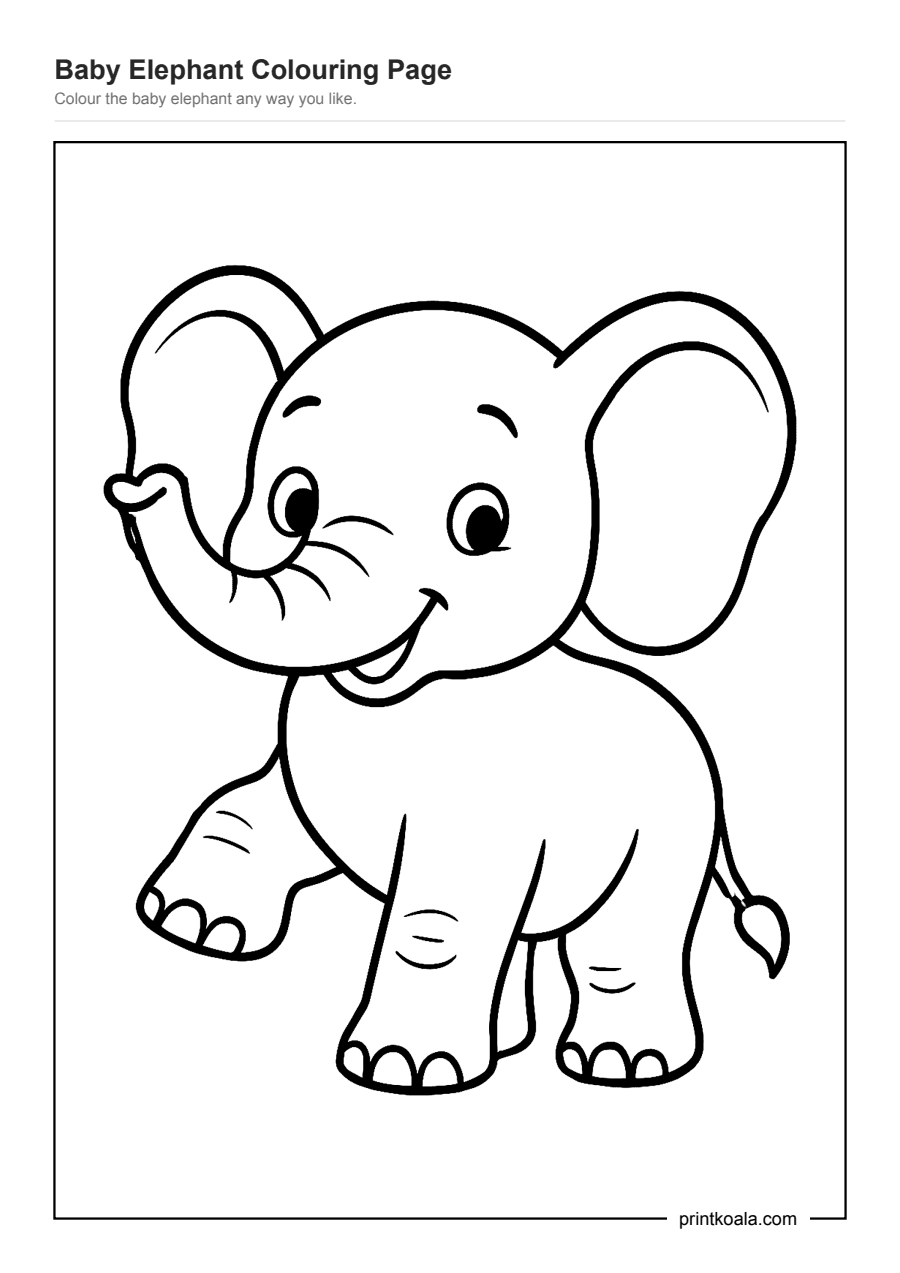
A smiling baby elephant stands facing forward with its trunk curled up by its eye and both big ears spread wide.
Free, no sign-up. Downloaded 10 times · A4 · Print at 100% scale
This baby elephant faces the viewer square on, trunk curling up and back almost to its own eye, mouth open in a grin that shows a small curve of tongue. Both ears are drawn huge and floppy, one turned to show the folded inner edge, the other peeking out behind the head. The body is round and chubby, set on four short legs, each foot ending in three or four rounded toenails. A thin tail with a tufted tip hangs off to the side. Wrinkle lines are kept to a few short curves on the trunk and legs, and the page has no background, so the elephant is the only thing to color.
What makes this one worth printing is the size of the spaces. The head, ears, and belly are big open areas a young child can fill in with a single color and a wide crayon without much steering. The trunk's curl and the toenails are the only fiddly bits, so a child gets a taste of coloring inside a tighter line without the whole page demanding that kind of care. It is also a good one for talking about the elephant while coloring: why the ears are so big, what the trunk is doing curled up like that, how many toes show on each foot.
Next to other sheets in the baby animals set, this is on the easier side. The bold, uncluttered outline suits a child who is still getting the hang of staying inside lines, and there is enough going on, ears, trunk, tail, toes, to hold the interest of a slightly older toddler too. Good for a first sitting with a new box of crayons.
Let your child start with the big ears and belly first, since mistakes there barely show. Save the curled trunk and toenails for last, when their hand has warmed up. Ask them to count the toes on each foot as they go.