🐣 Baby Animals
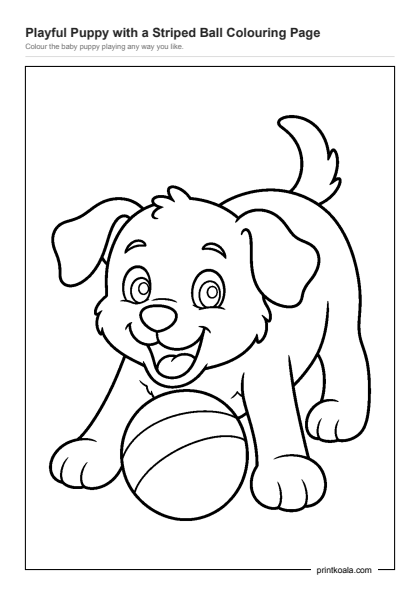
Playful Puppy with a Striped Ball Coloring Page
Ages 2–55
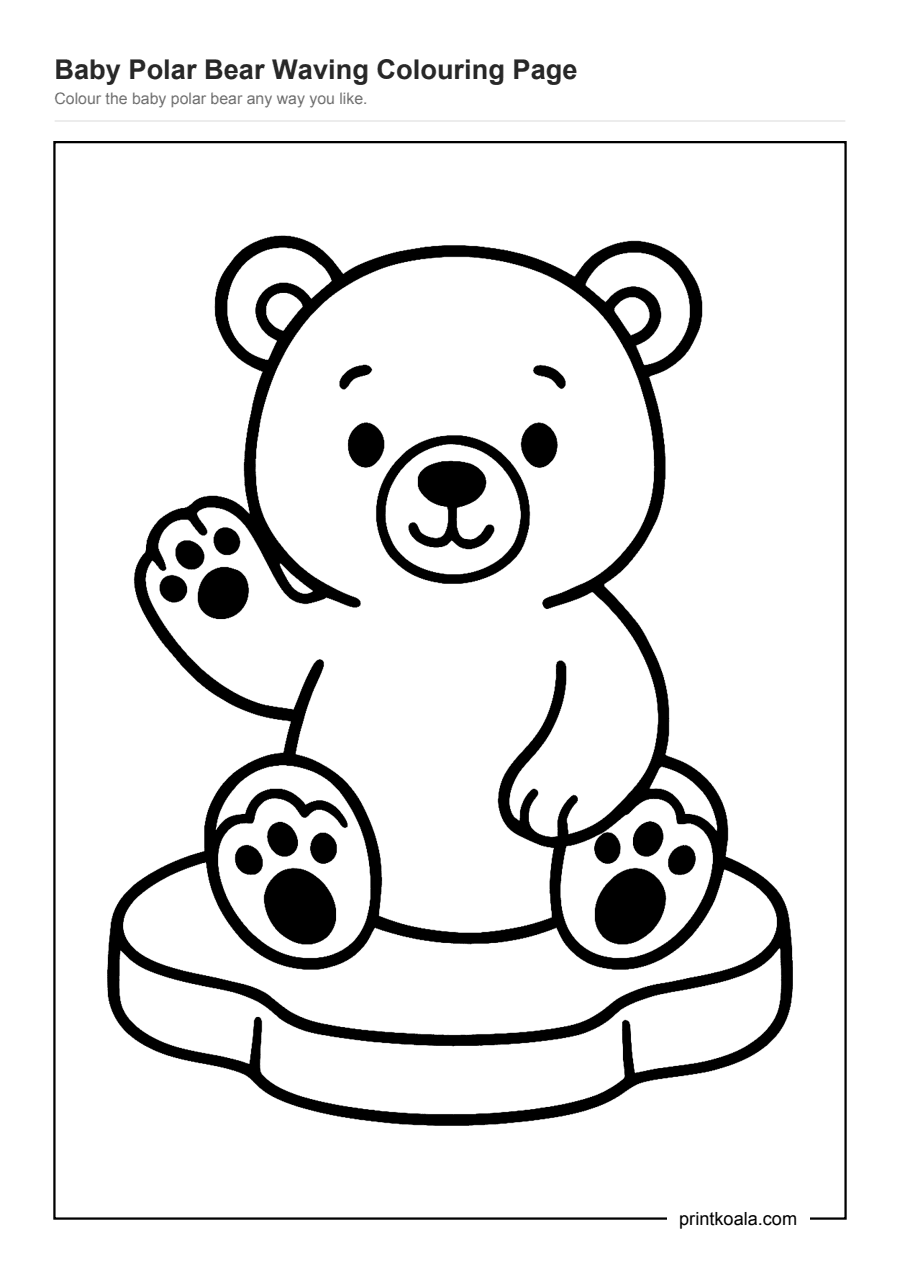
A round baby polar bear sits on an ice floe, one paw raised in a wave, with big bare paw pads to color on all four feet.
Free, no sign-up. Downloaded 8 times · A4 · Print at 100% scale
This page shows a single baby polar bear sitting on a lumpy, scalloped ice floe. One front paw is lifted in a wave, the other rests down by its side, and both back feet sit flat on the ice facing forward. The round head has two small rounded ears, two dot eyes, curved eyebrow lines, and an oval snout with a black nose and a soft smiling mouth. Every paw shows its pads: three small pads and one larger pad on the raised paw, and four small toe pads plus one big center pad on each of the two feet at the bottom. The ice floe beneath the bear is one large curved shape marked with a single line, giving it a bit of thickness without adding extra detail.
Most of this drawing is made up of big, open spaces, the head, the body, and the ice floe, so a child can color with a fat crayon or marker and stay inside the lines without much trouble. The paw pads are the one part that ask for a steadier hand, since the pad shapes are small and sit close together. It is a good page for talking about a bear's body: how many paws are waving, how many pads are on each foot, and why a polar bear might be sitting on ice.
Because the shapes are large and rounded and there is only one character to color, this sheet sits on the easy end of the coloring pages in this category. It suits a child who is still building crayon control and wants to finish a picture in one sitting, while the small paw pads give slightly older preschoolers something fiddlier to aim for if they want it.
Start with the big body and head so your child gets an early win, then move to the fiddly paw pads last. If the pads feel too small, skip them and color them all one flat color instead.