🐣 Baby Animals
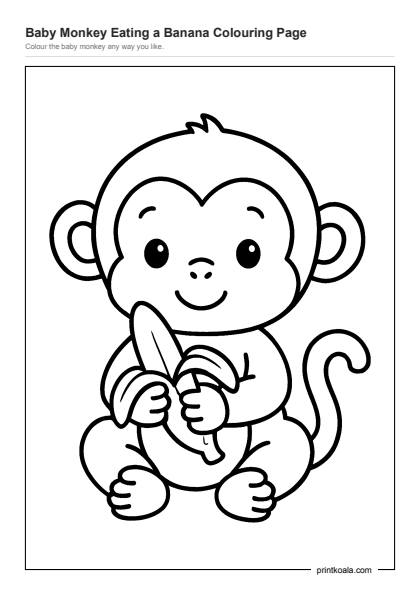
Baby Monkey Eating a Banana Coloring Page
Ages 2–55
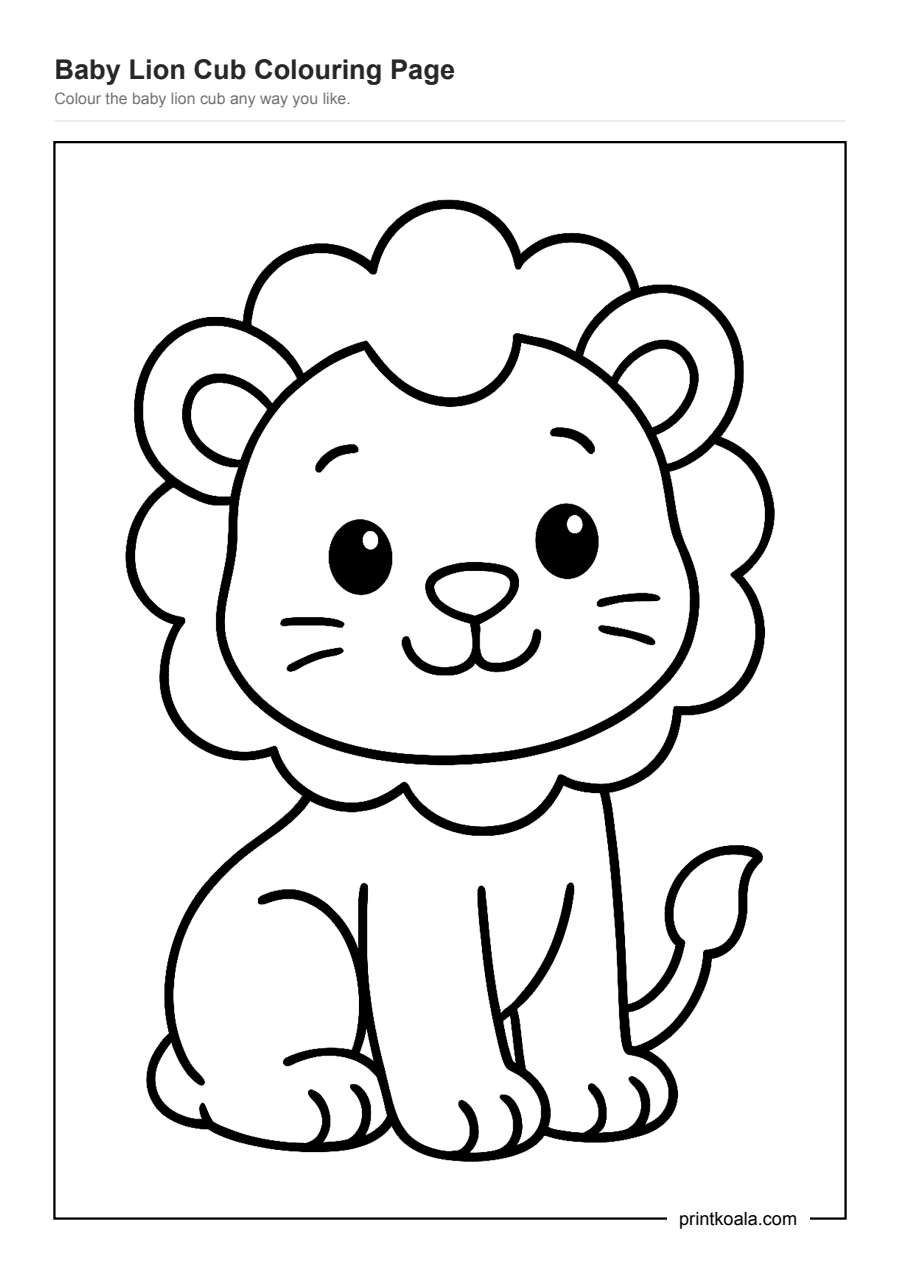
A round-faced lion cub sits facing forward, its mane a ring of soft scalloped bumps, paws and curled tail waiting to be colored.
Free, no sign-up. Downloaded 8 times · A4 · Print at 100% scale
This lion cub sits square to the viewer with its front paws planted on the ground, head slightly tilted, and a curled tail with a tufted end resting behind it. The mane isn't shaded or textured — it's drawn as a ring of rounded scallop bumps circling the face, like a soft flower border, with two small rounded ears poking through. The face has two large closed-in eyes with a white highlight dot already left blank, a small triangular nose, a curved smile, and three whisker lines on each cheek. Each paw shows separate rounded toes. There's no background, no grass, no sun — just the cub on a plain white page.
That plain page is what makes this one forgiving. The mane scallops and the body are big, closed shapes, so a child can color the whole cub in two or three colors without much fear of going over a line into a neighbor's space. The smaller bits — the nose, the paw toes, the tail tuft — give a bit of practice staying inside a tighter shape once the big areas are done. It's an easy one to talk through while coloring: which color lion is this, is it sleepy or happy, why its tail is curled up like that.
There's nothing tricky here, which is the point. It suits a child who is still building confidence with a crayon, or a younger sibling who wants to color "the lion" without a busy safari scene of grass, trees and other animals competing for attention. Older preschoolers who like more detail may finish it quickly and want a second sheet after.
Start with the mane bumps, since they're the biggest shapes and mistakes there are least noticeable. Save the eyes and nose for last, when little hands are steadier. If the scallops get tricky, let one color cover the whole mane instead of alternating shades.