🐣 Baby Animals
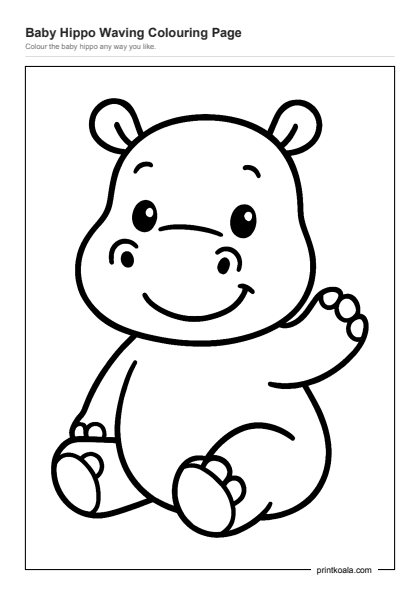
Baby Hippo Waving Coloring Page
Ages 2–46
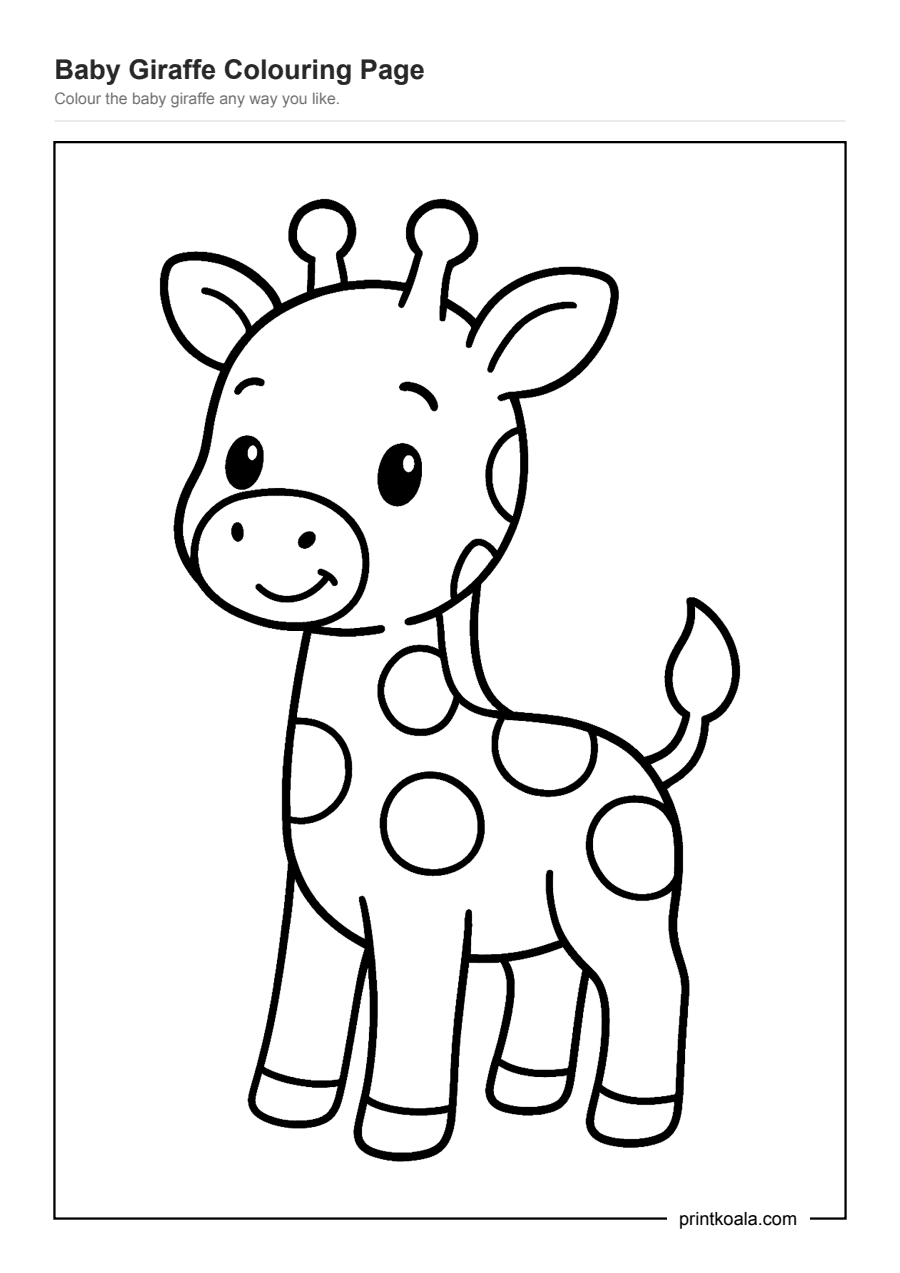
A baby giraffe stands still and smiling, its body covered in a handful of big round spots and topped with two knobby horns.
Free, no sign-up. Downloaded 10 times · A4 · Print at 100% scale
This baby giraffe stands facing slightly to one side, all four legs planted and a short tail curling up behind it. Its head is the friendliest part of the page: two round eyes with a white highlight, soft curved eyebrows, big floppy ears, a rounded smiling snout with two nostril dots, and a pair of small knobbed horns (ossicones) poking up from the top of its head. Down the neck and across the body sit a handful of large, well-spaced spots of different sizes, plus one smaller spot tucked behind the ear. Each leg ends in a simple hoof line near the bottom. There is no background, so the giraffe is the only thing to color.
What makes this one worth printing is the size of the shapes. The body, the ears and most of the spots are drawn big and rounded, so a child can sweep a crayon across them without worrying about tight corners. The few smaller bits, the horns, the hoof lines, the ear spot, give slightly steadier hands something fiddlier to aim for once the big areas are done. It is also a good page for talking while coloring: how many spots can you find, which one is the biggest, does a giraffe really look like this.
Because the outlines are thick and the spaces are mostly large and separate, this sits on the easier end of our Baby Animals sheets. It suits a child just starting to color inside lines, and it is forgiving if a crayon strays outside one of the big shapes. Older preschoolers who want more of a challenge might prefer a page with smaller, more detailed patterning.
Let your child start with the biggest belly spot and the main body outline, saving the horns and hoof lines for last when their hand is warmed up. Count the spots together before you begin, and don't worry if color spills over the thick outlines.