🐣 Baby Animals
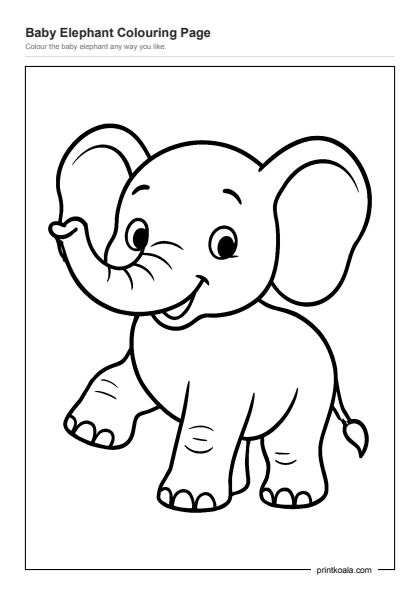
Baby Elephant Coloring Page
Ages 2–510
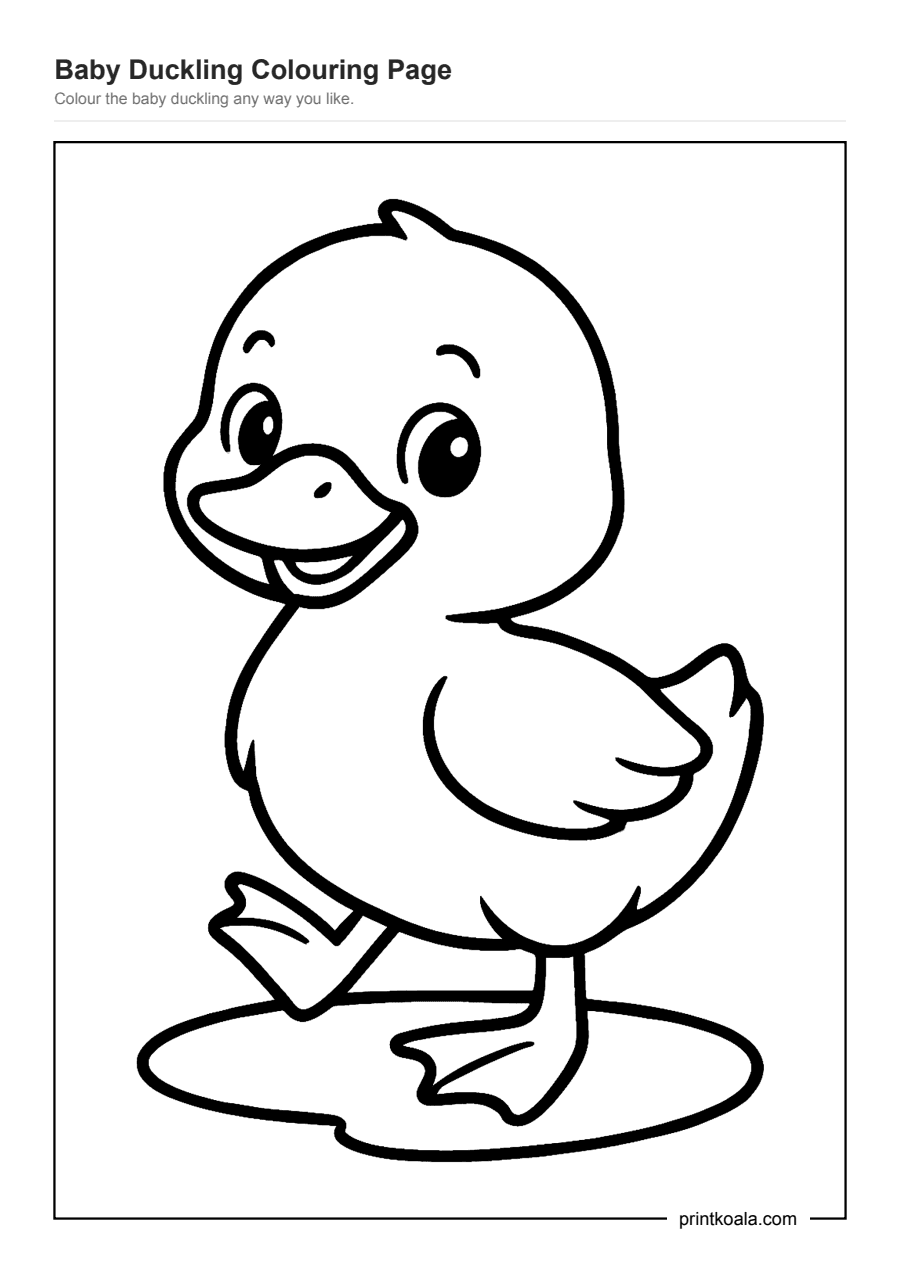
A round, smiling duckling mid-waddle across a puddle, one webbed foot lifted, ready for crayons.
Free, no sign-up. Downloaded 8 times · A4 · Print at 100% scale
This duckling is caught mid-step, facing left with one webbed foot lifted and splayed and the other planted on an oval puddle shape beneath it. Its head is large and round with a little tuft on top, two curved eyebrow lines, big oval eyes with a bright dot left white, and a broad flat beak that's open in a simple smile with one line for the tongue. The body is one big rounded shape with a single folded wing drawn in three soft curves, like layered feathers, and the whole thing sits on a plain white background with nothing else to fill in.
What makes this one worth printing is the size of the spaces. The body, head and wing are all large, closed, gently curved areas that a young child can fill with a fat crayon without much fear of scribbling outside the lines. The only fiddly bits are the webbed toes on each foot and the small dot of the nostril, which give slightly older hands something to slow down for. It's an easy page to talk through while coloring: ask what color a duckling really is, why one foot is up, whether the puddle needs its own shade of blue.
This sits on the easier end of the shelf, best suited to two- and three-year-olds just getting used to holding a crayon, though the wing detail and toes give four- and five-year-olds a reason to stay at the table a bit longer too. There's no background scenery to manage and no small props to lose patience over, just the duckling itself.
Start with the big body shape first so little hands warm up before tackling the webbed toes and beak. If the puddle line gets messy, let it go, it's meant to be a light background touch, not the main event.