🌈 Nature & Weather
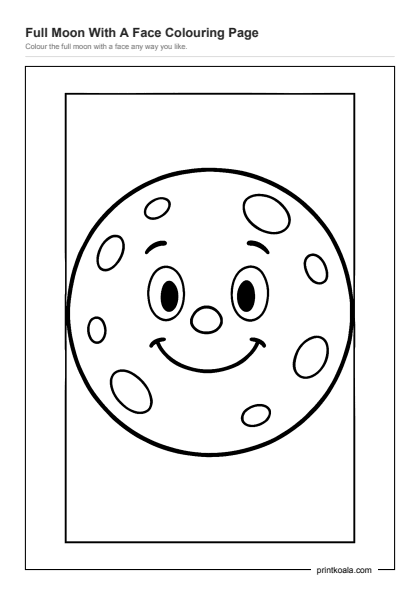
Full Moon with a Face Coloring Page
Ages 2–49
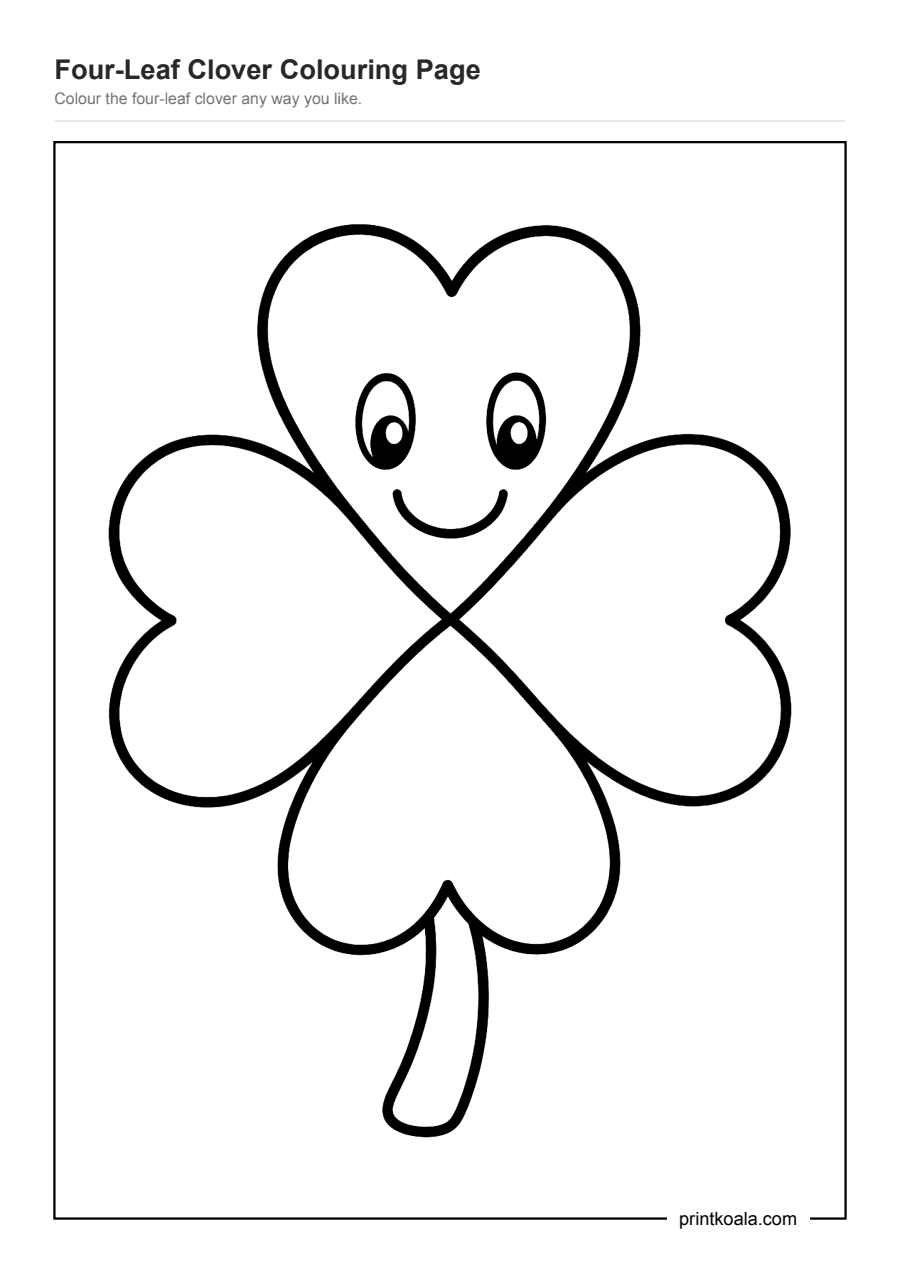
A smiling four-leaf clover made from four heart-shaped leaves crossing in the middle, with one curved stem below.
Free, no sign-up. Downloaded 4 times · A4 · Print at 100% scale
This clover is built from four big heart shapes that meet in the center, where the lines cross to form a neat X. The top leaf has a face drawn onto it: two round eyes with dark pupils and a small curved smile, so the whole clover looks like it is looking back at whoever is coloring it. Underneath, a single curved stem hangs down to the bottom of the page. Nothing else is on the sheet, no background, no grass, no extra characters, just the clover on white space.
Each heart-shaped leaf is large and closed off cleanly, so a child can color one leaf at a time without the crayon sliding into the next section. The face is the only fiddly bit, the eyes are small and close together, which gives slightly older toddlers something to slow down for while younger ones can skip straight over it and keep to the leaves. It is also an easy page to talk through while coloring: which leaf is first, whether all four should match or each get its own color, and why people call this clover lucky.
This is one of the simpler sheets in the nature set. The leaf shapes are big and forgiving, so a first attempt at coloring inside the lines can still look tidy, and the stem gives one last narrow strip for a bit of extra control. It suits a two or three year old just starting out with crayons, while the small facial features give a four or five year old a reason to take their time.
Let your child start with the big leaves before the small face, since the eyes and mouth are the fiddliest part. If the crayon slips over the crossing lines in the middle, that is fine, the four hearts still read clearly.