🌈 Nature & Weather
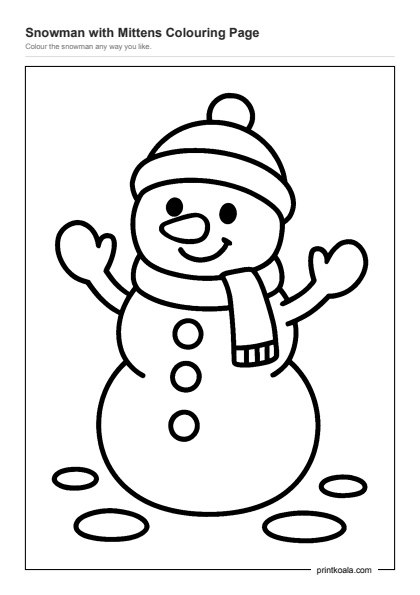
Snowman with Mittens Coloring Page
Ages 2–55
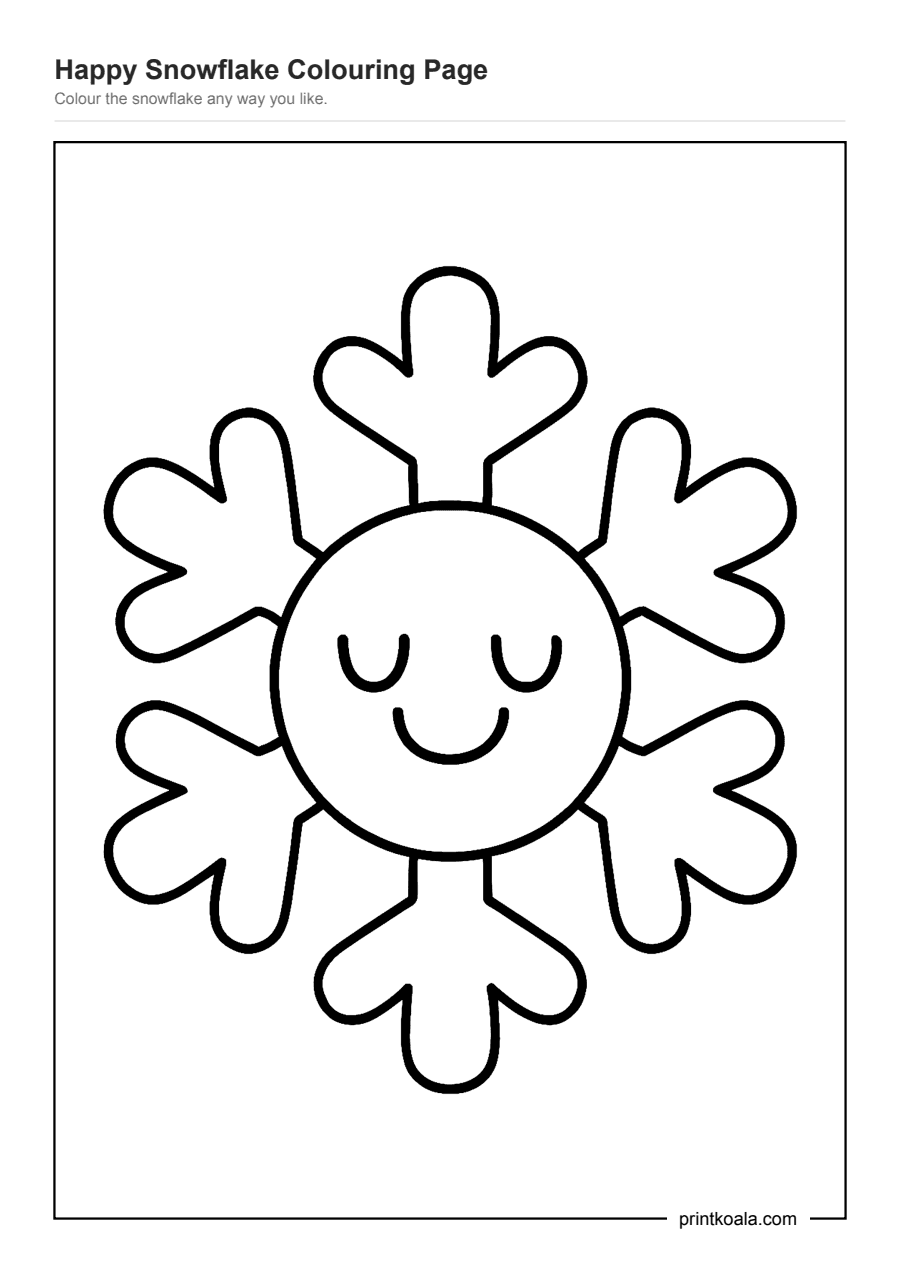
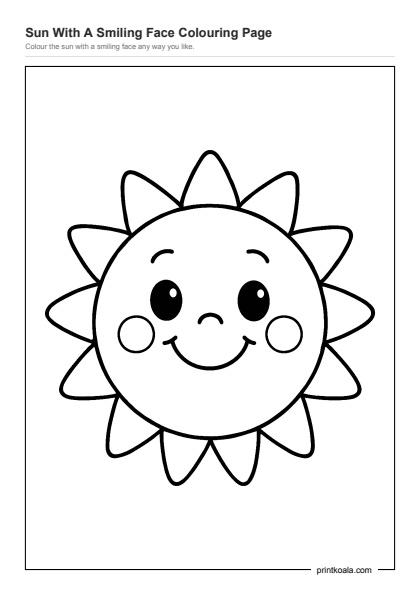
A round, sleepy-eyed snowflake face sits in the middle of six chunky antler-tipped arms, ready to color.
Free, no sign-up. Downloaded 3 times · A4 · Print at 100% scale
This snowflake has a face. A big circle sits in the center with closed, curved eyes and a small smiling mouth, and out from that circle spread six thick arms, each one ending in a forked tip that looks a little like antlers. Every arm is identical in shape, so once a child has colored one, they already know what the other five will look like. The lines are bold throughout, with no thin bits to snap a crayon over.
What makes this one worth printing is the mix of spaces on offer. The face circle is one large, calm area that a young child can fill in a single color without much steering. The six arms are a bit trickier, each split into a narrow stem and a wider forked end, so little hands get practice stopping at a line and starting again in a new section close by. Because the whole shape repeats six times, it is an easy one to talk through out loud, counting the arms together or naming which one gets which color.
It sits on the easier side of the sheets in this set. The open circle and thick arms suit a child just getting used to a crayon, while the repeated forked tips give slightly older preschoolers something to keep their attention on all the way round. Good for a first go at a symmetrical picture, or for a child who likes finishing something that looks satisfying and complete.
Start with the face in the middle, since it is the biggest space, then work outward one arm at a time. If a child loses track of which arms are done, count them aloud together as you go — there are six.