🌈 Nature & Weather
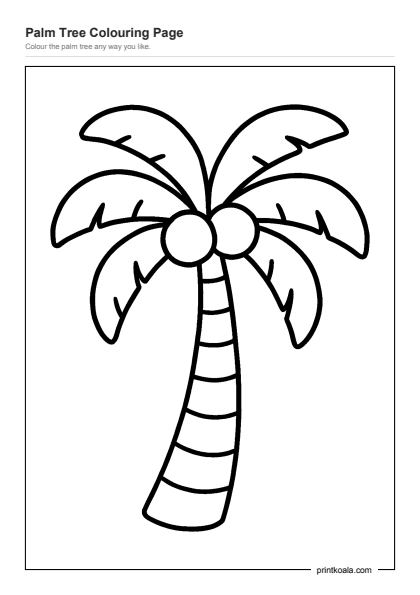
Palm Tree Coloring Page
Ages 2–58
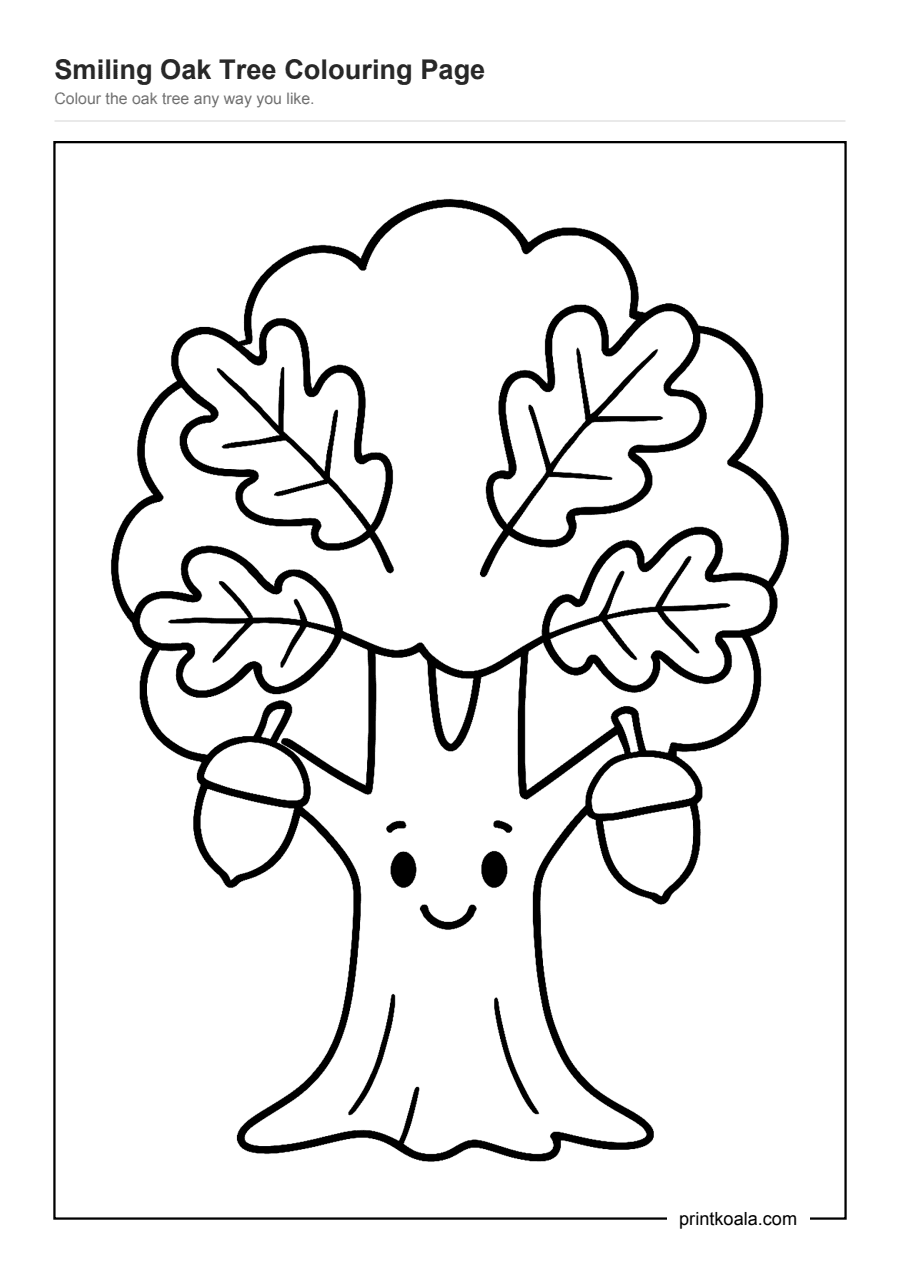
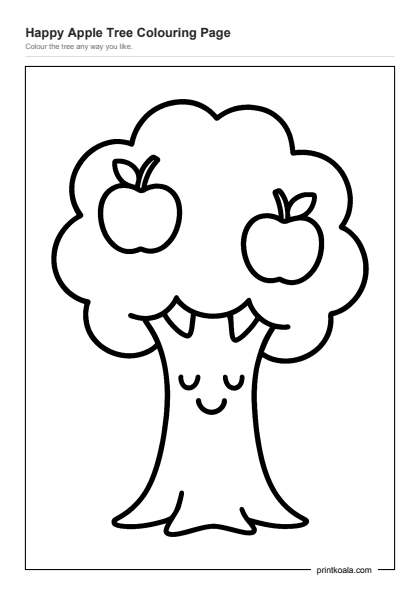
A friendly oak tree with a happy face on its trunk, four big lobed leaves and two dangling acorns to color.
Free, no sign-up. Downloaded 8 times · A4 · Print at 100% scale
This oak tree has a face drawn right into the trunk: two round eyes, curved eyebrows and a wide smile, so it looks pleased to be there. Above it sits one big cloud-shaped canopy, and in front of that hang four large oak leaves, two upper and two lower, each with the bumpy lobed edge and center vein you'd expect on a real oak leaf. Two acorns dangle from curled stems where the leaves meet the trunk, one on each side, each with its own little cap. The trunk itself is wide and sturdy, with a few bark lines running down it and gentle bumps at the base where the roots meet the ground.
Almost everything here is a big open shape, which is what makes it a good one for small hands. The canopy alone is one large area a child can fill in with a single color, and the trunk can become brown crayon practice with hardly any risk of going over a line. The four leaves and two acorns are a bit smaller and give a reason to switch colors partway through, and because there are only six things to count, it's an easy page to talk through while coloring: how many leaves, how many acorns, which one is biggest. The trunk face also gives you something to chat about, like whether the tree looks happy or what it might be thinking.
There's nothing fiddly here, no tiny background details or narrow gaps, so it sits on the easier end of our tree sheets. It suits a child who is still getting used to holding a crayon and staying inside a line, and it prints cleanly as a single sheet with no shading to fill in first.
Start with the big canopy so your child gets an early win, then move to the trunk. Save the two acorns for last since they're the smallest shapes. If a leaf line gets crossed, just color the leaf next to it a different shade and call it two-tone.