⚽ Sports & Fun Activities
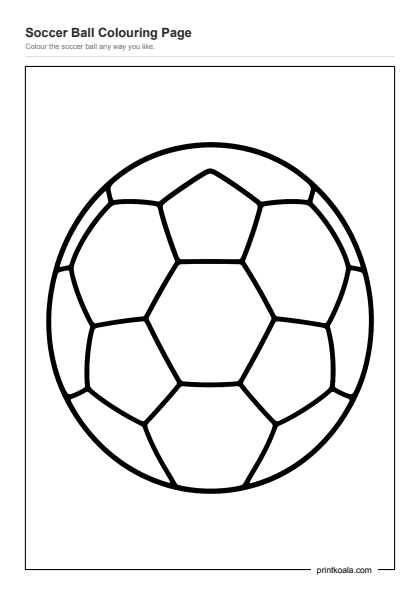
Soccer Ball Coloring Page
Ages 2–510
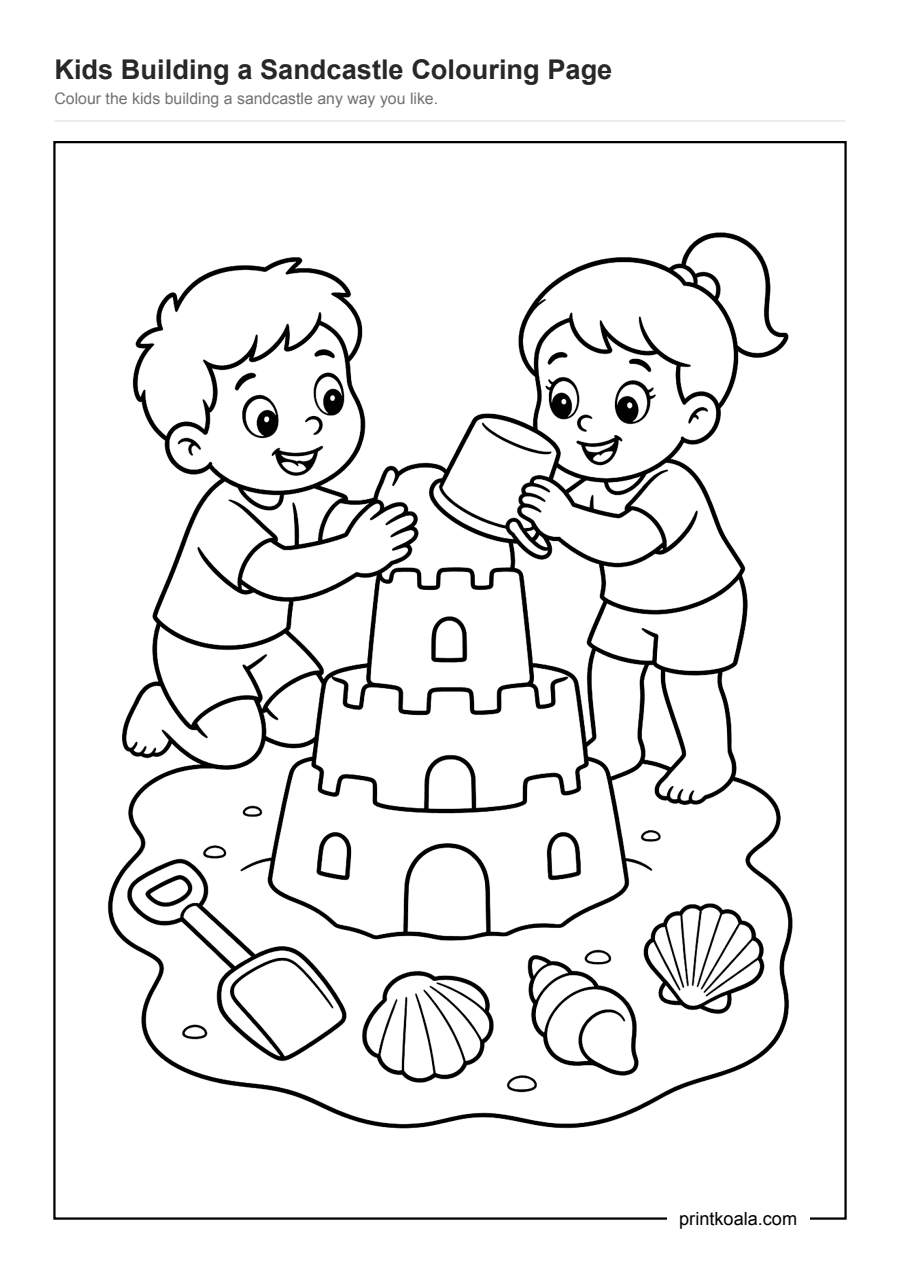
A kneeling boy pats a three-tier sandcastle while a standing girl tips her bucket on top, with a spade and three shells nearby.
Free, no sign-up. Downloaded 13 times · A4 · Print at 100% scale
Two children are hard at work on a sandcastle. The boy kneels on the left, barefoot in shorts and a t-shirt, pressing both hands against the side of the castle to smooth it. The girl stands on the right, hair in a ponytail, tipping an upside-down bucket over the top tower to add another scoop of sand. The castle itself has three stacked tiers, each with a zigzag battlement edge along the top and its own little arched doorway. Scattered in the sand in front of them are a long-handled spade, a spiral shell, and two fan-shaped scallop shells, all sitting on a patch of sand dotted with small pebble marks.
This page gives a child a good mix of jobs. The three castle tiers are wide and open, so they go quickly with a single color or three shades of sandy yellow and brown. The shells, the bucket, and the little arched windows are much smaller and closer together, which asks for a steadier hand and a finer crayon or pencil tip. It is also a nice one to talk over while coloring — who built which part, what color the bucket should be, whether the shells match the castle or stand out from it.
Nothing on this sheet is fiddly in the way a detailed background scene can be, but the shells and window arches are small enough to slow a three-year-old down. That makes it a solid middle-ground sheet: easy enough for a younger child to enjoy the big castle shapes, with enough small detail to keep an older preschooler interested for a full sitting.
Start with the big castle tiers so your child gets an early win, then move to the spade and shells last, since those need the most care. If a shell gets scribbled outside the lines, call it a piece of wet sand and keep going.