🧩 Matching & Sorting
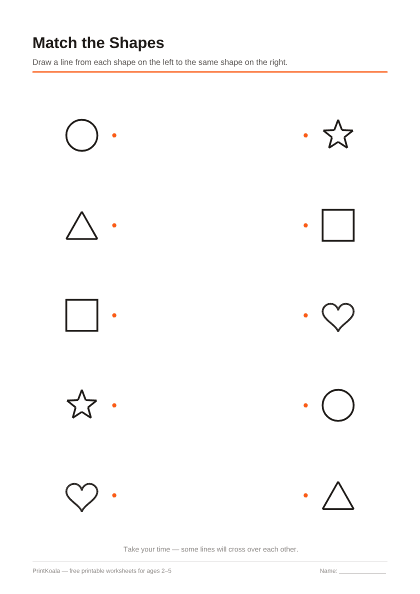
Match the Shapes
Ages 3–565
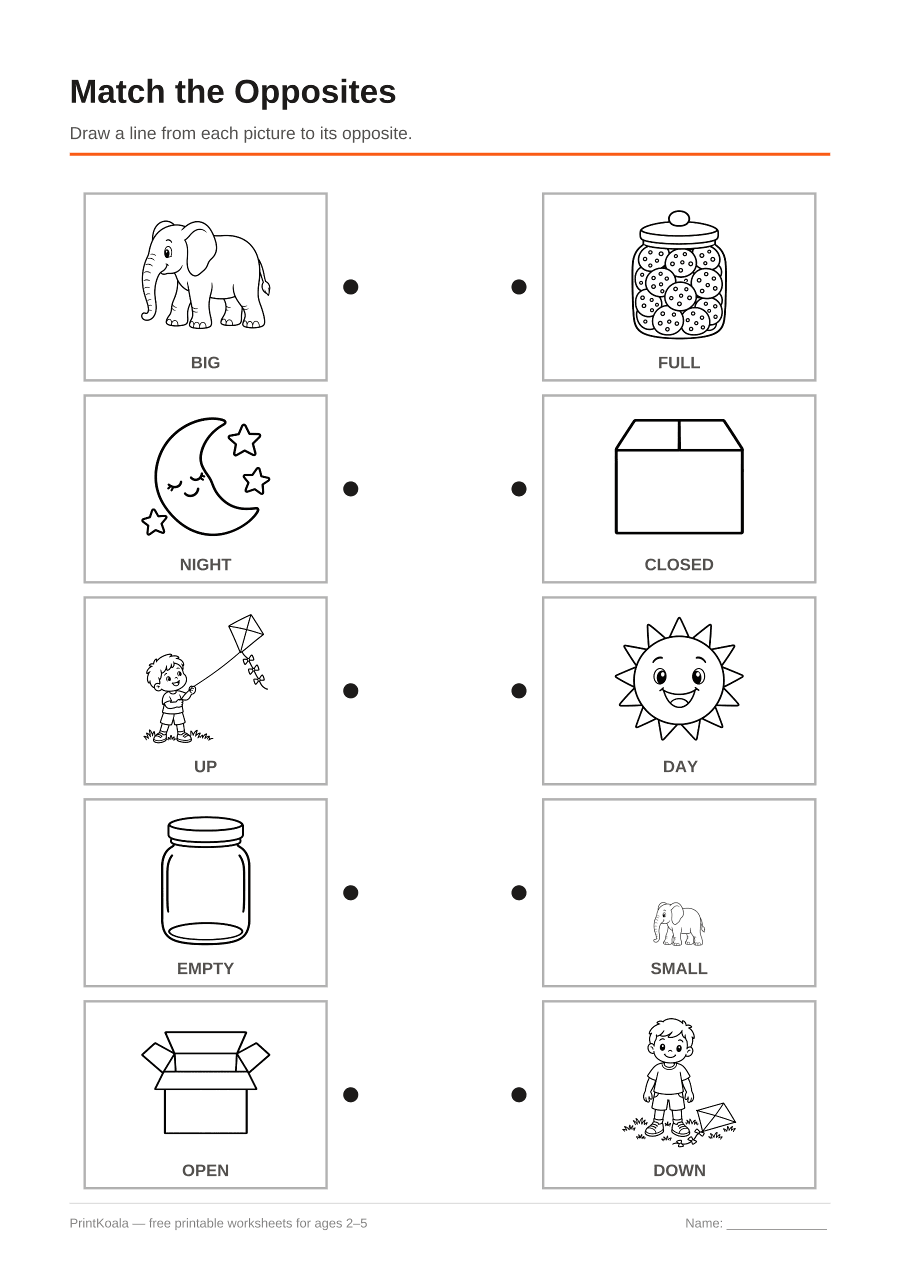
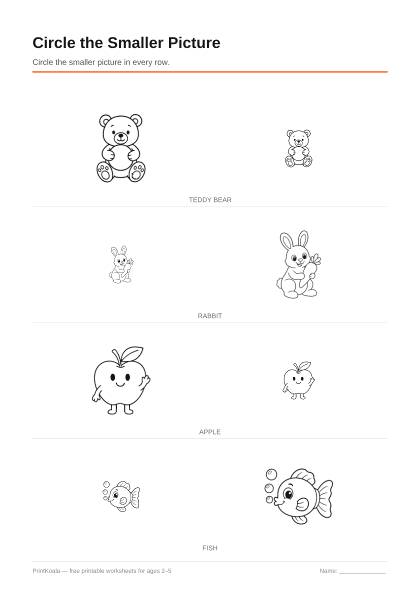
Draw a line from each picture to its opposite: big and small, night and day, up and down, empty and full, open and closed.
Free, no sign-up. A4 · Print at 100% scale
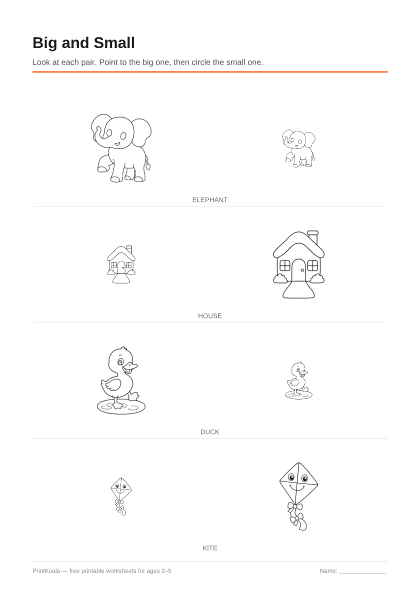
Five pictures run down the left side of the page: a big elephant, a sleepy moon with stars for night, a child flying a kite up high, an empty jar and an open box. Down the right, in a mixed-up order, are their opposites: a small elephant, a smiling sun for day, a child with the kite down on the grass, a jar full of cookies and a closed box. Each picture has its word printed underneath, and your child draws a line from dot to dot to join each pair.
Between about three and five, children start using comparing words like big and small or full and empty in their own talk. Seeing both halves of a pair side by side helps them notice exactly what changed, which builds vocabulary and the habit of comparing that later sorting and measuring rely on.
Read each word aloud and ask, "What is the opposite of open?" before your child hunts for the matching picture. Acting a pair out, such as stretching tall for up and crouching low for down, helps the words stick.
Let your child trace a finger along the path first, then draw the line with a crayon. Afterward, look for opposites around the house, such as a full cup and an empty one or a light switched on and off.