🦕 Dinosaurs & Prehistoric
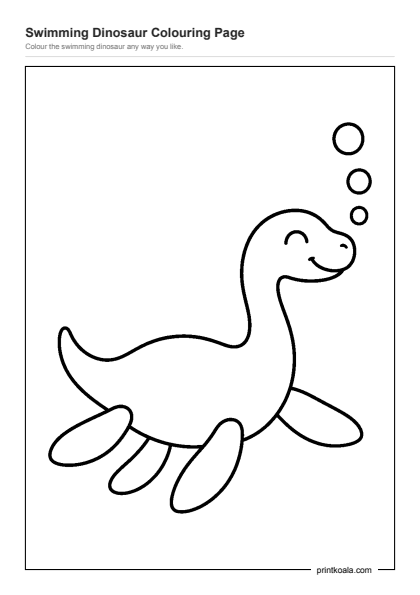
Swimming Dinosaur Coloring Page
Ages 2–54
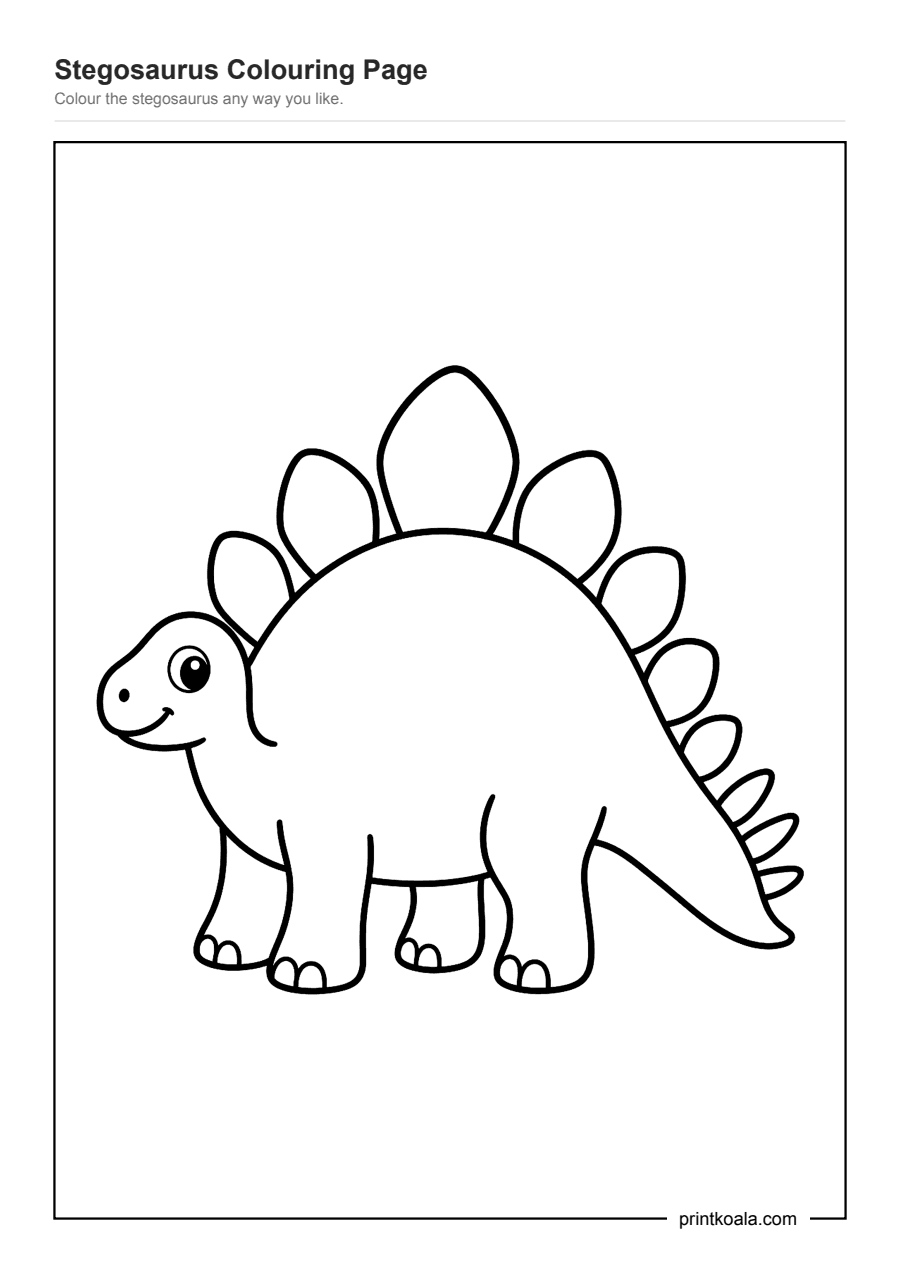
A smiling stegosaurus stands in profile with a tall row of back plates shrinking into pointed tail spikes.
Free, no sign-up. Downloaded 9 times · A4 · Print at 100% scale
This stegosaurus stands still on all four legs, facing left, with a big rounded body taking up most of the page. Its face is simple and friendly: one round eye with a bright highlight, a small nostril dot, and a curved smiling mouth. Along its back runs a row of large, rounded plates that start small near the neck, rise to a tall peak in the middle, then shrink down again and turn into narrower, pointed spikes running along the tail. The tail itself curls down and out to the right, tapering to a point. Each of the four legs ends in a little foot with small toe lines at the bottom. There is no background, grass or scenery, just the dinosaur on its own.
The big oval body is the easy part, one wide space a child can fill in without worrying about staying inside tricky lines. The row of plates is where the page asks for a bit more attention: each one is a separate enclosed shape, so a child can either color them all the same or turn them into a rainbow row, which is a nice thing to talk about while coloring. The small toe details at the bottom of each foot and the narrow tail spikes are the fiddliest bits on the page, good for a child who is ready to slow down and color inside a smaller space.
With its thick, simple outlines and lack of background clutter, this sheet sits on the easier end for a dinosaur page. The wide body and legs suit a younger child who mostly wants to color freely, while the plates and toes give an older preschooler something a bit more precise to aim for. It works well as a first dinosaur sheet or a calm five-minute activity between other things.
Let your child start with the big body first, since it is the easiest space, then move on to the back plates one at a time. If the small toes or tail spikes feel too fiddly, it is fine to leave them uncolored or fill them in loosely.