🦕 Dinosaurs & Prehistoric
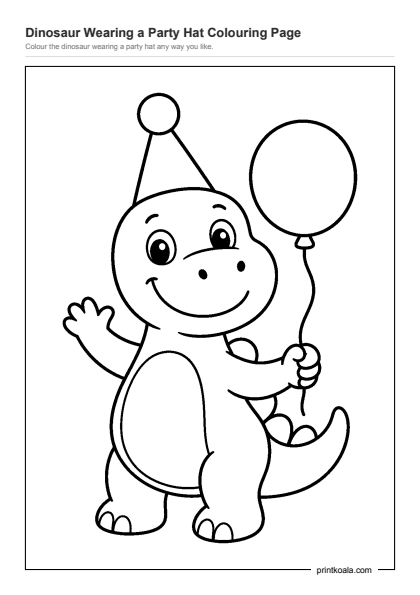
Dinosaur Wearing a Party Hat Coloring Page
Ages 3–57
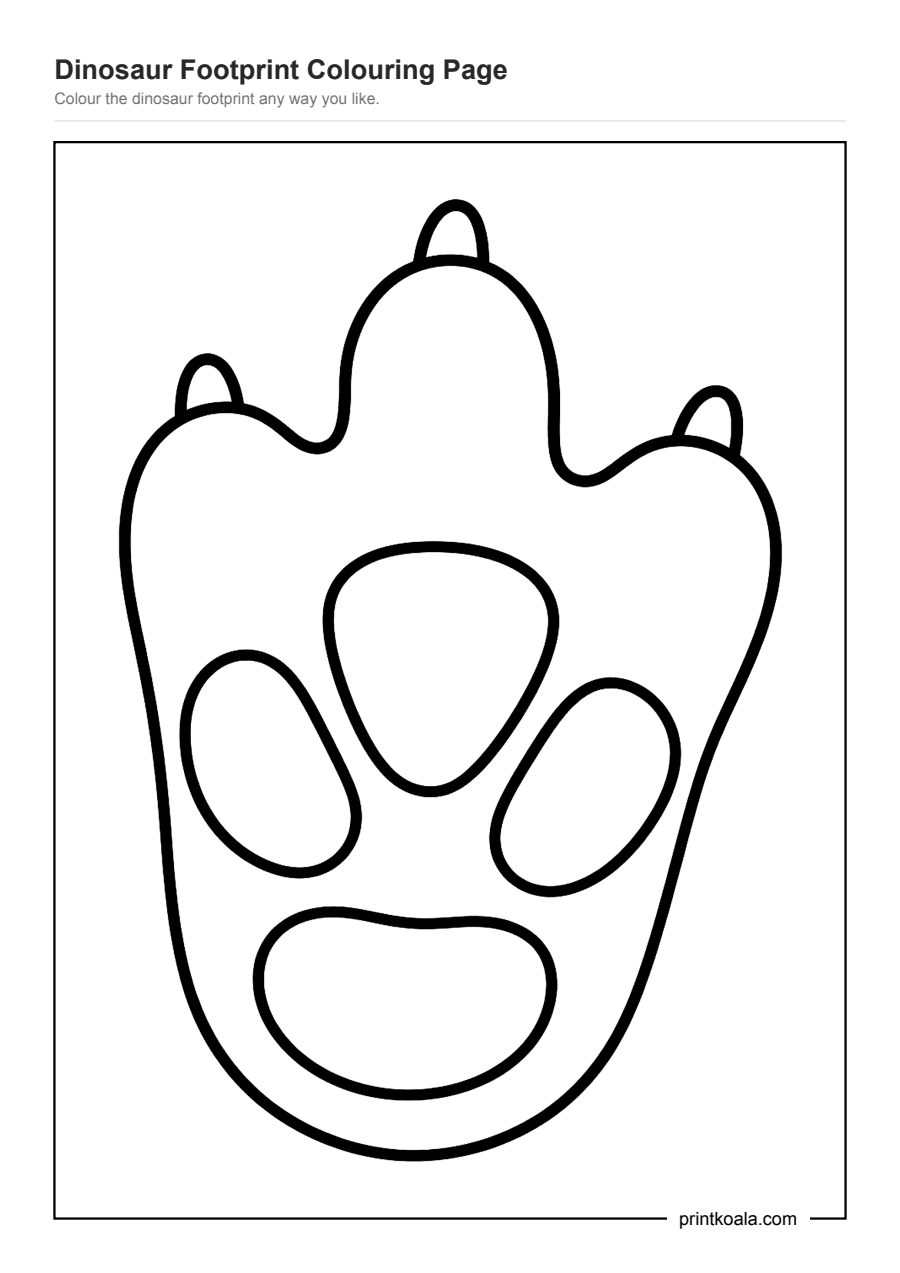
A single giant three-toed dinosaur footprint with three clawed toe tips, three rounded toe pads and one big heel pad to fill in.
Free, no sign-up. Downloaded 6 times · A4 · Print at 100% scale
This page has just one drawing: a huge dinosaur footprint, seen from above, filling almost the whole sheet. Three toes spread out at the top, each ending in a small curved claw. Inside the foot are three separate pads sitting under the toes, a pointed oval in the middle with a rounded oval either side, and below them one large heel pad that takes up the bottom third of the print. Around and between these shapes is the plain background of the foot itself, so there are really two kinds of space here: the wide open outer area and the smaller pads sitting inside it.
What makes this one worth printing is the mix of scale. The heel pad and the outer foot shape are big enough for a child to color with fast, loose strokes and still stay inside the lines, which is satisfying when little hands are still working on control. The three toe pads and the claws are smaller and separate, so a child can try picking a different color for each one, or matching the three claws to each other, without the shapes being fiddly enough to cause frustration. It is also a good one to talk about while coloring, like how big a real foot like this might have been and what animal could have left it.
As coloring pages go this is on the easier side, thanks to the bold outline and the small number of enclosed sections. It suits toddlers just starting to color inside lines as well as older preschoolers who want to move quickly and still end up with a finished-looking picture. There is nothing here that needs a steady hand or a fine-tipped crayon.
Let your child start with the big heel pad at the bottom, since it is the easiest space to fill without going over the line. Save the three small claws for last, and don't worry if colors overlap between sections, the thick outline hides most stray marks.