🦕 Dinosaurs & Prehistoric
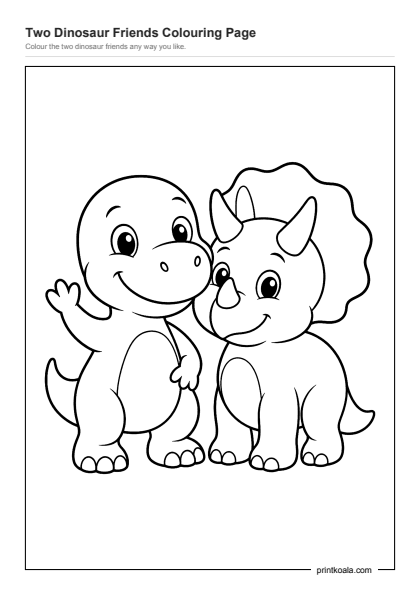
Two Dinosaur Friends Coloring Page
Ages 2–512
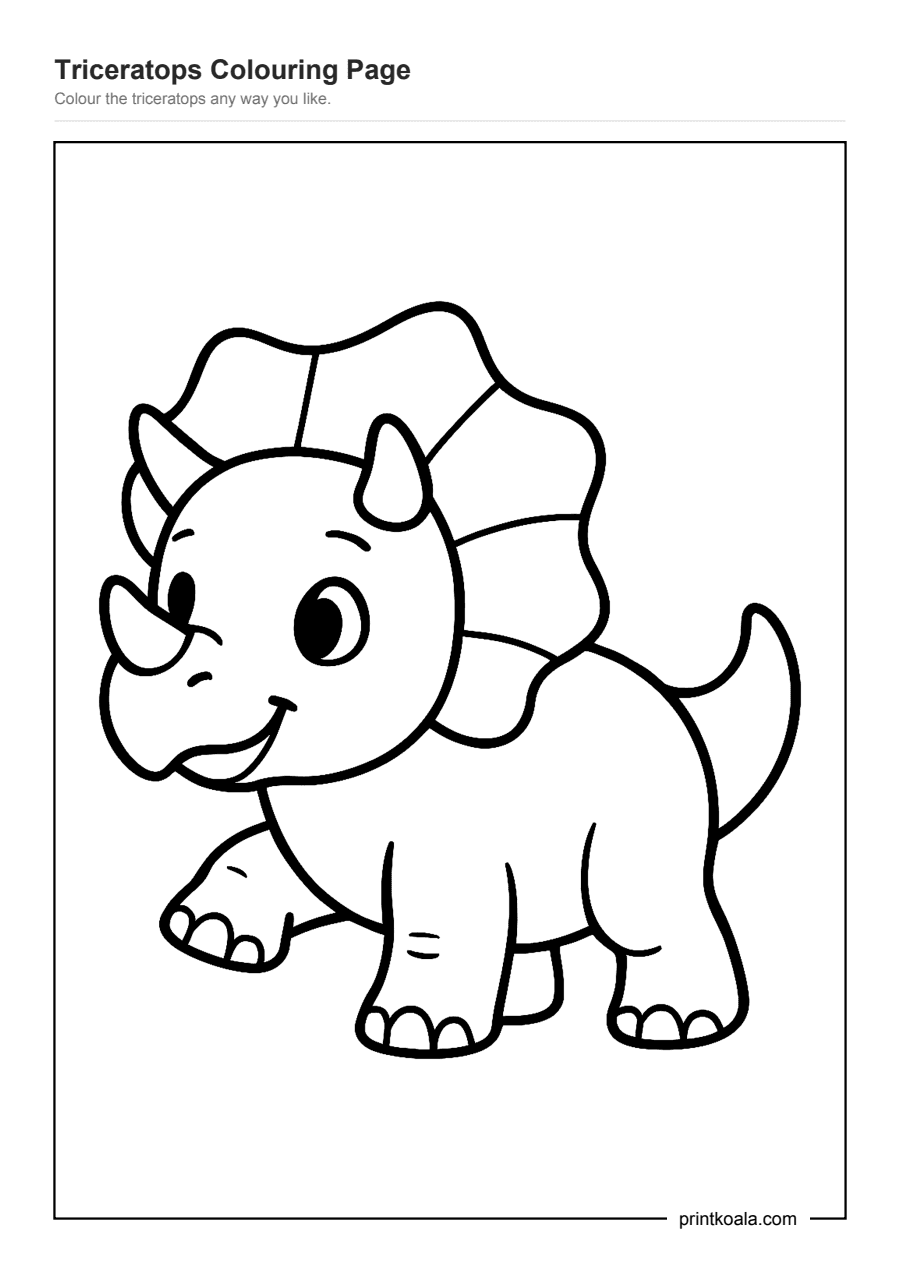
A round, smiling triceratops mid-step with one front foot lifted, a scalloped frill and a curled tail to color.
Free, no sign-up. Downloaded 13 times · A4 · Print at 100% scale
This triceratops is caught mid-walk, front left foot raised off the ground as if it just took a step towards you. Its body is one big rounded shape, and behind its head sits a scalloped frill divided into six sections by simple lines, edged with small bumps. Three horns sit on the face, two longer ones above the eyes and a shorter one on the nose, and the face itself is friendly, with one large round eye, a curved eyebrow line, a dotted nostril and an open, smiling mouth. A thick tail curls up behind the back legs, and all four feet show clawed toes planted, or on that lifted foot, reaching, towards the ground.
There is a lot of open space here for a young hand to fill in: the belly, the round body, the tail and each frill section are all big, closed shapes that do not demand a steady wrist. The face is where the picture gets more interesting to talk about, since the eye, eyebrow, horns and grinning mouth are small enough to invite a different color each, and a child can decide whether their triceratops is green, purple or something no dinosaur has ever been. The lifted foot is also a nice thing to point out and ask about: is it stepping, waving, or about to stomp?
Because the shapes are large and the outlines are thick and forgiving, this sits on the easier end for a preschooler working on staying inside the lines, while the frill sections and small facial details give slightly older children something more precise to aim for. It works well as a first dinosaur sheet for a three-year-old and still holds a four- or five-year-old's attention if they want to go slower and pick out every horn and toe.
Suggest starting with the body and tail, the biggest shapes, before moving to the trickier frill sections and face. If the horns or eye go outside the lines, cover it with a sticker or call it a battle scar rather than starting over.