🦕 Dinosaurs & Prehistoric
Waving T-Rex Coloring Page
Ages 2–53
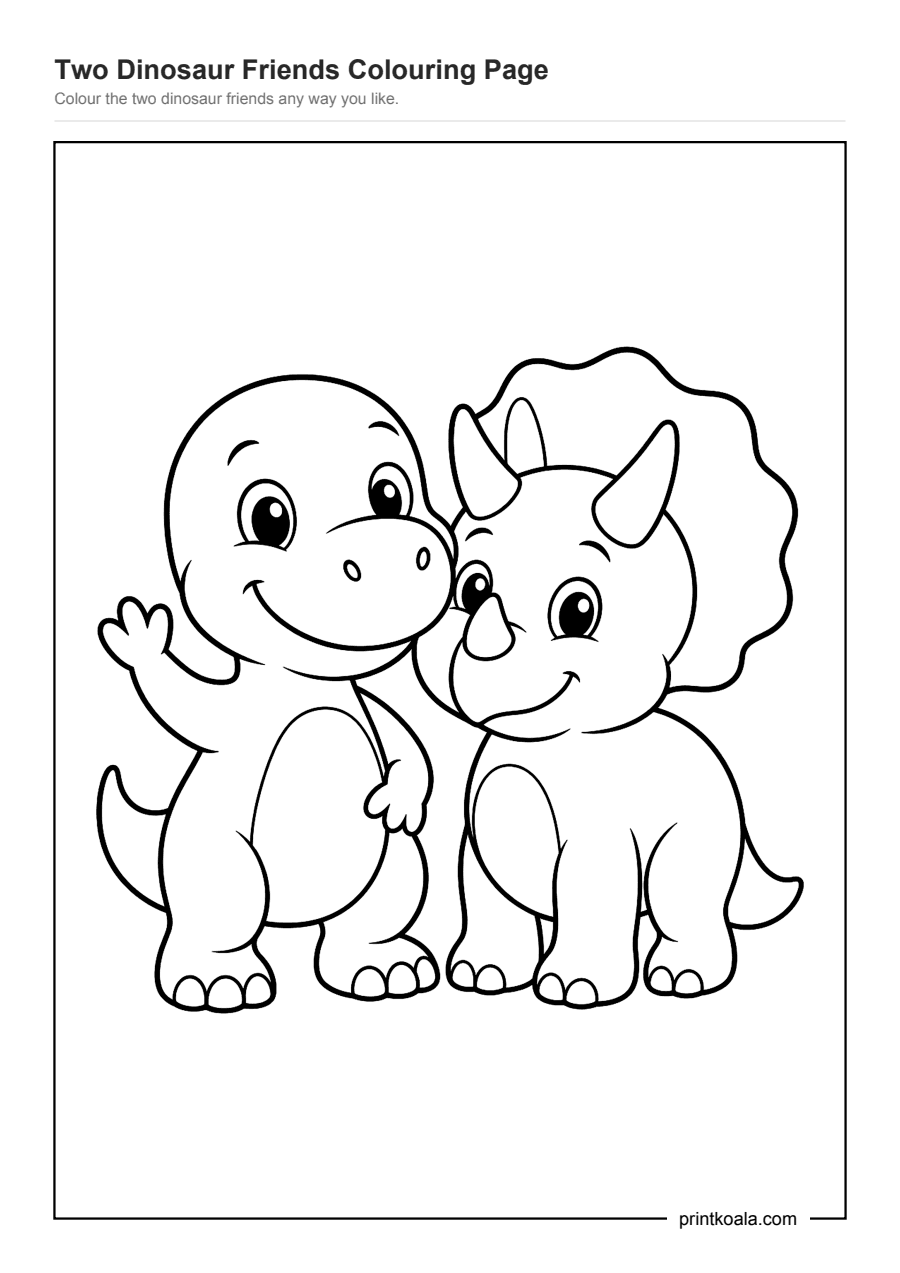
A round-headed T. rex waves hello beside a smiling Triceratops with a big scalloped frill and three horns.
Free, no sign-up. Downloaded 12 times · A4 · Print at 100% scale
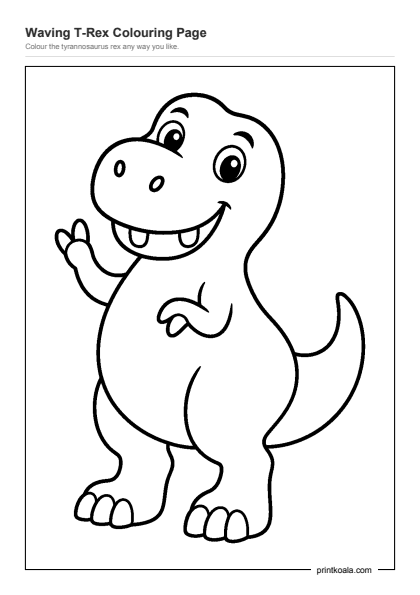
On this page a chubby T. rex stands on the left, one arm raised in a wave with its fingers spread wide, the other arm tucked near its round belly. Its head is a big smooth dome with two large eyes and a wide open smile, and a long curved tail sweeps down behind its feet. Next to it stands a Triceratops in the same friendly, rounded style, with two small brow horns, one longer nose horn, and a huge frill edged in soft scallops that runs back over its shoulders. Both dinosaurs have short legs, rounded toes, and stumpy tails, and they stand close together as if caught mid-conversation.
What makes this one worth printing is the mix of spaces on offer. The T. rex's head and belly are big open curves a young child can fill in a few confident strokes, while the Triceratops frill gives slightly older hands a large but scalloped edge to follow more carefully. The horns, eyes, and toes are small enough to invite a second or third color without making the page fussy. It is an easy one to talk through while coloring too: which dinosaur has horns, which one is waving, why the frill looks like a fan.
Compared with other sheets in the dinosaur set, this one sits on the gentler end. The outlines are thick, the shapes are closed and simple, and there is nothing tucked into a corner that will frustrate small hands. It suits a child just starting to stay inside the lines, and works equally well as a quick one-sitting page or a slower project picked up in stages.
Let your child start with the two big shapes, the T. rex head and belly, before moving to the frill and horns. If the frill's scalloped edge feels fiddly, color it as one solid shape and add the wavy border last with a fine marker.