🦕 Dinosaurs & Prehistoric
Brontosaurus Coloring Page
Ages 2–58
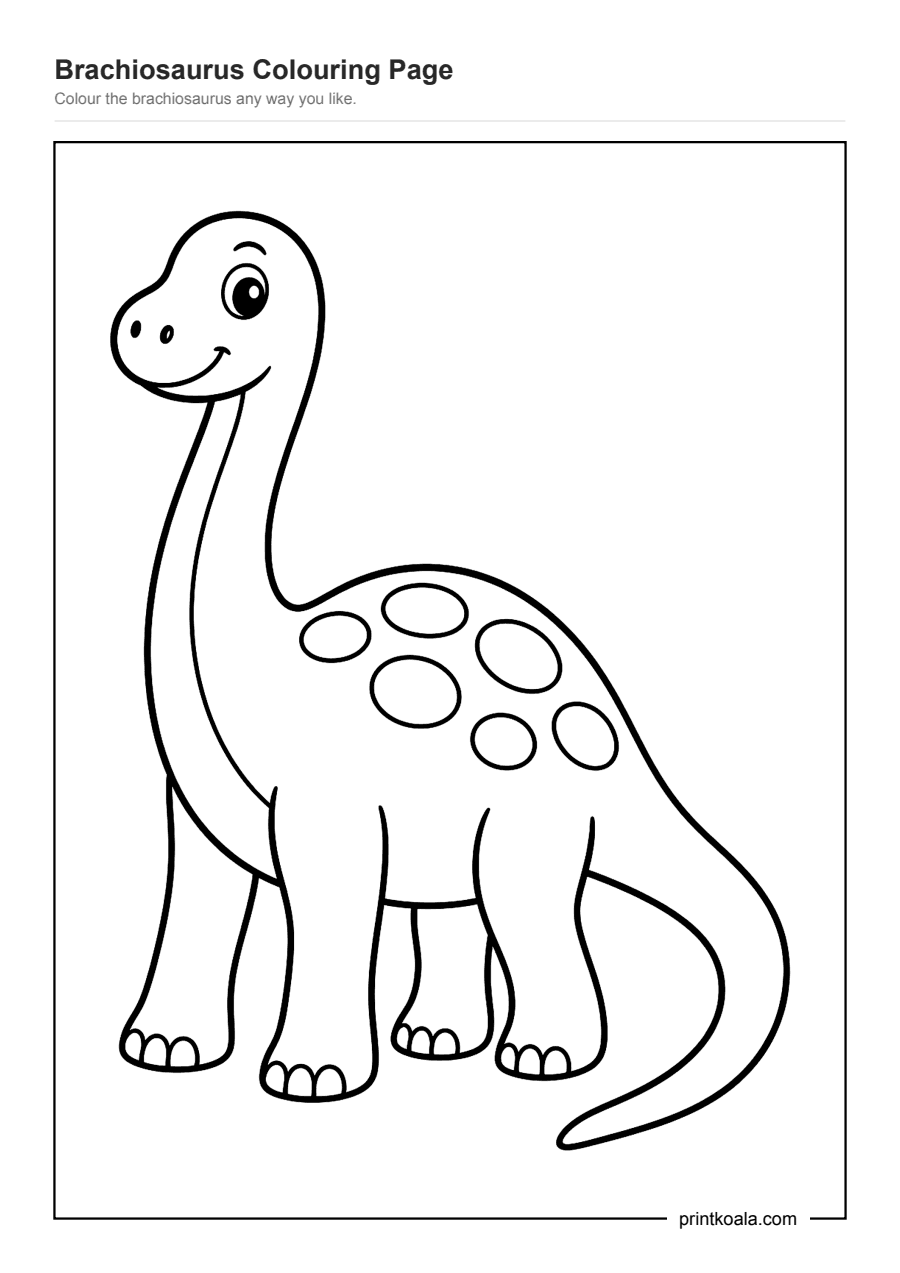
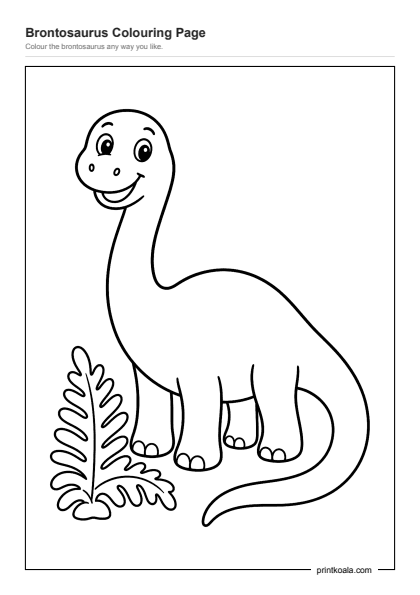
A smiling Brachiosaurus stands on four sturdy legs, its long neck curved gently, with six round spots on its back to color.
Free, no sign-up. Downloaded 11 times · A4 · Print at 100% scale
This Brachiosaurus stands facing left with its head held up and a small smile on its face. Its long neck curves in a smooth arc down to a rounded, plump body, and the tail trails out behind and curls up at the tip. Six oval spots sit along the back, all different sizes, and each of the four thick legs ends in a little foot with three or four clawed toes. There is no background or scenery, just the dinosaur alone on the page, so every line belongs to the animal itself.
Most of this page is made up of big open spaces: the neck, the body, and the legs are all wide enough for a young child to fill in without much trouble. The six spots on the back are the fiddlier part, since each one is a small closed shape that needs to be colored inside its own line rather than run into the body color around it. That makes the page a nice mix of easy, confident strokes and a bit of careful work, and it gives a parent something to talk about too, like counting the spots or picking a different color for each one.
There is no shading, texture, or background clutter to slow things down, which keeps this on the easier side of the dinosaur pages in this set. The narrow neck and the small toes ask for a touch more care than the body does, so it suits a child who has had some practice staying inside lines, while still being manageable for a younger sibling who just wants to color the big shapes and skip the spots.
Start with the big body and neck first so your child gets confident strokes going, then save the six back spots for last since those need slower, careful coloring inside the lines.