👕 Clothes & Accessories
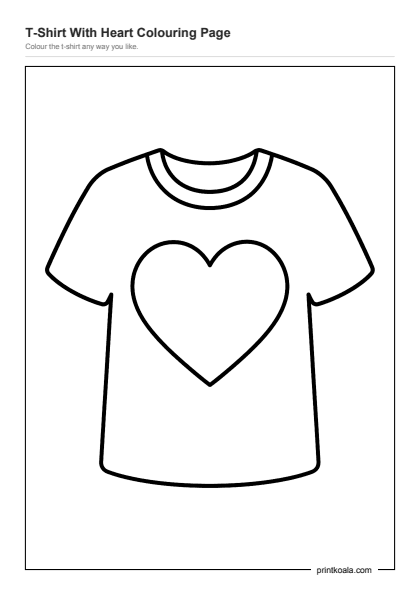
T-Shirt with Heart Coloring Page
Ages 2–415
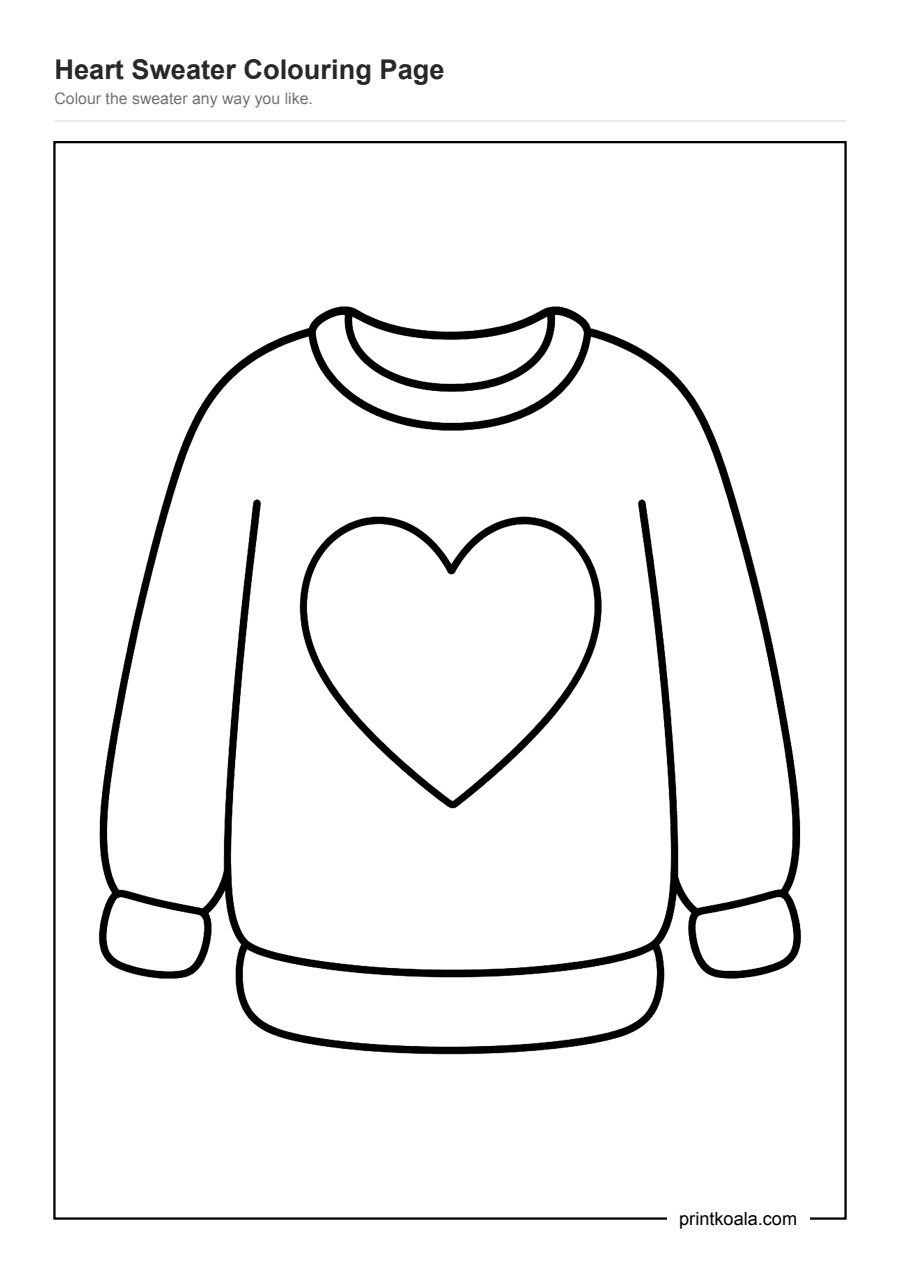
A cosy jumper with a ribbed collar, cuffed sleeves and one big heart patch in the middle to color.
Free, no sign-up. Downloaded 14 times · A4 · Print at 100% scale
This page shows a single sweater, drawn front-on and filling most of the sheet. It has a round ribbed collar at the neck, two long sleeves that end in thick cuffs, and a ribbed band running along the bottom hem. Right in the center of the chest sits one large heart, outlined and empty, plus two short straight lines under the arms where the fabric folds. There is nothing else on the page: no background, no second character, just the jumper.
That simplicity is the whole point. The body and sleeves are wide, closed shapes, so a child can color them in with big, loose strokes and still stay inside the lines. The heart is the one part that asks for a bit more care, since it has a proper point at the bottom and two curves at the top, which makes it a good small step up from coloring plain squares and circles. Because the jumper is one object, it is also an easy one to talk about while coloring: what color would you wear it in, does the heart match or stand out.
This is an easy sheet, better suited to toddlers and younger preschoolers who are still building confidence with a crayon than to older children looking for a challenge. The thick outlines forgive wobbly coloring, and with only two shapes to fill besides the heart, most children will finish it in one sitting.
Let your child start with the heart, since it is the trickiest shape, then move out to the sleeves and body. If they color outside the heart, treat it as part of the pattern rather than a mistake.