🦕 Dinosaurs & Prehistoric
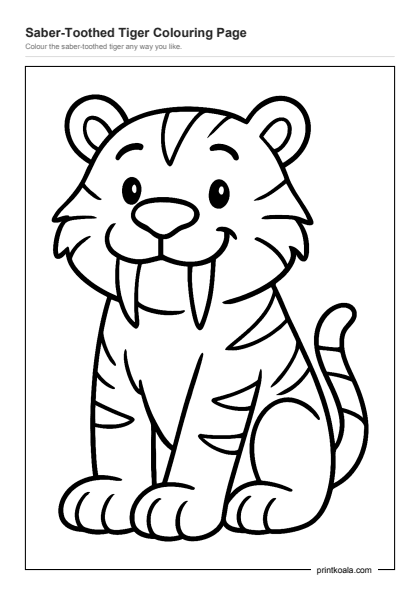
Saber-Toothed Tiger Coloring Page
Ages 3–510
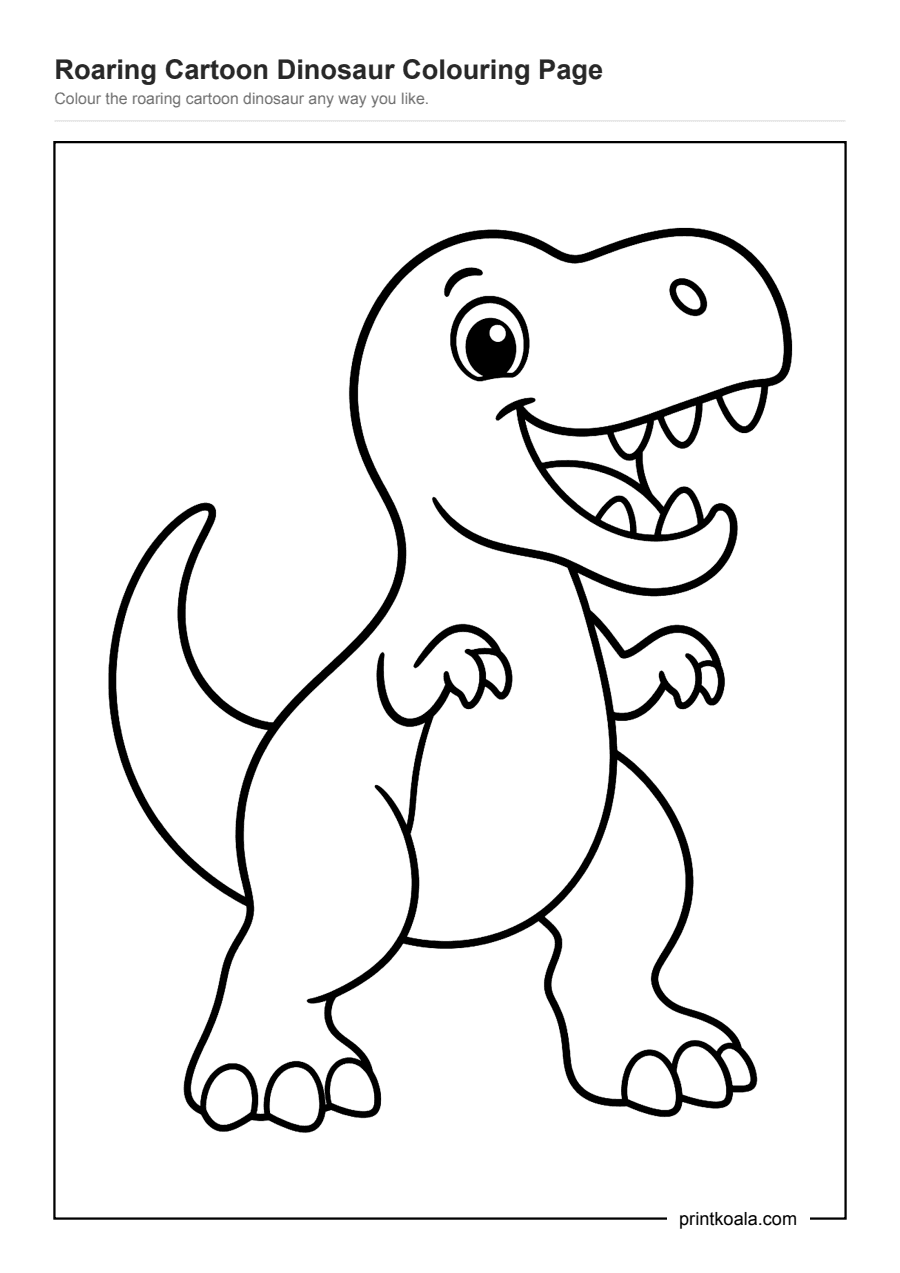
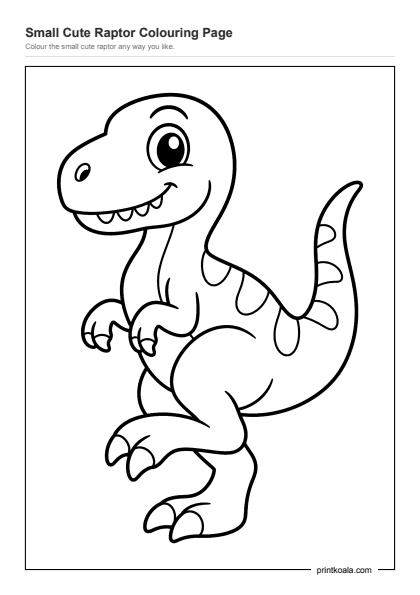
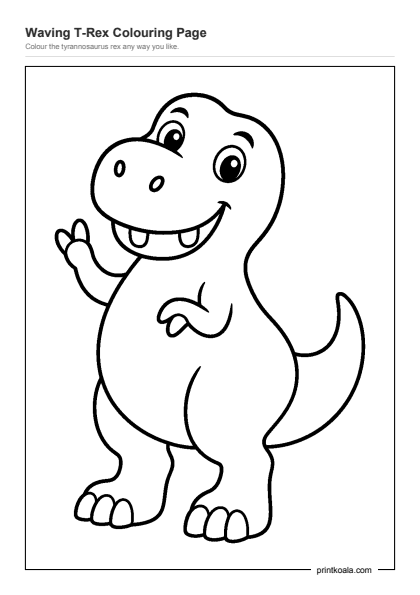
A friendly T-Rex stands on two legs with its mouth open and teeth showing, tiny clawed arms raised, and a tail that curls up like a wave.
Free, no sign-up. Downloaded 6 times · A4 · Print at 100% scale
This dinosaur stands upright on two sturdy legs, head turned to the side with its mouth wide open and a row of pointed teeth on show, top and bottom. One eyebrow is arched up above its round eye, giving it a cheeky, friendly look rather than a scary one. Its two short arms are lifted with three claws on each hand, and its tail sweeps out behind and curls back up into a wave shape. There is no background or scenery to fill in, just the dinosaur itself against a plain white page.
The body is drawn in big, rounded sections, a wide chest, a round belly, thick legs, so most of the page is open space a child can color in with one or two big sweeps of a crayon rather than careful dabbing. The trickier bits are small and few: the row of teeth, the three claws on each hand, and the three toes on each foot. That mix gives a child something easy to fill fast and something small to slow down for, and the raised eyebrow and open mouth are worth a comment or two about what the dinosaur is roaring at.
With its thick outlines and large uncluttered shapes, this sheet sits on the easier end of the dinosaur pages in this set. It suits a child who is still building control with a crayon or who wants a page they can finish in one sitting, while the teeth, claws and toes give slightly older hands a few small spots to practice staying inside the lines.
Let your child start with the belly or tail, the biggest open shapes, before moving to the small teeth and claws where the crayon needs more control. If the teeth feel too fiddly, coloring them all white or leaving them blank works fine too.