🐣 Baby Animals
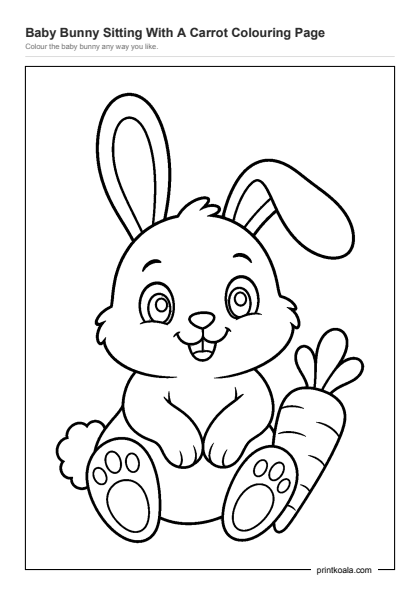
Baby Bunny Sitting with a Carrot Coloring Page
Ages 2–49
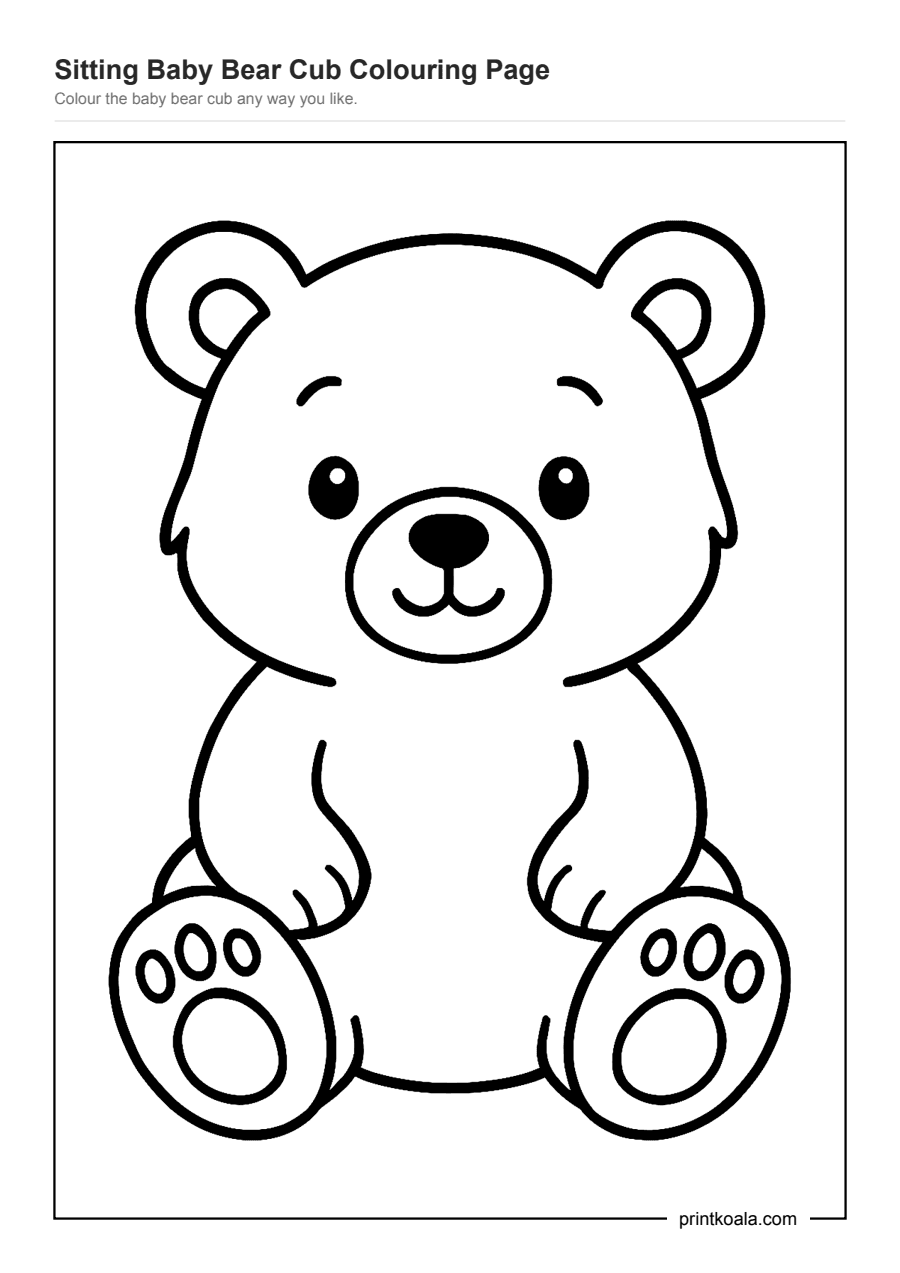
A round baby bear cub sits facing forward with both big feet stuck out, showing off the paw pads on its soles.
Free, no sign-up. Downloaded 6 times · A4 · Print at 100% scale
This bear cub sits square to the front, arms resting on its belly and both feet planted out in front so the paw pads face up. The head is made of two round ears with a curved inner-ear line inside each, two oval eyes with a small white highlight dot, and a soft round snout holding a black nose and a simple smiling mouth. The body is one big rounded shape with no fur lines, no clothes and no background scenery, so the whole page is just the cub, sitting.
What makes this one worth printing is the mix of sizes. The head, ears and belly are large open spaces a child can fill in a few strokes without worrying about the crayon slipping outside the line. The feet are the fiddly part: each one has three small oval toe pads and a bigger heel pad to color separately, which is good practice for staying inside a smaller shape once the easy areas are done. There's also a natural color conversation built in, since kids will want to know why the paw pads might be a different shade to the fur.
With no extra props or background, this sheet asks less of a child than a busier scene would, but the paw pads give it a bit more to do than the plainest cub outlines. It suits a child who can already color a big circle cleanly and is ready to try smaller shapes next, roughly three to five year olds, and works well as a first bear page before moving on to busier animal sheets.
Start with the big belly and head first so your child gets a confident run before tackling the smaller paw pads on the feet. If the pads feel too fiddly, skip them or color them one flat shade rather than stopping the session.