🐣 Baby Animals
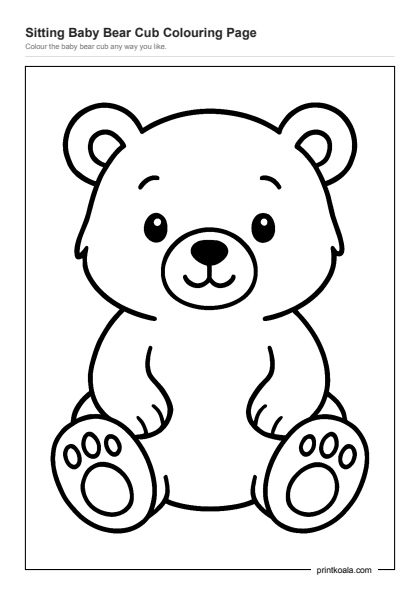
Sitting Baby Bear Cub Coloring Page
Ages 2–56
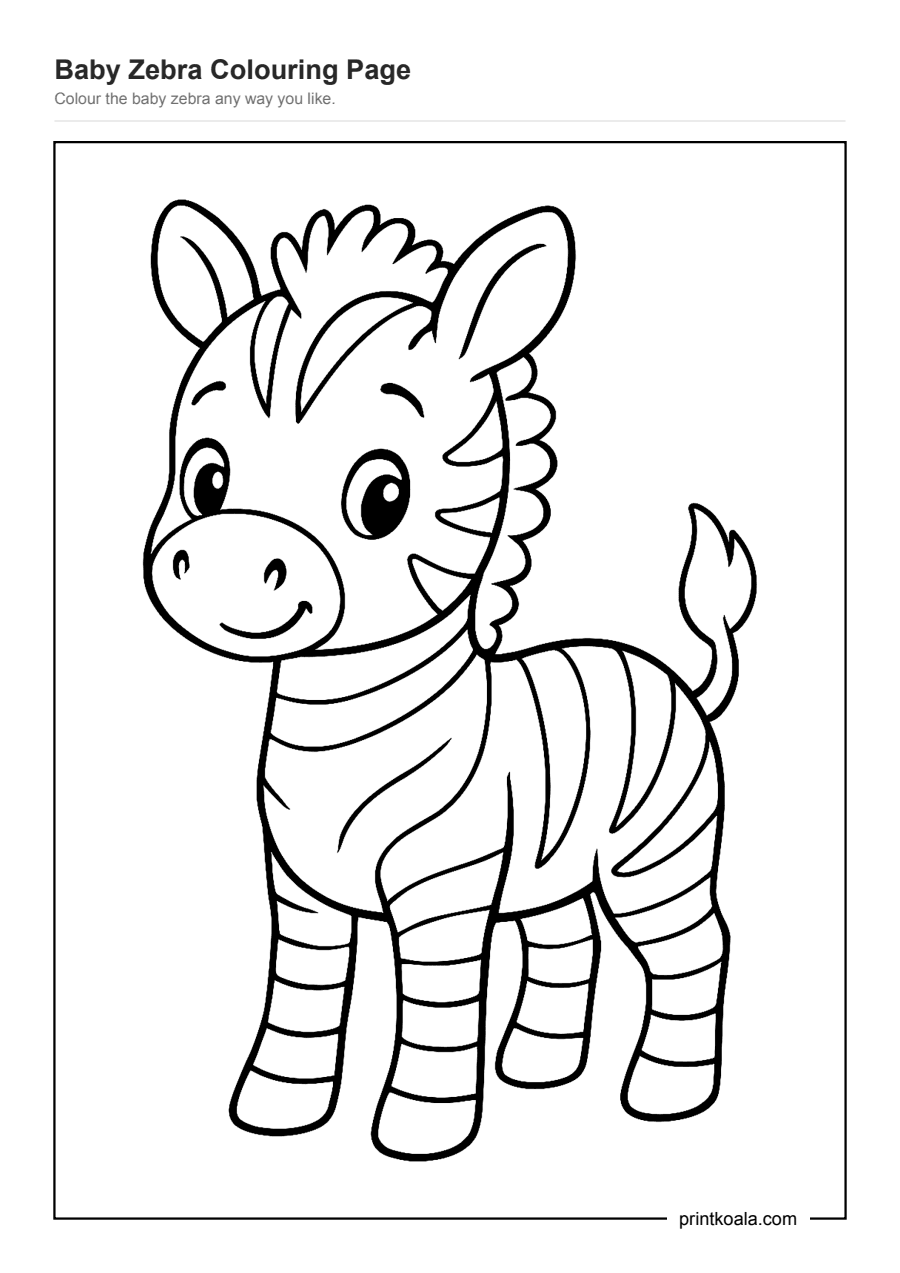
A round-faced baby zebra stands still with big eyes and a spiky mane, its body marked out in broad, widely spaced stripes.
Free, no sign-up. Downloaded 8 times · A4 · Print at 100% scale
This baby zebra stands facing slightly sideways, front legs together, looking out at the page with two large round eyes and a gentle smile. Its mane sticks up in a small spiky tuft between two big upright ears, and its short tail curls up at the end in a tufted point. There is no background here, just the zebra on its own, so the whole page is the animal.
The body is where the coloring happens. The stripes across the back and sides are broad and spaced well apart, giving a young hand plenty of room to stay inside the lines without much trouble. The four legs carry narrower stripe bands stacked down to the hooves, which asks for a bit more care than the body does, and the face, ears and tail are all plain, open spaces that color in one or two strokes each. A parent can talk through the pattern with their child as they go, asking which stripe comes next or whether the zebra should be black and white or something more colorful.
Compared to other sheets in this category, this one sits on the easier side. The thick outlines and generous stripe gaps suit a child who is just getting the hang of a crayon, while the leg stripes give slightly older preschoolers something to slow down for. It works well as a first go at an animal with a pattern, rather than a plain outline.
Start with the big body stripes before moving to the legs, since those need steadier hands. If the leg stripes feel too fiddly, it is fine to color them as solid legs instead. Ask your child what colors a zebra "should" be versus what they want to try.