🦕 Dinosaurs & Prehistoric
Hatching Dinosaur Egg Coloring Page
Ages 2–56
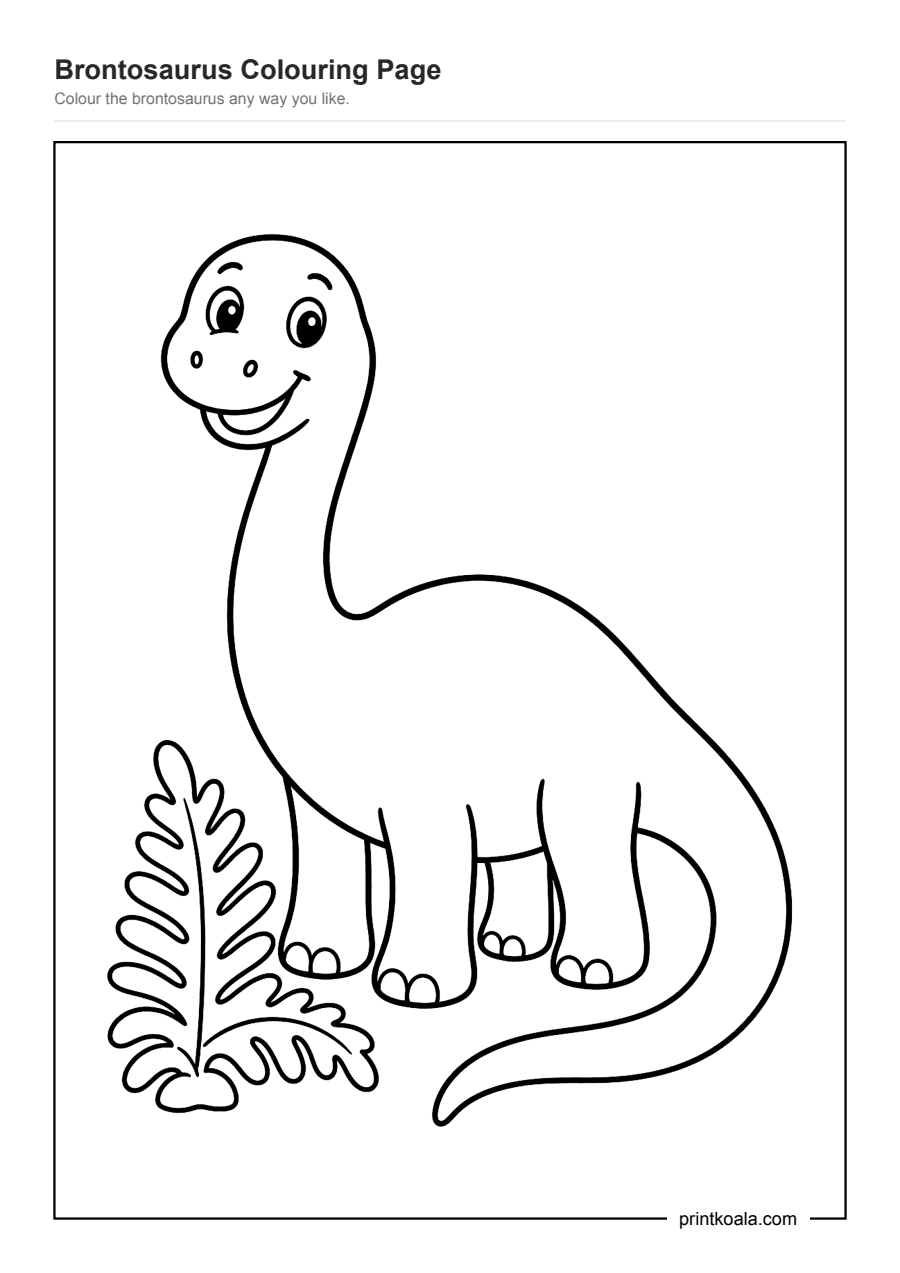
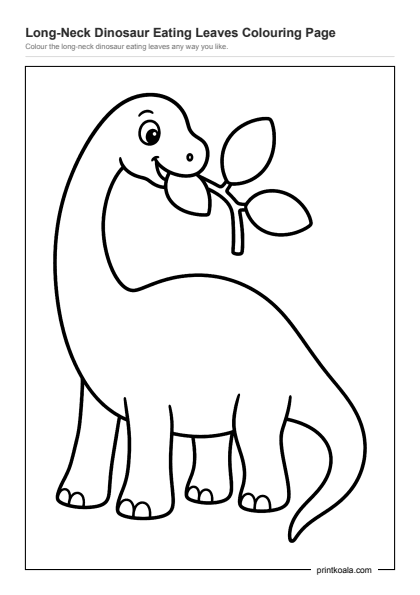
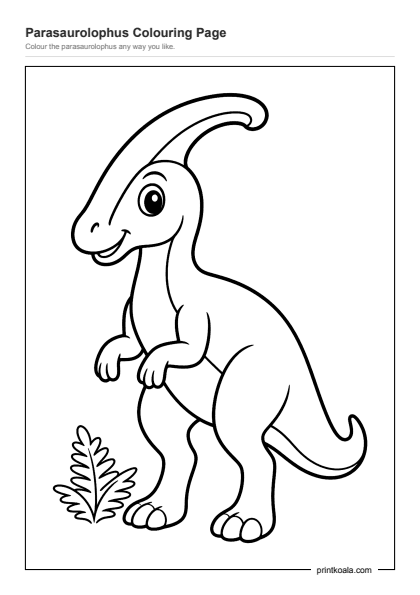
A smiling brontosaurus stands beside one tall fern, its long curved neck and round body giving big, easy spaces to color.
Free, no sign-up. Downloaded 8 times · A4 · Print at 100% scale
This brontosaurus stands on all four sturdy legs, head turned to face forward with a wide smile, round eyes and two small nostrils. Its neck sweeps up in one long curve from its rounded back, and its tail trails off the bottom of the page in a loose loop. Each of the four feet shows two little toenails to pick out if a child wants that detail. To the left, in front of the legs, a single tall fern fans out into several curled leaflets on either side of its stem. There is nothing else on the page: no background scenery, no second animal, just the dinosaur and its plant standing on plain white.
That emptiness is the point. The body, neck and head are each one big unbroken shape, so a child can sweep a crayon back and forth without worrying about staying inside tight lines. The fern is the only part that asks for more care, since its leaflets are narrow and close together, which makes it a good small challenge after the easy body. It is also an easy page to talk over while coloring: how long is that neck, why might a dinosaur need a neck like that, how many toes can you count on one foot.
Against other dinosaur sheets in this set, this is one of the gentler ones. The large curved areas suit a child who is still getting used to a crayon and gets discouraged by fiddly pages, while the fern gives an older sibling something a bit fussier to finish. It works well as a first dinosaur page for a preschooler, or as a quick, low-pressure sheet between busier ones.
Let your child start with the big body or neck first, so they feel done fast, then tackle the fussier fern leaflets last. If the fern feels too fiddly, one plain color is fine. Ask them to count the toenails on each foot.