🦕 Dinosaurs & Prehistoric
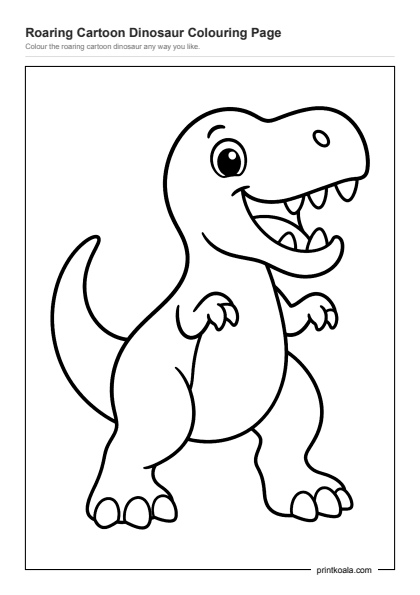
Roaring Cartoon Dinosaur Coloring Page
Ages 2–57
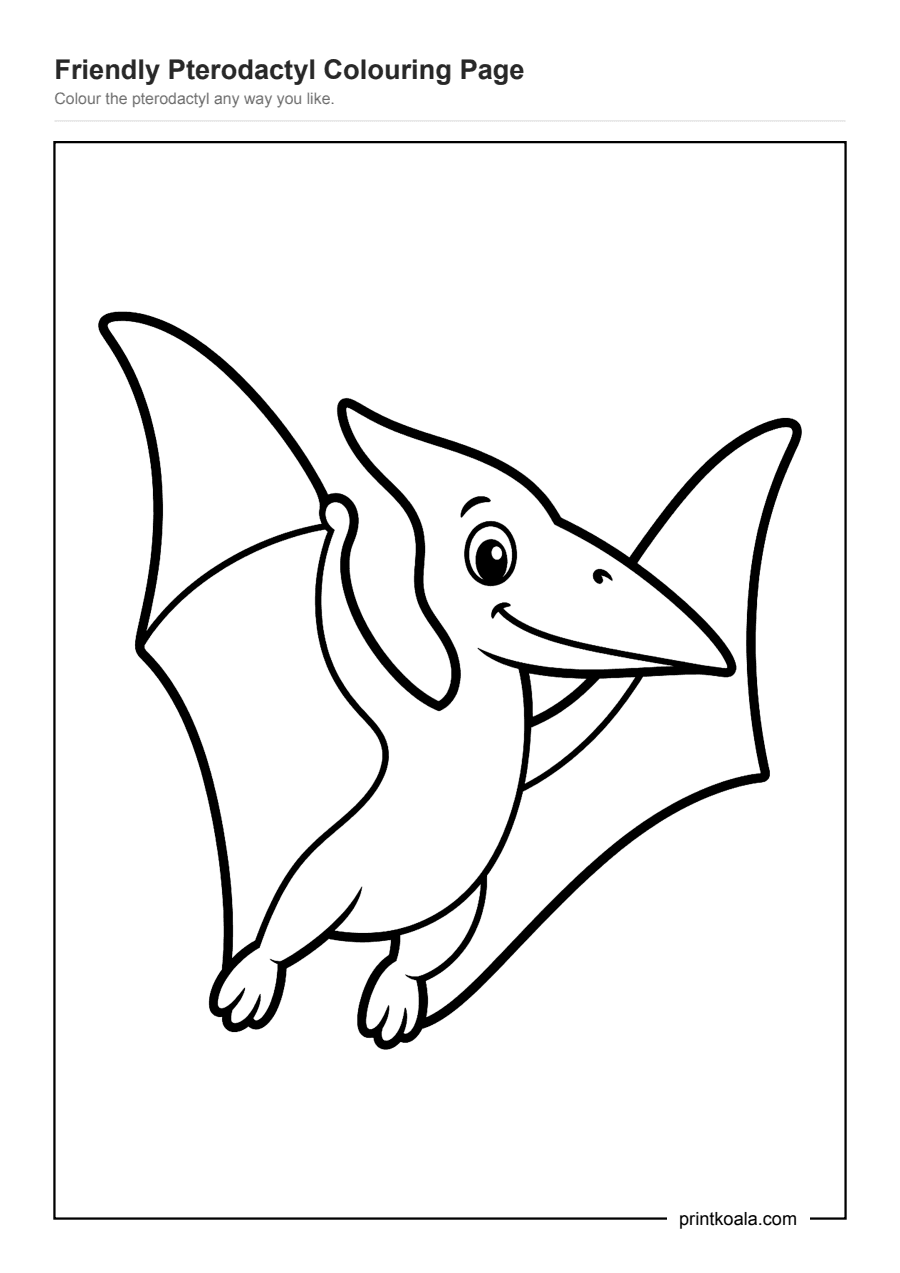
A grinning pterodactyl glides with both wings stretched wide, its pointed head crest and clawed feet ready for color.
Free, no sign-up. Downloaded 8 times · A4 · Print at 100% scale
This pterodactyl is caught mid-glide, head turned to face you with a big round eye and a wide, toothless smile. Its long beak points off to one side, and behind its head a tall, curved crest sweeps upward. Both wings are spread out fully, one reaching up to the left and one stretching down to the right, each one a single large curved shape. The rounded body sits in the middle, with two short legs dangling below and small clawed feet, three little toes on each foot, at the bottom of the page.
The two wings are the main event here: each one is a big, unbroken space, so a child can fill one in with a single confident color without worrying about staying inside anything small. The crest, the eye, the beak and the feet are separate little zones for a second or third color, which gives a child who wants more to do somewhere to put it. It is an easy picture to talk about too, ask what color a flying dinosaur should be, or why its mouth is open in a smile.
Because the wings are so large and there is only one character on the page, this sits on the easier end of the dinosaur sheets in this set. It suits a child who is still getting comfortable holding a crayon and staying inside lines, while the smaller foot and crest details give an older preschooler a bit more to concentrate on if they want it.
Let your child start with the two big wings, one color each is plenty. Save the eye, crest and feet for last, since those smaller spots take more care and a steadier hand.