🦕 Dinosaurs & Prehistoric
Parasaurolophus Coloring Page
Ages 3–510
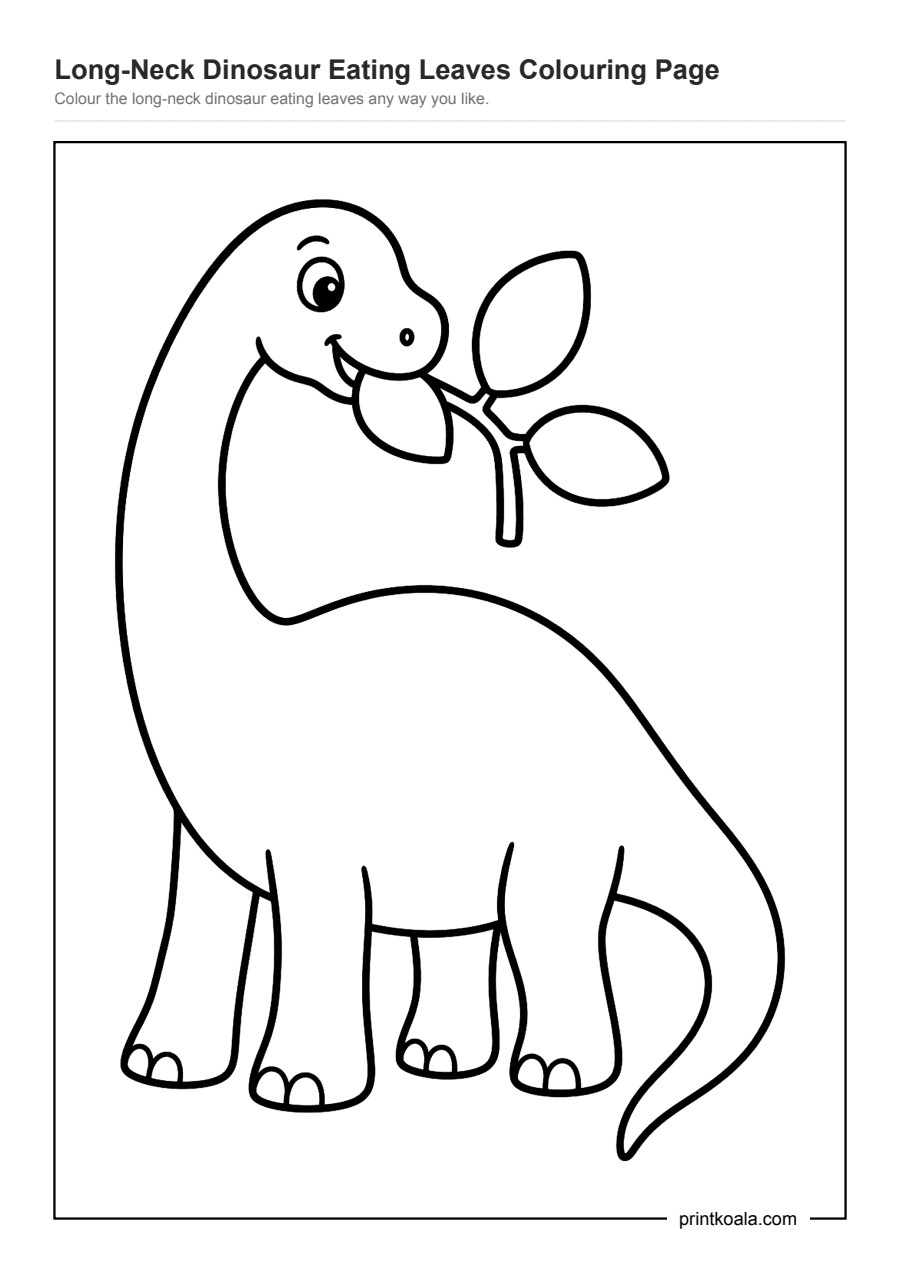
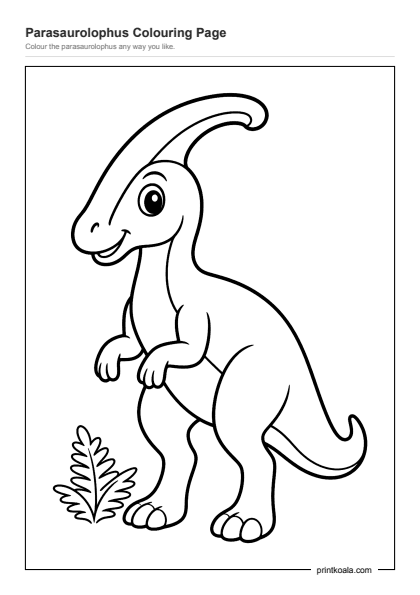
A smiling long-neck dinosaur bites into a leafy branch, its curved neck and round body giving lots of open space to color.
Free, no sign-up. Downloaded 7 times · A4 · Print at 100% scale
This page shows a gentle, round-bodied dinosaur with a long curving neck, standing on four sturdy legs with a curling tail behind it. Its head is turned back towards a small branch, and it has just taken a bite of one of the three big leaves growing from it. The dinosaur is smiling, with one large eye, a small nostril and a few visible teeth where it is chewing.
The body is drawn in big, open shapes, the neck, the belly and each thick leg give a child plenty of room to color without worrying about staying inside tiny lines. The three leaves are simple ovals, so a child can pick one color for the whole dinosaur and a different one for the leaves and branch, or go further and give each leaf its own shade. The twelve little toe marks on the feet are the only fiddly bits on the page, and they are easy to skip if a child would rather keep to the big spaces.
There is no background to fill in, just the dinosaur and its snack on a plain page, so this sheet is on the easier end. It suits a child who is still working on holding color inside a curved line and would get frustrated by lots of small sections, while older preschoolers can use the toes and leaves to slow down and add extra detail.
Start with the big body and neck before moving to the smaller leaves and toes, so early coloring wins happen fast. If the leaf shapes feel too fiddly, skip them and come back at the end, or let your child color all three the same color.