🦊 Forest & Woodland Animals
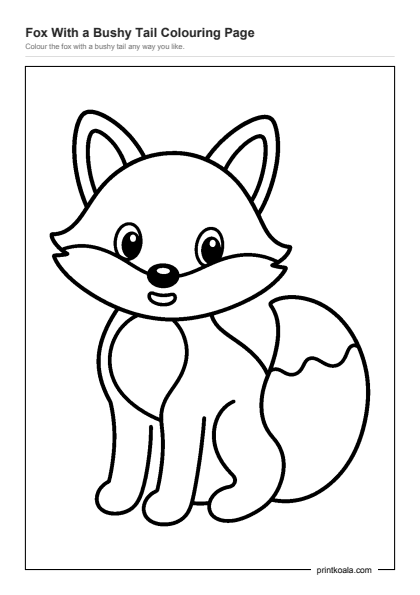
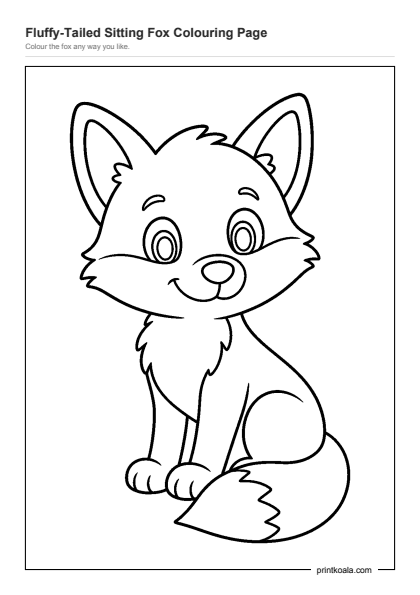
Fluffy-Tailed Sitting Fox Coloring Page
Ages 3–58
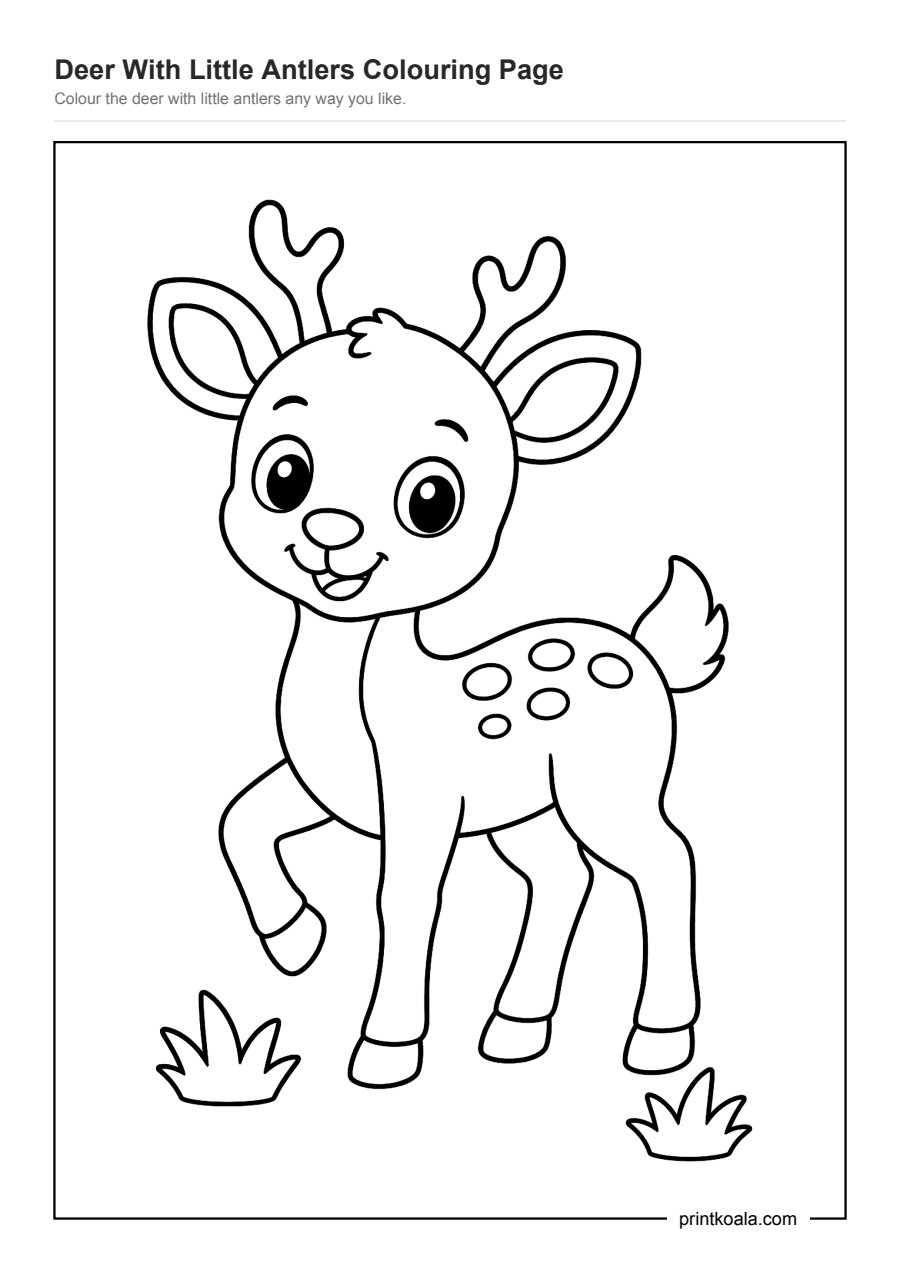
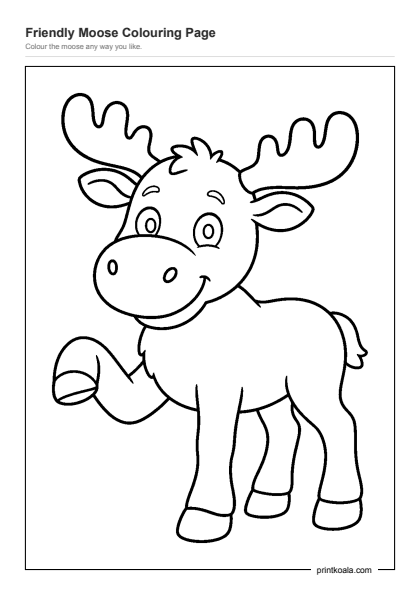
A round-faced baby deer with small forked antlers, a raised front hoof, and six oval spots scattered across its back.
Free, no sign-up. Downloaded 9 times · A4 · Print at 100% scale
This is a young deer standing on tufts of grass, one front leg lifted mid-step as if it has just noticed something. Its head is large and rounded next to its body, with big open eyes, a small nose, and a wide smiling mouth showing its tongue. Two short antlers, each with a small fork, sit above a tuft of fur between the ears, and both large ears are angled outward. Along its back and side are six oval spots, and its short tail curls up in a small fan shape. Two clumps of grass sit at its feet, one on each side of the page.
The body is made up of big, calm shapes, the head, the round belly, the haunches, so a child can lay down color in broad strokes without much fuss. The antlers, ears, hooves and spots are smaller and separate from each other, which gives a bit of practice staying inside a line without making the whole page fiddly. The spots are a natural spot for a second or third color, and the raised hoof and open mouth give a parent something easy to talk about, is the deer walking, or waving hello.
This sits on the easier side of the animal sheets on the site, thanks to the thick outlines and the amount of open space in the body and legs. It suits a preschooler coloring mostly on their own, with the smaller bits, antlers, spots, hoof tips, as places to slow down or where a grown-up can help keep the crayon on the page.
Start with the big body shape before the small antlers and spots, so early wobbles land where they show least. If the spots feel fiddly, skip them and come back once the rest of the deer is colored in.